Best Fertilizers For Blueberries - A Complete Guide
By Parvez Akhtar Pasha | Mar 05, 2026
I'll be honest.
When I first planted blueberries, I treated them like any other fruit plant. I gave them regular garden fertilizer.
They grew… but not happily. Leaves turned pale. Growth was slow. And the fruit was small and watery.
That's when I learned one very important thing:
Blueberries are very different from most plants.
They need acidic soil and the right type of fertilizer. If you don't give blueberries the nutrients they actually need, the plants will struggle to grow well and won't produce good, flavorful berries.
So here's a simple guide based on the things that actually worked well for me.
First, Fix Soil Before Fertilizing
As we all know, blueberries need acidic soil. So before we even talk about fertilizer, it's important to understand the soil pH first.
- Ideal soil pH: 4.5 to 5.5
- pH above 6.0 is not good for blueberries.
- Regular garden fertilizer often raises pH.
If the soil isn't acidic enough, blueberries can't absorb nutrients properly — even if you fertilize heavily.
So first, we need to lower the soil pH (about 4.5–5.5) to make the soil acidic.
| Soil pH Range | What to Do |
|---|---|
| 6.0 – 6.5 | Add elemental sulfur, pine bark mulch, or acidic compost to slowly lower pH. |
| Above 7.0 | Use larger sulfur application, grow in a raised bed with acidic soil, or plant in containers for easier pH control. |
I fought with high soil pH for almost 2 years. In the end, I moved one plant to a raised bed, and it recovered within a single season.
Best Fertilizers for Blueberries
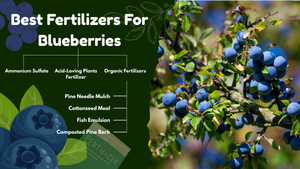
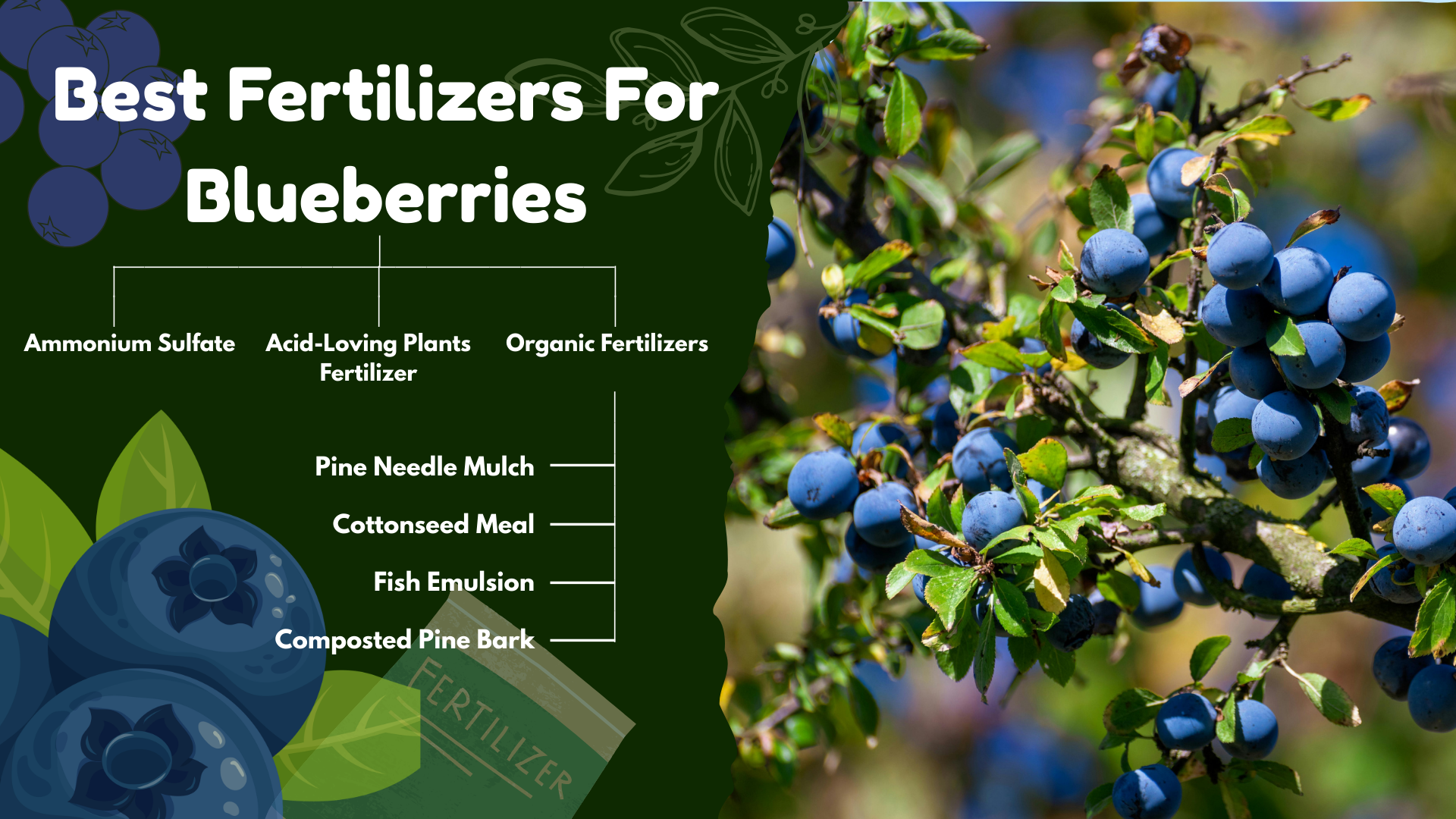
There are 3 main types of fertilizers that actually work best for blueberry plants.
Ammonium Sulfate
If you ask me which fertilizer works best for blueberries, ammonium sulfate is one of my top choices, especially for plants that are already established.
Why I like it:
- Provides nitrogen for growth
- Helps keep the soil acidic
I noticed deeper green leaves within 2–3 weeks after using it properly.
I usually apply it in early spring when new growth starts, spread it around the plant (keeping it away from the stem), and then water deeply so it reaches the roots.
Do NOT use it too much. Too much fertilizer can damage the roots.
Use Fertilizer Made for Acid-Loving Plants
If you don't want to deal with different fertilizers or measurements, the easiest option is to use a fertilizer made for acid-loving plants.
These fertilizers are usually sold for plants like azaleas, rhododendrons, and camellias, and they work well for blueberries too.
What I like about these fertilizers is that they already contain the right nutrients blueberries need, and they also help keep the soil slightly acidic.
You can easily find these fertilizers at any local garden store or plant nursery. Just go to the market and ask for fertilizer for acid-loving plants or blueberries.
Organic Fertilizers – Natural Options
If you prefer organic gardening, there are also good natural options.
I tried organic feeding on one side of my garden just to compare.
Here's what exactly worked best for me:
| Organic Option | Why It Helps | My Experience |
|---|---|---|
| Pine Needle Mulch | Maintains soil acidity | Worked very well for long-term soil health |
| Cottonseed Meal | Natural acidic fertilizer | Growth was slow but steady |
| Fish Emulsion | Provides a quick nitrogen boost | Great for young plants |
| Composted Pine Bark | Improves soil structure and drainage | Very useful for container plants |
I always recommend using organic fertilizers because they are safe for plants and better for the soil.
Organic feeding works beautifully, but they release nutrients slowly, so results take a little more time.
Fertilizer NPK Ratio for Blueberries
Blueberries don't need fertilizers with very high numbers.
The best NPK ratios are:
- 4-3-4
- 6-4-4
You can also use 10-10-10, but only in small amounts and only if the soil is acidic.
When to Fertilize Blueberries
One thing I realized after growing blueberries for a while is this:
Blueberries don't need a lot of fertilizer — they just need it at the right time.
So, here is the schedule I follow every year.
| Growth Stage | When It Happens | Fertilizer Options (Choose One) |
|---|---|---|
| Planting | When you plant the blueberry bush | Composted pine bark / cottonseed meal / pine needle mulch |
| Early Spring Growth | When buds start opening and new growth begins | Ammonium sulfate / acid-loving fertilizer / fish emulsion |
| Leaf & Stem Growth | When the plant is growing lots of leaves and stems | Cottonseed meal / fish emulsion / acid-loving fertilizer |
| Flowering | When the plant starts producing flowers | Fish emulsion / ammonium sulfate / pine needle mulch |
| Berry Formation | When berries start forming and growing | Acid-loving fertilizer / fish emulsion / cottonseed meal |
| After Harvest | After you finish picking the berries | Cottonseed meal / composted pine bark / acid-loving fertilizer |
Do NOT fertilize your blueberries in the late summer or fall. It pushes new growth that can be damaged by cold.
You might be wondering how much fertilizer to use and how often to apply it, since it's not mentioned above.
Don't worry, I've explained the exact amounts and how often to apply them in the next section. Just scroll down.
How Much Fertilizer to Use
This is the most important part.
Because too much fertilizer can damage blueberries, and too little can slow their growth.
| Fertilizer | How Much to Use | How Often to Use |
|---|---|---|
| Ammonium Sulfate | About 1 tablespoon for small plants/ 2–3 tablespoons for mature plants | Usually once in early spring. If needed, a light feeding after harvest is okay. |
| Acid-Loving Plant Fertilizer | 1–2 tablespoons for young plants/ up to ¼ cup for mature plants | 1–2 times a year, mostly in early spring and sometimes after harvest. |
| Cottonseed Meal | Around ¼ cup per plant/ up to ½ cup for large plants | Once or twice during the growing season. |
| Fish Emulsion | Mix 1–2 tablespoons in 1 gallon of water | Feed every 2–3 weeks during active growth in spring and early summer. |
| Composted Pine Bark | Add a 2–3 inch layer around the plant or mix it into the soil | Usually once a year when preparing soil or refreshing the bed. |
| Pine Needle Mulch | Spread 2–3 inches around the base of the plant | Refresh once or twice a year to keep the soil acidic and moist. |
Don't use all fertilizers together. They are alternatives, so choose one fertilizer at a time to avoid overfeeding the plant.
Mulch isn't fertilizer. Pine needles and composted pine bark mainly help keep the soil acidic and protect the roots.
I always avoid fertilizers with nitrates, manure-heavy compost, high phosphorus, or lime because they can raise the soil pH, and blueberries really don’t like that.
How to Care for Blueberries in Containers
I have grown blueberries in containers too, and they grow well, but they need a little more care.
So, here are a few things I always do.
- I always use an acidic potting mix, usually pine bark based.
- I fertilize lightly every 4–6 weeks during the growing season.
- I water regularly, but I make sure the pot drains well.
One thing I noticed is that container plants lose nutrients faster than plants in the ground, so I usually feed them a little more often.