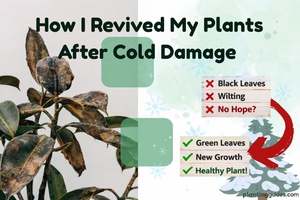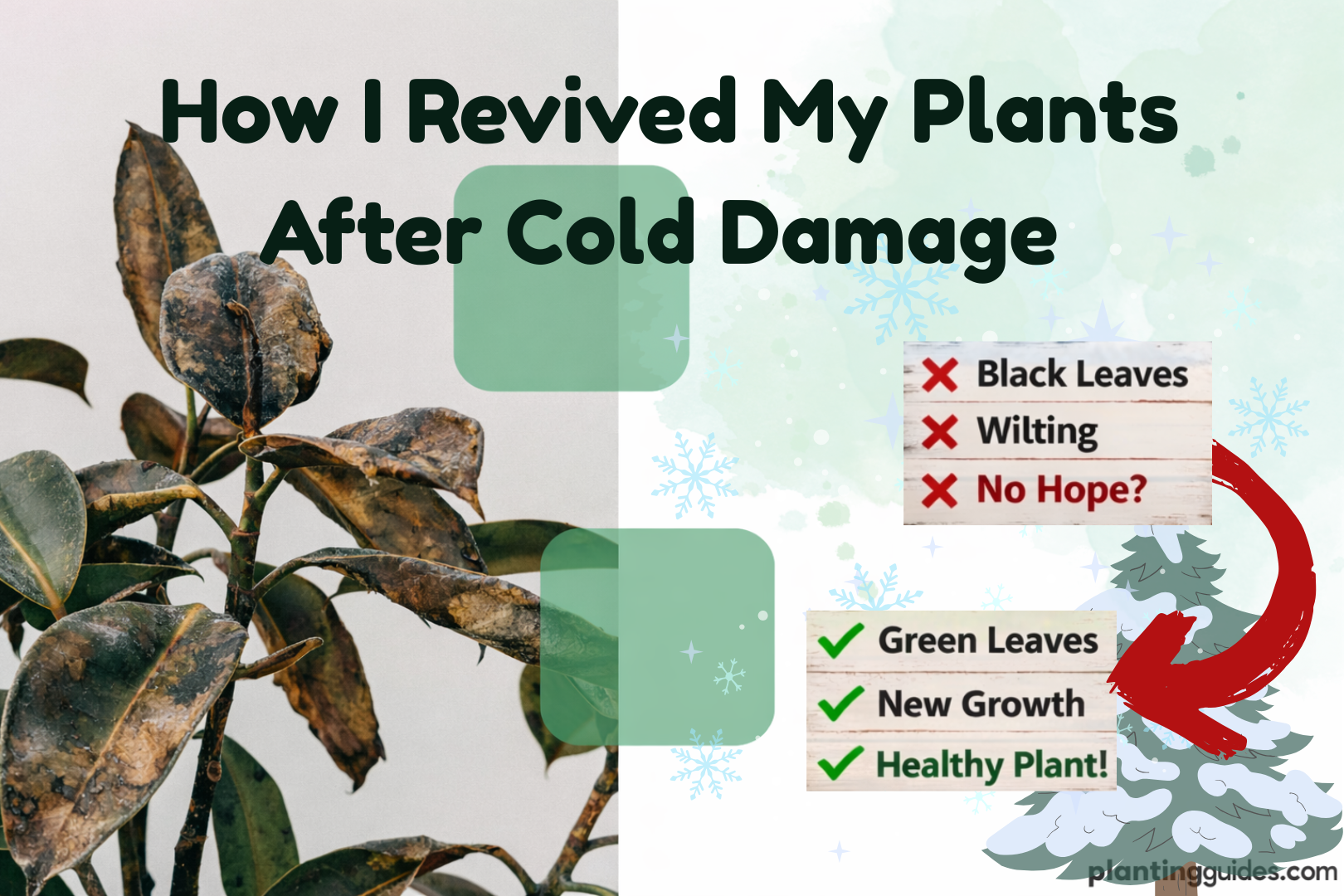
I won't lie, the first time frost damaged my plants, I thought everything was finished. Leaves turned black, soft, and droopy. Some plants looked completely dead.
I was just about to remove a few plants because I had completely lost hope in them. They looked totally dead. But in the end, I stopped myself and decided to wait a few days before doing anything.
But thankfully… I didn't.
After some research and a little patience, I realized something important:
Many plants look dead after frost — but they are not actually dead.
If you're staring at frost-damaged plants right now, don't panic. This is the exact recovery process that worked for me. I'm simply sharing the methods I personally tried to bring my plants back to life.
Check If the Plant Is Actually Alive — Scratch Test
Before I do anything, I always check whether the plant is actually alive. Many plants look completely dead after frost, but they're not.
The easiest way to check a cold-damaged plant's health is the scratch test.
It's simple, just take your fingernail (or a small knife) and gently scratch a small part of the stem — not too deep, just the outer layer.
Now look at the color inside:
| Color Inside | What It Means | What You Should Do |
|---|---|---|
| Fresh green color | The plant is still alive and healthy | Don't cut anything. Let it recover naturally. |
| Light green or slightly pale | The plant is weak but still alive | Wait patiently and give proper care. |
| Brown and dry | That part is dead | Leave it for now. Trim later when the weather is stable. |
Many times, the top looks dead, but the lower stem is still green.
If the lower stem and roots are green, your plant has a strong chance to recover. Just be patient.
Prune the Damaged Parts — At the Right Time
One common mistake is cutting off the damaged parts right away. I made the same mistake at first.
But that's not helpful.
The damaged leaves can actually protect the healthy parts inside if another cold night comes, acting like a natural shield. If you prune too early, you only put more stress on the plant.
The simple rule is:
- Don't rush. Wait until there's no more chance of frost.
- Once the weather becomes stable and you see new growth starting, you can begin trimming.
- Remove only the parts that are brown, black, soft, or completely dry.
If you cut too early, you might remove parts that could still recover. So wait a little — this is the part where you really need patience.
Give Gentle Sunlight — Not Extreme Heat
When a plant is damaged, it becomes more sensitive than usual.
Plants need light to recover and grow again.
But too much strong sunlight can stress them more and slow down healing.
- Give the plant 2–4 hours of gentle morning sunlight (before 10 AM is best).
- If the plant is indoors, put it near a bright window, but don’t let direct sunlight hit the leaves.
Avoid direct afternoon sun (12 PM–4 PM) for at least 5–7 days.
When you notice new healthy leaves growing, slowly start giving the plant a little more sunlight each day.
Water Smartly — Very Important
Cold-damaged roots are weak.
✘ Don't overwater
✘ Don't keep soil soggy
✓ Keep soil slightly moist
✓ Water only when top soil feels dry
If you give too much water after frost, the weak roots can start to rot.
Add Light Compost — After 1 or 2 Weeks
I remember I made a mistake—I immediately gave my frost-damaged plants fertilizer because I thought they were weak and needed food.
But I was wrong, their weak roots couldn't handle it.
Now, I wait until I see healthy new growth before giving anything.
Once new growth starts:
- Add light compost
- Or mild liquid fertilizer
✘ Don't use strong chemical fertilizers until your plant becomes stronger.
So, don't fertilize your damaged plants immediately after frost. At least wait until the plant starts showing signs of recovery.
Potted Plants — Special Care After Frost Damage
Potted plants need extra care in winter. They get damaged faster in cold weather because their roots can freeze quickly.
But don't worry — if the roots are still healthy, your plant can recover with proper care.
If your plant looks weak, first check the health of the roots.
| Root Condition | What It Looks/Feels Like | What It Means | What You Should Do |
|---|---|---|---|
| Healthy Roots | White or light cream color, firm and strong | Roots are alive and healthy | Put the plant back in fresh soil and give it time to recover |
| Slightly Stressed Roots | Light brown but still firm | Mild cold stress | Trim damaged parts and repot in well-draining soil |
| Rotten Roots | Black or dark brown, soft and mushy | Root rot has started | Cut off damaged roots and repot in fresh soil immediately |
| Dead Roots | Dry, brittle, hollow | Roots are dead | Remove all dead roots, recovery may be difficult |
Here's what you should do to recover your plants:
- Move them to a warmer spot, like near a wall, inside a garage, or indoors if possible.
- If the soil smells bad or rotten, replace it with fresh, well-draining soil.
Always use clean scissors to cut off damaged or rotten roots.
Be patient and give your plant time. Don't add fertilizer immediately. Wait until you see new growth — that's the sign your plant is recovering.
⚠️ When Recovery Is Not Possible
I know it's heartbreaking, but sometimes a plant just can't be saved.
Signs:
- Stem is completely brown inside
- Roots are soft, mushy, or rotten
- No green leaves or shoots anywhere
- Strong bad smell from the soil
If that happens, don't worry. Even experienced gardeners lose plants sometimes.
I've lost plants too — it was sad, but I learned from it.