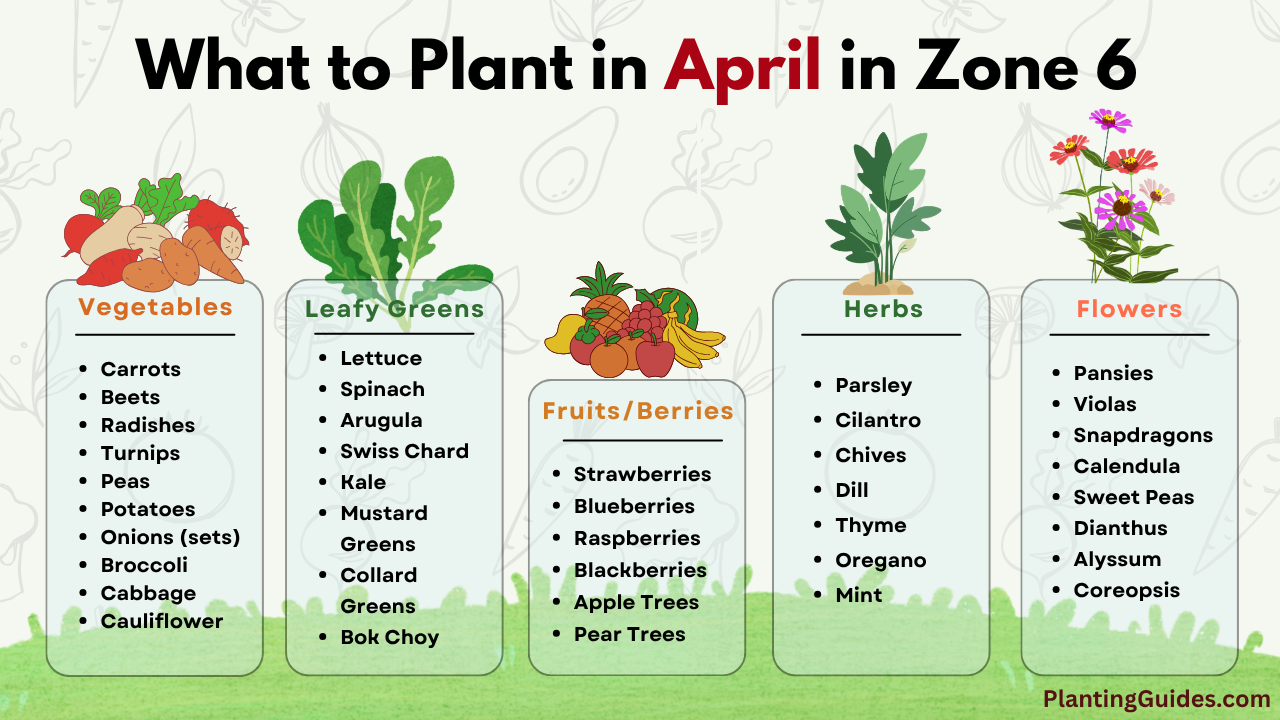
April in Zone 6 is when plants start growing properly again, and this is the time many gardeners wait for.
Actually, my uncle has been gardening in Zone 6 for years, and he understands very well how this month behaves.
So, I just keep asking him questions like, "What should I plant now?" or "Is it the right time yet?
According to him, April may look easy, but you still need to stay a bit careful. In Zone 6, the average last frost is usually between April 10 and 30, and that's exactly why you should plant the right crops at the right time.
So in this guide, I will show you what to plant in April in Zone 6 and how to grow them the right way, based on what I learned from him.
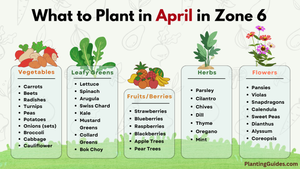
Leafy Greens
If you want quick results and zero stress, leafy greens will be the best choice for you in April.
My uncle always says, If someone plans to grow just one type of plant in April, he/ she should go for leafy greens.
| Leafy Green | Planting Method | Transplanting Time (days after sowing) | First Harvest | Variety Recommendations |
|---|---|---|---|---|
| Lettuce (leaf, romaine, butterhead) | Direct sow or transplant | 20–30 days | 30–50 days | Buttercrunch, Black Seeded Simpson, Little Gem |
| Spinach | Direct sow | Not needed | 30–40 days | Bloomsdale, Space, Tyee |
| Arugula | Direct sow | Not needed | 25–35 days | Astro, Rocket |
| Swiss Chard | Direct sow or transplant | 20–25 days | 50–60 days | Bright Lights, Fordhook Giant |
| Kale | Direct sow or transplant | 25–30 days | 45–60 days | Lacinato, Red Russian, Winterbor |
| Mustard Greens | Direct sow | Not needed | 30–40 days | Southern Giant, Red Giant |
| Collard Greens | Direct sow or transplant | 25–30 days | 55–75 days | Georgia Southern, Champion |
| Bok Choy | Direct sow | Not needed | 30–45 days | Joi Choi, Baby Choi |
If you are transplanting seedlings, only do it when they look strong and healthy. I always wait until they have about 2–3 proper leaves, otherwise they struggle after transplant.
Always water your plants in the morning, not at night. Wet leaves left overnight can cause fungal problems.
Also, keep an eye on the weather. If nights suddenly get very cold (close to freezing), just cover your plants with a light cloth to keep them safe.
I've seen this question many times on social media — people keep asking what soil is best for starting seeds.
So, to clear that confusion, I've created a simple guide on Best Soil for Starting Seedlings. You can check it out if you're interested.
Vegetables to Plant in Zone 6 in April
According to many experienced gardeners, now the soil in Zone 6 is finally perfect, and this is when most vegetables start growing their best.
| Vegetable | Planting Method | Transplanting Time | First Harvest | Variety Recommendations |
|---|---|---|---|---|
| Carrots | Direct sow | Not recommended | 60–75 days | Nantes, Danvers, Imperator |
| Beets | Direct sow | Not needed | 50–60 days | Detroit Dark Red, Chioggia |
| Radishes | Direct sow | Not needed | 20–30 days | Cherry Belle, French Breakfast |
| Turnips | Direct sow | Not needed | 40–60 days | Purple Top White Globe, Tokyo Cross |
| Peas | Direct sow | Not needed | 55–70 days | Sugar Snap, Green Arrow |
| Potatoes | Plant seed potatoes | Not needed | 80–100 days | Yukon Gold, Red Pontiac, Kennebec |
| Onions (sets) | Plant sets | Not needed | 90–110 days | Yellow Stuttgarter, Red Burgundy |
| Broccoli | Transplant | 25–35 days | 60–90 days | Calabrese, Green Magic |
| Cabbage | Transplant | 25–35 days | 70–100 days | Golden Acre, Copenhagen Market |
| Cauliflower | Transplant | 25–35 days | 70–90 days | Snowball, Amazing |
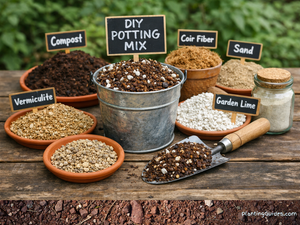
If your soil doesn't feel rich enough, mix a little compost into your soil; it makes the soil better and helps plants grow well.
If you feel confused about which fertilizer to use and how often, don't worry, I've created a simple guide on fertilizers that explains everything in an easy way.
You can check it here: Best Homemade Organic Fertilizers and Compost.
Fruits & Berries to Plant in April in Zone 6
| Fruit/Berry | Planting Method | First Harvest | Variety Recommendations | Plant Height |
|---|---|---|---|---|
| Strawberries | Plant bare-root crowns in well-drained soil | Late spring | Earliglow, Albion, Honeoye | 6–12 inches |
| Blueberries | Plant nursery-grown shrubs in acidic soil | Year 2–3 | Bluecrop, Patriot, Duke | 4–6 feet |
| Raspberries | Plant dormant canes in rows with support | Summer | Heritage, Caroline | 4–6 feet |
| Blackberries | Plant dormant canes with trellis support | Year 2 | Chester, Triple Crown | 5–8 feet |
| Apple Trees | Plant bare-root trees in deep, fertile soil | 2–4 years | Honeycrisp, Fuji | 10–20 feet |
| Pear Trees | Plant bare-root trees in well-drained soil | 2–4 years | Bartlett, Anjou | 10–20 feet |
Blueberries need acidic soil. If the soil is not acidic enough, they won't grow well, no matter what you do.
Actually, blueberries need a very specific type of fertilizer to grow properly. I've explained it in a simple way here: Best Fertilizers For Blueberries. You can check it out.
Herbs to Plant in April
April is a great time to start herbs, but here's the truth most guides don't say clearly:
Not all herbs behave the same in cool soil.
Some herbs grow well in April weather, but a few need slightly warmer soil. If you plant them the right way, they grow faster and give better results.
These are some herbs you can grow this April in Zone 6.
| Herb | Planting Method | First Harvest | Flavour | Variety Recommendations |
|---|---|---|---|---|
| Parsley | Direct sow or transplant | 70 days | Fresh, slightly peppery | Italian Flat Leaf, Curled |
| Cilantro | Direct sow | 40 days | Citrusy, bright | Santo, Slow Bolt |
| Chives | Plant clumps or sow | 60 days | Mild onion-like | Common, Garlic Chives |
| Dill | Direct sow | 40–60 days | Light, slightly tangy | Bouquet, Fernleaf |
| Thyme | Start indoors or transplant | 60 days | Earthy, slightly minty | English Thyme, Lemon Thyme |
| Oregano | Start indoors or transplant | 60 days | Strong, warm, slightly bitter | Greek Oregano, Italian |
| Mint | Plant divisions | 60 days | Cool, refreshing, sweet | Spearmint, Peppermint |
Cilantro and dill grow best if you plant them directly in soil. Don't move them later.
Basil grows well only when the soil feels warm. So, wait until late April before planting it.
Flowers to Plant in Zone 6
| Flower Name | Planting Method | Transplanting Time (Days After Sowing) | First Bloom | Perennial or Annual | Flower Color |
|---|---|---|---|---|---|
| Pansies | Transplant | 30–40 days | Spring | Annual | Purple, Yellow, White |
| Violas | Transplant | 30–40 days | Spring | Annual | Purple, Blue, Yellow |
| Snapdragons | Transplant | 35–45 days | Late spring | Annual | Pink, Red, Yellow, White |
| Calendula | Direct sow | Not needed | 45–60 days | Annual | Orange, Yellow |
| Sweet Peas | Direct sow | Not needed | Late spring | Annual | Pink, Purple, White |
| Dianthus | Transplant or sow | 30–40 days | Late spring | Perennial | Pink, Red, White |
| Alyssum | Direct sow | Not needed | 45 days | Annual | White, Purple |
| Coreopsis | Direct sow | Not needed | Summer | Perennial | Yellow, Red |
Sunlight is very important for most of the flowering plants. If your flowers don't get at least 6 hours of sunlight, don't expect good blooms.
So, try to plant your flowers in a spot where they get full sunlight for most of the day.