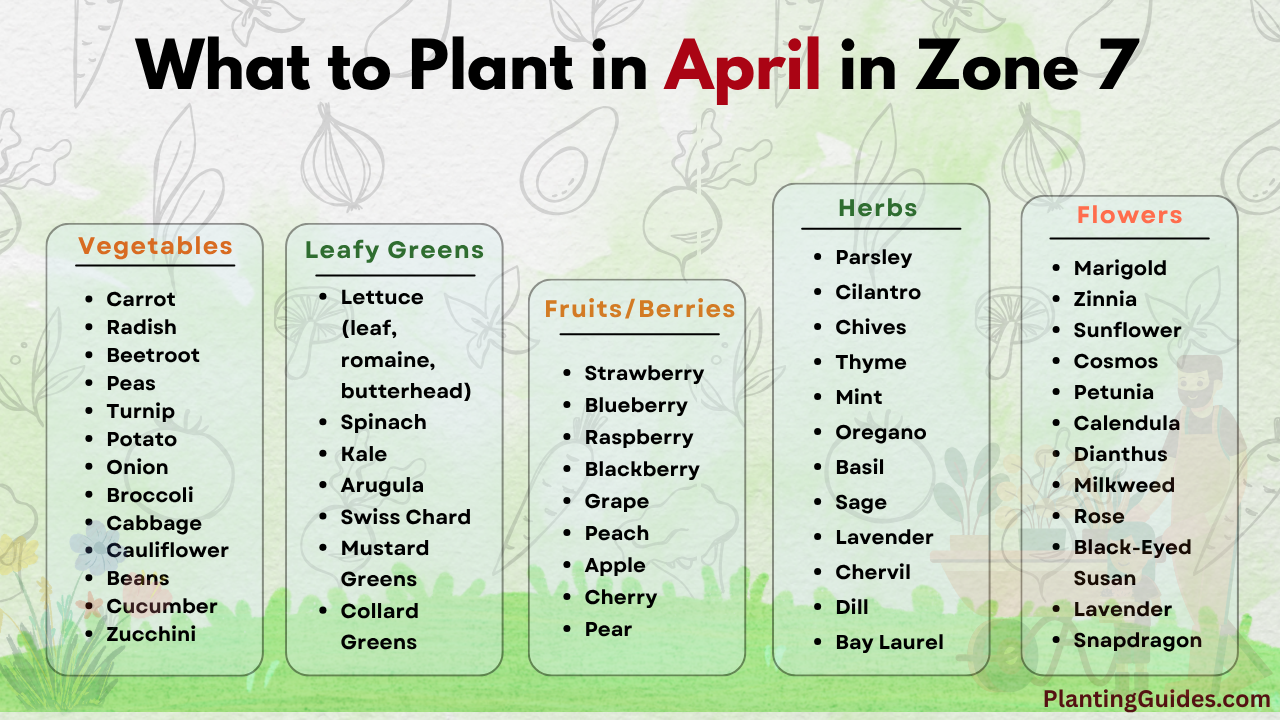
If you're gardening in Zone 7, you need to know this.
April in Zone 7 is the month when most gardeners either get ahead or fall behind without even realizing it.
The weather feels nice. The soil looks ready. And suddenly you feel like planting everything at once - honestly, we've all done that at some point.
That's exactly where things go wrong.
Because the reality is:
April in Zone 7 is not fully warm and not really cold either. It's somewhere in between.
Here, I will show you exactly what you can plant this month in Zone 7. The crops that grow well and give good results, not just leaves and disappointment.
So before you grab your seeds and start planting blindly, read this guide once — it will save you time, effort, and a lot of frustration.
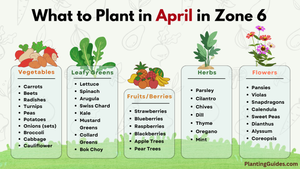
Leafy Greens to Plant in April in Zone 7
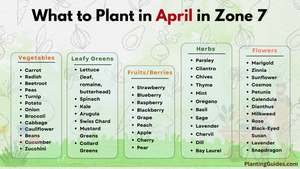
| Leafy Green | Planting Method | Transplanting Time (Days After Sowing) | First Harvest | Variety Recommendations |
|---|---|---|---|---|
| Lettuce | Direct sow / transplant | 20–25 days | 25–40 days | Black Seeded Simpson, Little Gem |
| Spinach | Direct sow | N/A | 25–35 days | Tyee, Regiment |
| Kale | Transplant / direct sow | 25–30 days | 40–60 days | Red Russian, Winterbor |
| Arugula | Direct sow | N/A | 20–30 days | Astro, Wild Rocket |
| Swiss Chard | Direct sow | N/A | 30–50 days | Fordhook Giant |
| Mustard Greens | Direct sow | N/A | 25–40 days | Mizuna, Osaka Purple |
| Collard Greens | Transplant | 25–35 days | 50–70 days | Champion, Vates |
If the weather suddenly gets too hot, give your plants partial shade, especially during the afternoon, so the plants don't get stressed or burn.
I have also created a detailed guide on best soil for starting seedlings. You can check that out if you are planning to start your plants from seed.
Vegetables to Plant in Zone 7 in April
Plant these vegetables this month in your garden, but only if you are gardening in Zone 7, and thank me in the comment section.
| Vegetable | Planting Method | Transplanting Time (Days After Sowing) | First Harvest | Variety Recommendations |
|---|---|---|---|---|
| Carrot | Sow seeds directly in the ground | N/A | 60–80 days | Scarlet Nantes, Danvers 126 |
| Radish | Sow seeds directly in the ground | N/A | 20–30 days | French Breakfast, White Icicle |
| Beetroot | Sow seeds directly in the ground | N/A | 50–70 days | Chioggia, Cylindra |
| Peas | Sow seeds directly in the ground | N/A | 60–70 days | Little Marvel, Wando |
| Turnip | Sow seeds directly in the ground | N/A | 40–60 days | Tokyo Cross, Hakurei |
| Potato | Plant seed tubers directly in soil | N/A | 70–100 days | Red Pontiac, Kennebec |
| Onion | Plant sets or transplant seedlings | 30–40 days | 90–120 days | Red Creole, Candy |
| Broccoli | Transplant seedlings | 25–35 days | 60–90 days | Green Magic |
| Cabbage | Transplant seedlings | 25–35 days | 70–100 days | Early Jersey Wakefield |
| Cauliflower | Transplant seedlings | 25–35 days | 70–100 days | Amazing |
| Beans | Sow seeds directly in the ground | N/A | 50–60 days | Provider, Contender |
| Cucumber | Sow seeds directly in the ground | N/A | 50–70 days | Marketmore 76 |
| Zucchini | Sow seeds directly in the ground | N/A | 45–60 days | Cocozelle |
If you are planning to grow warm crops like beans or cucumbers, check the soil temperature first. It should be at least 15–18°C (60–65°F). If the soil is still cold, seeds may rot instead of growing.
Don't worry if you don't have a thermometer — just touch the soil. If it doesn't feel cold to your hand, you’re good to plant.
Fruits and Berries
| Fruit/Berry | Planting Method | First Harvest | Variety Recommendations |
|---|---|---|---|
| Strawberry | Transplant rooted runners into well-drained soil | 60–90 days | Albion, Chandler |
| Blueberry | Transplant nursery-grown bush into acidic soil | 1–2 years | Duke, Legacy |
| Raspberry | Plant dormant canes in loose, fertile soil | 1 year | Heritage, Caroline |
| Blackberry | Plant thornless canes in well-drained soil | 1 year | Chester |
| Grape | Plant bare-root or potted vines with support | 2–3 years | Concord, Reliance |
| Peach | Plant grafted bare-root tree in full sun | 2–3 years | Redhaven, Elberta |
| Apple | Plant grafted bare-root tree with spacing | 2–4 years | Fuji, Gala |
| Cherry | Plant grafted tree in well-drained soil | 3–4 years | Bing, Stella |
| Pear | Plant grafted tree in fertile, well-drained soil | 3–5 years | Bartlett, Anjou |
Don't expect fruits immediately — focus on root growth first. Water deeply but not daily.
One thing most gardeners ignore is mulch. If you add mulch around the base of your plants, it helps keep the roots cool, holds moisture, and reduces stress when temperatures start rising.
If you are planning to grow berries like blueberries, soil quality is everything. I have explained it properly in my guide on the best fertilizers for blueberries, so you don't make any mistakes.
Flowers to Plant in Zone 7 in April
Actually, flowers don't grow well in hard soil, so always try to keep the soil soft and make sure water drains out easily.
| Flower Name | Planting Method | First Bloom | Perennial or Annual | Flower Color |
|---|---|---|---|---|
| Marigold | Direct sow / transplant | 40–60 days | Annual | Yellow, Orange |
| Zinnia | Direct sow | 50–70 days | Annual | Red, Pink, Yellow, White |
| Sunflower | Direct sow | 60–90 days | Annual | Yellow |
| Cosmos | Direct sow | 50–70 days | Annual | Pink, White, Purple |
| Petunia | Transplant | 50–70 days | Annual | Purple, Pink, White |
| Calendula | Direct sow | 40–60 days | Annual | Yellow, Orange |
| Dianthus | Transplant | 60–90 days | Perennial | Pink, Red, White |
| Milkweed | Direct sow / transplant | 60–90 days | Perennial | Orange, Pink |
| Rose | Transplant | 60–90 days | Perennial | Red, Pink, White, Yellow |
| Black-Eyed Susan | Direct sow / transplant | 60–90 days | Perennial | Yellow, Brown center |
| Lavender | Transplant | 80–100 days | Perennial | Purple |
| Snapdragon | Transplant | 60–80 days | Annual | Pink, Yellow, White |
Don't use too much fertilizer, or the plant will grow more leaves instead of flowers.
If you're not sure what fertilizer to use and when to use it, I have already made a detailed guide on the best homemade organic fertilizers you can try.
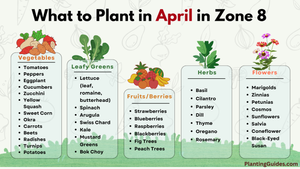
Herbs to Plant in April in Zone 8
| Herb | Planting Method | First Harvest | Variety Recommendations | Flavour |
|---|---|---|---|---|
| Parsley | Direct sow seeds / transplant seedlings | 40–60 days | Italian Flat Leaf | Fresh, mild, slightly peppery |
| Cilantro | Direct sow seeds | 30–40 days | Santo, Slow Bolt | Bright, citrusy |
| Chives | Transplant seedlings / divide clumps | 30 days | Common | Mild onion |
| Thyme | Transplant seedlings / stem cuttings | 60 days | Lemon Thyme | Earthy, slightly minty |
| Mint | Transplant cuttings / divide runners | 30–50 days | Spearmint, Chocolate Mint | Cool, refreshing |
| Oregano | Transplant seedlings / stem cuttings | 60 days | Greek | Strong, slightly bitter |
| Basil | Transplant seedlings | 30–50 days | Genovese, Thai | Sweet, aromatic |
| Sage | Transplant seedlings / stem cuttings | 60–75 days | Common, Purple | Warm, slightly bitter |
| Lavender | Transplant seedlings / stem cuttings | 90–120 days | English, French | Floral, slightly sweet |
| Chervil | Direct sow seeds | 40–60 days | Curled | Mild, slightly anise-like |
| Dill | Direct sow seeds | 40–60 days | Bouquet, Fernleaf | Fresh, slightly tangy |
| Bay Laurel | Transplant nursery plant / stem cuttings | 1–2 years | Sweet Bay | Strong, slightly bitter, aromatic |
If you have gone through this article, you probably noticed that I included Lavender in both the flower and herb sections.
That's because lavender is actually both. You can grow it for its beautiful flowers, and you can also use it in herbal remedies like herbal tea, essential oils, etc.