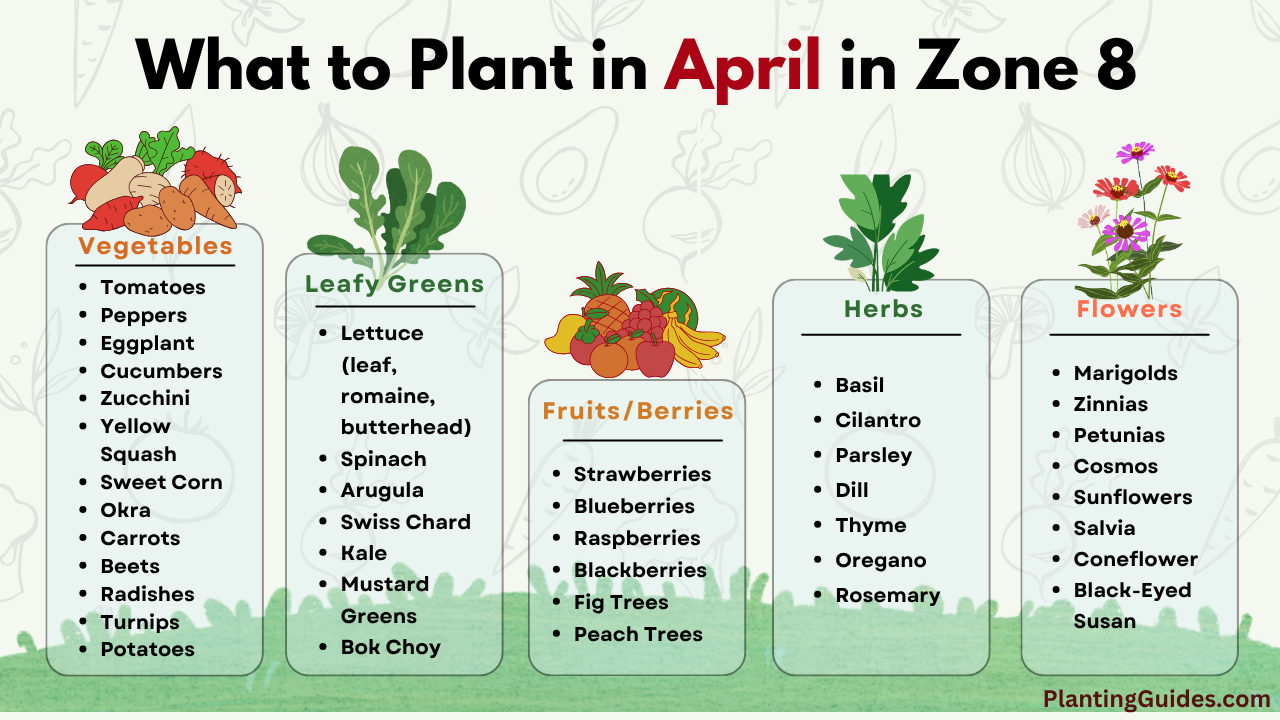
If you've been following my articles, you've probably noticed this already — I often say some months are confusing for gardening. And honestly, that's true.
But April in Zone 8 is not a confusing month.
It's not a risky month either.
Trust me, it's actually your best chance to set up your entire garden properly.
I've seen this happen so many times — people either wait too long to plant or overthink what to plant, and then the summer heat comes and ruins everything.
If you plant at the right time in April, your plants won't just grow — they'll grow faster and stronger without any struggle.
So just go through this article, and by the end of it, all your confusion will be clear, and you'll know exactly what to plant and how to plant it.
Leafy Greens to Plant in April in Zone 8
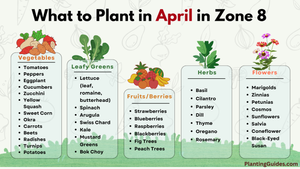
Just take a look at the table below. It shows what to plant, how to plant it, when to transplant (if needed), and how quickly you can harvest.
If you follow this, you'll have fresh greens ready in just a few weeks.
| Leafy Green | Planting Method | Transplanting Time | First Harvest | Variety Recommendations |
|---|---|---|---|---|
| Lettuce (leaf, romaine, butterhead) | Direct sow or transplant | 15–20 days | 30–45 days | Buttercrunch, Jericho, Little Gem |
| Spinach | Direct sow | Not needed | 30–40 days | Bloomsdale, Space |
| Arugula | Direct sow | Not needed | 25–30 days | Astro, Rocket |
| Swiss Chard | Direct sow or transplant | 20–25 days | 50–60 days | Bright Lights, Fordhook Giant |
| Kale | Direct sow or transplant | 20–25 days | 45–60 days | Lacinato, Red Russian |
| Mustard Greens | Direct sow | Not needed | 30–40 days | Southern Giant, Red Giant |
| Bok Choy | Direct sow | Not needed | 30–45 days | Joi Choi, Baby Choi |
These plants grow quickly, don't need much care, and give quick harvests.
If you want the best results, try planting these leafy greens in early April.
Water your leafy greens a little but regularly, and don't plant them too close — if you give them enough space, they grow much better.
Vegetables to Plant in April
April in Zone 8 is a great time to plant summer vegetables because the soil is warm and the weather is stable.
This condition actually helps them settle quickly, grow faster, and become strong plants.
| Vegetable | Planting Method | Transplanting Time (After Sowing) | First Harvest | Variety Recommendations |
|---|---|---|---|---|
| Tomatoes | Transplant seedlings | 25–35 days | 60–85 days | Celebrity, Roma, Cherokee Purple |
| Peppers | Transplant seedlings | 30–45 days | 70–90 days | California Wonder, Jalapeño, Anaheim |
| Eggplant | Transplant seedlings | 30–45 days | 70–90 days | Black Beauty, Ichiban |
| Cucumbers | Direct sow or transplant | 15–20 days | 50–65 days | Marketmore, Straight Eight |
| Zucchini | Direct sow | Not needed | 45–55 days | Black Beauty, Dunja |
| Yellow Squash | Direct sow | Not needed | 45–55 days | Early Prolific, Straightneck |
| Beans (bush & pole) | Direct sow | Not needed | 50–60 days | Blue Lake, Kentucky Wonder |
| Sweet Corn | Direct sow | Not needed | 70–90 days | Silver Queen, Honey Select |
| Okra | Direct sow | 20–25 days | 50–65 days | Clemson Spineless, Emerald |
Always try to plant your vegetables in the early morning or in the evening; they settle better when the weather is cooler.
Soil temperature should be around 60-70°F.
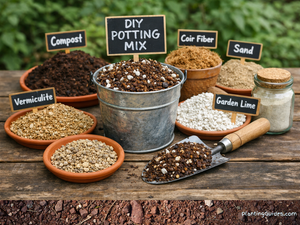
Before you plant, add some compost to the soil so the plants get good nutrients from the start.
Root Vegetables
This month in Zone 8, the soil is just perfect for root crops - it's warm enough for good growth and soft enough so they grow in a nice shape.
| Vegetable | Planting Method | Soil Type | First Harvest | Variety Recommendations |
|---|---|---|---|---|
| Carrots | Direct sow ½ inch deep, 2–3 inches apart | Loose, sandy, well-drained soil | 60–75 days | Nantes, Danvers, Scarlet Nantes |
| Beets | Direct sow ½ inch deep, 3–4 inches apart | Well-drained, slightly fertile soil | 50–60 days | Detroit Dark Red, Chioggia |
| Radishes | Direct sow ½ inch deep, 1–2 inches apart | Light, well-drained soil | 20–25 days | Cherry Belle, French Breakfast |
| Turnips | Direct sow ½ inch deep, 4–6 inches apart | Loose, fertile, well-drained soil | 40–55 days | Purple Top, Tokyo Cross |
| Potatoes | Plant seed potatoes 2–3 inches deep, 12 inches apart | Loose, rich, well-drained soil | 80–100 days | Yukon Gold, Red Pontiac |
Before planting, take a little time to prepare the soil. Remove any stones and break up hard clumps so the roots can grow straight and smooth.
Also, keep the soil a little damp, not too dry, and not too wet. So, seeds can grow easily.
Fruits & Berries
If you're not a beginner, you already know that most fruit plants need around 6–8 hours of sunlight every day.
So, choose a sunny spot where they get enough sunlight.
| Fruit/Berry | Planting Method | Soil Type | First Harvest | Variety Recommendations |
|---|---|---|---|---|
| Strawberries | Plant crowns or plants | Well-drained, fertile soil | Late spring | Chandler, Albion, Seascape |
| Blueberries | Plant shrubs | Acidic, well-drained soil | Year 2–3 | Bluecrop, Sunshine Blue |
| Raspberries | Plant canes | Well-drained, rich soil | Summer | Heritage, Caroline |
| Blackberries | Plant canes | Well-drained, loamy soil | Year 2 | Ouachita, Apache |
| Fig Trees | Plant young trees | Well-drained, sandy loam | 1–2 years | Brown Turkey, Celeste |
| Peach Trees | Plant trees | Well-drained, sandy soil | 2–3 years | Elberta, Redhaven |
Once you plant them, don't just forget about them. The early stage of care is very important.
Water them regularly, but don't give too much. Keep the soil a little damp.
If you're growing blueberries, check out this guide, Best Fertilizers for Blueberries - it shows exactly which fertilizers work best for blueberry plants.
Also, add some mulch around the plants. It helps hold moisture in the soil and protects the roots.
Herbs to Plant in Zone 6
Actually, herbs are the easiest plants you can grow in Zone 8.
Let me tell you why they are so easy.
They need very little care, grow quickly, and even if you miss watering sometimes or make small mistakes, they still grow well.
| Herb | Planting Method | First Harvest | Variety Recommendations | Flavour |
|---|---|---|---|---|
| Basil | Direct sow outdoors or transplant seedlings | 30–50 days | Genovese, Sweet Basil | Sweet, slightly peppery |
| Cilantro | Direct sow seeds in soil | 40 days | Santo, Slow Bolt | Fresh, citrusy |
| Parsley | Direct sow seeds or transplant seedlings | 70 days | Italian Flat Leaf, Curled | Mild, fresh, slightly peppery |
| Dill | Direct sow seeds in soil | 40–60 days | Bouquet, Fernleaf | Light, grassy, slightly tangy |
| Thyme | Transplant nursery seedlings | 60 days | English Thyme, Lemon Thyme | Earthy, slightly minty |
| Oregano | Transplant nursery seedlings | 60 days | Greek Oregano, Italian | Strong, warm, slightly bitter |
| Rosemary | Transplant nursery seedlings | 60 days | Tuscan Blue, Arp | Woody, pine-like, slightly peppery |
Don't plant Basil too early, it needs warm weather to grow well. So, wait until it feels properly warm before planting.
I have mentioned nursery seedlings for thyme, oregano, and rosemary because they grow very slowly from seeds and sometimes don't even sprout. So it's better to start with healthy, established nursery seedlings.
Flowers to Plant in April in Zone 6
We don't plant flowers in our garden just to make it look beautiful. They actually help our garden by attracting bees and other pollinators.
Plant these flowers in your garden this month, and I'm sure you'll thank me later in the comment section.
| Flower Name | Planting Method | Flower Color | First Bloom | Perennial or Annual |
|---|---|---|---|---|
| Marigolds | Direct sow outdoors or transplant seedlings | Yellow, orange | Late spring | Annual |
| Zinnias | Direct sow seeds outdoors | Red, pink, yellow, orange | 60 days | Annual |
| Petunias | Transplant nursery seedlings | Purple, pink, white, red | Spring | Annual |
| Cosmos | Direct sow seeds outdoors | Pink, white, red | 60–70 days | Annual |
| Sunflowers | Direct sow seeds outdoors | Yellow | 70–90 days | Annual |
| Salvia | Transplant seedlings or rooted cuttings | Red, blue, purple | Late spring | Perennial/Annual |
| Coneflower | Transplant nursery plants or divisions | Purple, pink, white | Summer | Perennial |
| Black-Eyed Susan | Direct sow seeds outdoors | Yellow with dark center | Summer | Perennial |
Don't just trust the air, check the soil too. If it feels warm, then it's a good time to plant.
Also, mix some compost into the soil before planting so your plants get a good start.
I have also created a simple guide on Best Home-Made Organic Fertilizers and Compost. You can check it out if you want to feed your plants naturally.