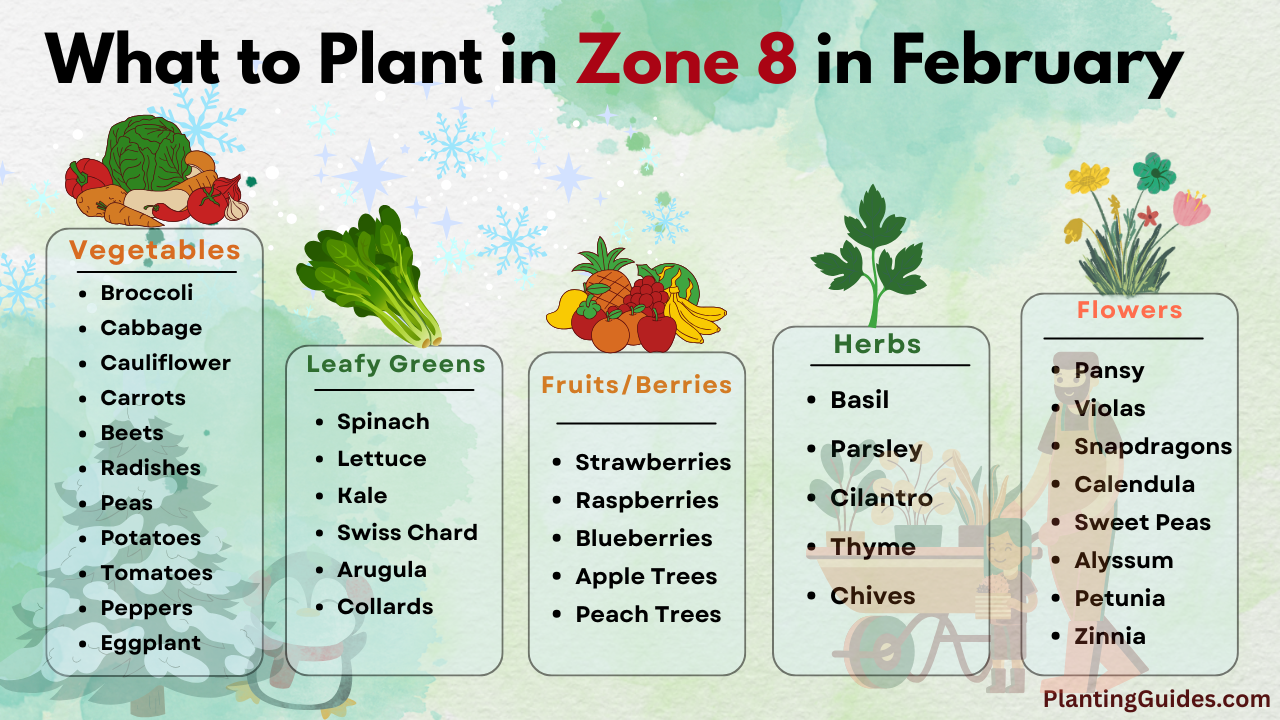
If you live in Zone 8, February is actually a pretty good month for gardening — even if the weather is still a little confusing. Some days feel nice and comfortable, like spring is coming. Also, some nights are still cold enough to remind you winter is not fully gone yet.
And honestly, February is the month where smart planting gives you a big advantage. If you plant the right crops now, you can harvest earlier and grow stronger plants before the summer heat comes.
This guide gives you simple and useful advice that works in every home garden. Every plant listed here truly grows well in Zone 8 when planted or started in February.
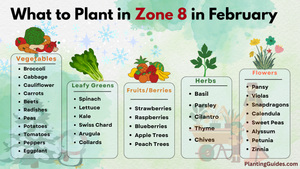
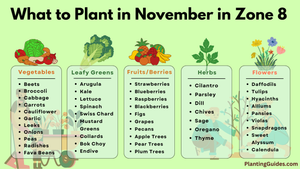
Vegetables to Plant in February in Zone 8
I always choose the fast-maturing varieties so they are done before the heat comes. I usually prefer sowing seeds directly in the ground under row cover this month, but you can also start them indoors.
One thing to keep in mind:
If you start your seedlings indoors, be sure to harden them off gradually before moving them outside.
| Vegetable | Planting Method | Transplanting Time (if started indoors) | First Harvest | Variety Suggestions |
|---|---|---|---|---|
| Broccoli | Start indoors early Feb or direct sow late Feb | Mid-March to early April | 60–75 days (April–May) | Packman, Green Magic, Calabrese |
| Cabbage | Direct sow or start indoors | Early-mid April | 60–90 days (May–June) | Early Jersey Wakefield, Red Express |
| Cauliflower | Start indoors early-mid Feb | Mid-April | 60–80 days (May) | Snowball, Amazing |
| Carrots | Direct sow mid-late Feb | N/A | 60–80 days (April–May) | Nantes, Danvers, Scarlet Nantes |
| Beets | Direct sow early-mid Feb | N/A | 50–70 days (April onward) | Detroit Dark Red, Chioggia |
| Radishes | Direct sow anytime Feb | N/A | 20–30 days (March–April) | Cherry Belle, French Breakfast |
| Peas | Direct sow early-mid Feb | N/A | 55–70 days (April–May) | Sugar Snap, Oregon Sugar Pod II |
| Potatoes | Plant seed potatoes mid-late Feb | N/A | 90–120 days (May–June) | Yukon Gold, Red Pontiac |
| Tomatoes | Start indoors early Feb | Mid-April | 60–85 days (June–July) | Roma, Cherry, Beefsteak |
| Peppers | Start indoors early Feb | Mid-April | 60–90 days (June–July) | Bell, Jalapeno, Cayenne |
| Eggplant | Start indoors early Feb | Mid-April | 65–85 days (June–July) | Black Beauty, Rosa Bianca |
Peas grow well in cool weather but don't like the heat, so plant them as early as possible. Root vegetables get sweeter after a little frost, so light cold isn't a problem.
Leafy Greens to Plant in Zone 8
| Leafy Green | Planting Method | Transplanting Time | First Harvest | Variety Recommendations |
|---|---|---|---|---|
| Spinach | Direct sow or start indoors | N/A or early April | 40–50 days (March–April) | "Bloomsdale, Space" |
| Lettuce | Direct sow or start indoors | Early April | 40–60 days (March onward) | "Black Seeded Simpson, Buttercrunch" |
| Kale | Direct sow mid-Feb | N/A | 50–60 days (April+) | "Lacinato, Red Russian" |
| Swiss Chard | Direct sow mid-late Feb | N/A | 50–60 days (April+) | "Bright Lights, Fordhook Giant" |
| Arugula | Direct sow anytime Feb | N/A | 30–40 days | "Astro, Rocket" |
| Collards | Direct sow | N/A | 60–80 days | Georgia Southern |
Frost is usually light this month in Zone 8, but you should protect your seedlings with row covers if temperatures drop below 0°C.
Fruits and Berries
| Fruit/Berry | Planting Method | Soil Type | First Harvest | Variety Recommendations | Winter Care |
|---|---|---|---|---|---|
| Strawberries | Plant bare-root crowns in soil | Well-drained, fertile soil | Late Spring | Albion, Seascape | Cover with straw mulch |
| Raspberries | Plant bare-root canes in soil | Well-drained loamy soil | Summer | Heritage, Caroline | Mulch base and prune old canes |
| Blueberries | Plant bare-root bushes in acidic soil | Acidic, well-drained soil | Summer | Bluecrop, Duke | Mulch with pine bark or needles |
| Apple Trees | Plant bare-root dormant trees in ground | Well-drained loamy soil | 2–3 Years | Fuji, Gala, Honeycrisp | Mulch root zone and protect trunk |
| Peach Trees | Plant bare-root dormant trees in ground | Sandy loam, well-drained soil | 2–3 Years | Elberta, Redhaven | Mulch roots and protect from frost |
Plant only when the soil is soft enough to dig easily. For dormant trees, prune them now before they start growing new leaves and branches.
Herbs to Plant in Zone 8 in February
February is a great month to grow herbs like basil, parsley, and cilantro, either indoors or outside in the garden under protection.
| Herb | Planting Method | First Harvest | Variety Recommendations | Flavour |
|---|---|---|---|---|
| Basil | Start indoors | Late May | Genovese, Sweet Basil | Sweet, aromatic |
| Parsley | Direct sow or indoors | May | Italian Flat Leaf | Fresh, slightly bitter |
| Cilantro | Direct sow | April–May | Santo, Calypso | Citrusy, fresh |
| Thyme | Start indoors or plant outside if mild | Late Spring | English Thyme | Earthy, slightly minty |
| Chives | Start indoors | April–May | Common Chives | Mild onion-like |
Herbs need at least 6 hours of direct sunlight daily to grow well and have good taste.
Don't use too much fertilizer. If you do so, herbs will grow fast, but the leaves will become weak and lose flavor.
If you start planting herbs properly in February in Zone 8, you can harvest fresh herbs much earlier than most gardeners.
Flowers to Start in February
| Flower Name | Planting Method | Soil Type | First Bloom | Perennial or Annual |
|---|---|---|---|---|
| Pansy | Direct sow or transplant seedlings | Well-drained, fertile soil | Early Spring | Annual |
| Violas | Direct sow or transplant | Well-drained, moist soil | Early Spring | Annual |
| Snapdragons | Direct sow or transplant | Well-drained, rich soil | Spring | Annual (Perennial in mild climates) |
| Calendula | Direct sow outdoors | Average, well-drained soil | Early Spring | Annual |
| Sweet Peas | Direct sow outdoors | Rich, well-drained soil | Spring | Annual |
| Alyssum | Direct sow or start indoors | Light, well-drained soil | Spring | Annual |
| Petunia | Start indoors | Light, fertile, well-drained soil | Late Spring | Annual |
| Zinnia | Start indoors (late Feb optional) | Well-drained, moderately fertile soil | Late Spring | Annual |
I always plant outdoors only the flowers that can survive light frost, like pansies, violas, and snapdragons.
If temperatures fall below -2°C (28°F), cover your young seedlings with row covers, plastic tunnels, or light cloth to protect them from frost damage.