One thing I have noticed.
As soon as May starts, people get excited and plant everything they can.
I think you all know that feeling when you plant everything with hope, thinking this time everything will grow perfectly. But after a few weeks, some plants grow really well while others just struggle, and you don't even know why.
Trust me, it's not bad luck. It just means you planted at the wrong time or picked the wrong plants.
Even if the weather feels perfect, every plant still has its own comfort zone. Some plants love this month, and some don't.
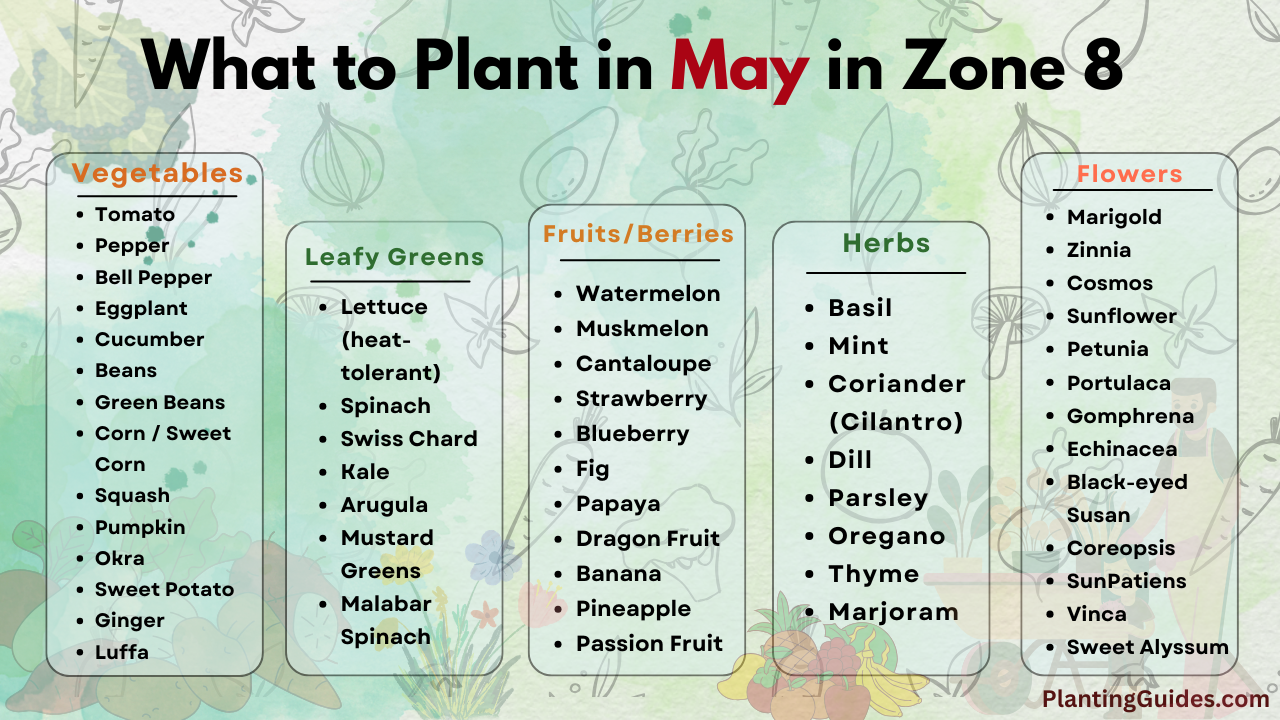
So in this guide, I'll show you the plants that actually grow well in May in Zone 8, not just stay alive but grow quickly, stay strong, and give you good results.
Leafy Greens to Plant in May – Zone 8
Leafy greens grow fast, but May heat can make them bolt early, so choose heat-tolerant varieties.
Here are some leafy greens, along with their varieties, that you can plant this month in Zone 8.
| Leafy Green | Planting Method | Transplanting Time | First Harvest | Variety Recommendations |
|---|---|---|---|---|
| Lettuce (heat-tolerant) | Direct sow / transplant | 2–3 weeks | 30–50 days | Buttercrunch, Summer Crisp |
| Spinach (only early May) | Direct sow | Not recommended | 30–40 days | Bloomsdale, Space |
| Swiss Chard | Direct sow | Not required | 40–60 days | Bright Lights, Fordhook |
| Kale | Direct sow / transplant | 2–3 weeks | 50–70 days | Lacinato, Red Russian |
| Arugula | Direct sow | Not required | 20–30 days | Rocket, Astro |
| Mustard Greens | Direct sow | Not required | 25–40 days | Green Wave, Red Giant |
| Malabar Spinach (heat lover) | Direct sow | Not required | 50–70 days | Red Stem, Green |
Keep the soil slightly moist, not too dry or too wet. You can add a layer of mulch around the base of your plant to keep the soil temperature stable.
If the temperature suddenly gets too hot, give your plants partial shade in the afternoon using a cloth or shade net. Place potted plants where they get some protection from direct sunlight.
Vegetables to Plant in May in Zone 8
This is the best time for warm-season vegetables. They love heat and grow fast now.
Make sure the soil feels warm when you touch it, not cool or cold. If it still feels cold, wait a few more days before planting.
| Vegetable | Planting Method | Transplanting Time | First Harvest | Variety Recommendations |
|---|---|---|---|---|
| Tomato | Start indoors & transplant | 25–35 days after seeding | 60–80 days | Roma, Beefsteak, Cherry |
| Pepper (Chilli/Capsicum) | Start indoors & transplant | 30–40 days after seeding | 60–90 days | Bell, Jalapeño |
| Eggplant (Brinjal) | Start indoors & transplant | 30–45 days after seeding | 70–90 days | Black Beauty, Long Purple |
| Cucumber | Direct sow | N/A | 50–70 days | Marketmore, Lemon |
| Beans (Bush & Pole) | Direct sow | N/A | 50–60 days | Blue Lake, Kentucky Wonder |
| Corn | Direct sow | N/A | 70–100 days | Golden Bantam, Sweet |
| Squash (Zucchini) | Direct sow | N/A | 50–70 days | Black Beauty, Yellow |
| Pumpkin | Direct sow | N/A | 90–120 days | Sugar Pie, Jack O Lantern |
| Okra | Direct sow | N/A | 50–65 days | Clemson Spineless |
| Sweet Potato (slips) | Plant slips | Not Required | 90–120 days | Beauregard, Jewel |
| Ginger | Direct plant | N/A | 180–240 days | Local, Organic Ginger |
| Bell Pepper | Start indoors & transplant | 30–40 days after seeding | 60–90 days | California Wonder, Yolo Wonder |
| Luffa | Direct sow | N/A | 70–100 days | Sponge Gourd, Ridge Luffa |
| Sweet Corn | Direct sow | N/A | 70–100 days | Golden Bantam, Sweet |
| Green Beans | Direct sow | N/A | 50–60 days | Blue Lake, Kentucky Wonder |
Give your plants enough space and full sunlight. In May, plants grow fast, and if they are too close, airflow becomes poor, which can cause fungal diseases.
If you are starting seedlings, I have created a detailed guide on the best soil for starting seedlings. You can check that out if you want.
I have also created a complete guide on organic fertilizers and compost. You can check that out from here: Best Homemade Organic Fertilizers and Compost.
One more thing to keep in mind is sudden heat. By the end of May, the temperature can rise very quickly. If that happens, young plants can get stressed, so give them a little shade in the afternoon.
Flowers to Plant in Zone 8 in May
| Flower Name | Planting Method | First Bloom | Flower Color | Perennial or Annual |
|---|---|---|---|---|
| Marigold | Direct sow in soil / transplant seedlings | 45–60 days | Yellow, Orange | Annual |
| Zinnia | Direct sow in soil | 50–70 days | Red, Pink, Yellow | Annual |
| Cosmos | Direct sow in soil | 60–80 days | Pink, White | Annual |
| Sunflower | Direct sow in soil | 70–100 days | Yellow | Annual |
| Petunia | Transplant nursery seedlings | 40–60 days | Purple, Pink, White | Annual |
| Portulaca | Direct sow in soil | 45–60 days | Mixed colors | Annual |
| Gomphrena | Direct sow in soil | 60–80 days | Purple, Pink | Annual |
| Echinacea (Coneflower) | Transplant seedlings | 80–100 days | Pink, Purple | Perennial |
| Black-eyed Susan | Direct sow in soil / transplant seedlings | 70–90 days | Yellow with dark center | Perennial |
| Coreopsis | Direct sow in soil / transplant seedlings | 60–80 days | Yellow, Red | Perennial |
| SunPatiens | Transplant nursery plants | 50–70 days | Red, Pink, White | Annual |
| Vinca | Transplant nursery seedlings | 45–60 days | Pink, White, Purple | Annual |
I always plant marigolds near my vegetables, like tomatoes and peppers. It really helps reduce soil pests and keeps bugs away from my plants.
I have also created a detailed guide on organic pest control methods. You can check that out from here: Best Organic Pest Control Methods.
Sweet Alyssum brings helpful tiny insects into your garden that eat aphids. This can be your free pest control.
Herbs to Plant in Zone 8
| Herb | Planting Method | First Harvest | Variety Recommendations | Flavour |
|---|---|---|---|---|
| Basil | Direct sow in warm soil or transplant seedlings | 30–40 days | Sweet, Thai | Sweet, slightly spicy |
| Mint | Plant from cuttings or nursery transplant | 30–50 days | Spearmint, Peppermint | Cool, refreshing |
| Coriander (Cilantro) | Direct sow seeds in soil (does not transplant well) | 25–35 days | Slow Bolt | Fresh, citrusy |
| Dill | Direct sow seeds in final growing spot | 40–50 days | Bouquet | Light, slightly tangy |
| Parsley | Direct sow seeds or transplant seedlings | 60–80 days | Curly, Italian | Mild, earthy |
| Oregano | Transplant young plants or rooted cuttings | 50–70 days | Greek | Strong, slightly bitter |
| Thyme | Transplant seedlings or grow from cuttings | 60–90 days | English, Lemon Thyme | Warm, earthy |
| Marjoram | Transplant seedlings or grow from cuttings | 50–70 days | Sweet Marjoram, Knotted Marjoram | Mild, slightly sweet |
Herbs grow really fast this month in Zone 8. Most of them don't need much care, just regular watering, good sunlight, and they grow well on their own.
Basil is very sensitive. Even a small drop in temperature can slow its growth. So plant it only when nights stay warm and steady.
I always pinch off the top of basil, oregano, and marjoram as soon as they start growing. From my experience, this simple step makes a big difference. The plants grow bushy and strong instead of tall and weak.
Fruits & Berries to Plant in May – Zone 8
May is a great time to plant both fast-growing fruits and long-term fruit plants that will give you harvests for years.
I have listed some fruits and berries in the table below that you can grow in Zone 8 this month.
| Fruit / Berry | Planting Method | Soil Type | First Harvest | Variety Recommendations |
|---|---|---|---|---|
| Watermelon | Direct sow seeds outdoors | Well-drained sandy loam | 80–100 days | Sugar Baby, Crimson Sweet |
| Muskmelon | Direct sow seeds outdoors | Sandy loam, well-drained | 70–90 days | Honeydew, Cantaloupe |
| Cantaloupe | Direct sow seeds outdoors | Sandy loam, well-drained | 70–90 days | Honeydew, Cantaloupe |
| Strawberry | Transplant runners or nursery plants | Loamy, rich, well-drained | 60–90 days | Albion, Chandler |
| Blueberry | Transplant | Acidic, well-drained (pH 4.5–5.5) | Next season | Bluecrop, Rabbiteye |
| Fig | Plant nursery sapling or cutting | Well-drained loamy soil | Next season | Brown Turkey, Celeste |
| Papaya (warm areas) | Direct sow seeds or transplant seedlings | Light, well-drained sandy soil | 6–9 months | Red Lady |
| Dragon Fruit | Plant stem cuttings with support | Sandy, well-drained, slightly acidic | 1–2 years | White Flesh |
| Banana | Plant suckers or tissue-cultured plants | Rich, well-drained loamy soil | 9–12 months | Dwarf Cavendish, Robusta |
| Pineapple | Plant crown or side suckers | Sandy, well-drained soil | 18–24 months | Queen, Smooth Cayenne |
| Passion Fruit | Grow from seeds or semi-hardwood cuttings | Well-drained, slightly acidic soil | 12–18 months | Purple, Yellow |
Use a 2–3 inch layer of mulch around fruit plants to keep the roots cool and hold moisture, but keep it a little away from the stem.
If you are growing blueberries, I have created a detailed guide on the best fertilizers for blueberries. You can check it out here: Best Fertilizers for Blueberries.
Make sure your plants get full sunlight every day, at least 6 to 8 hours, so they grow properly and give better fruits.