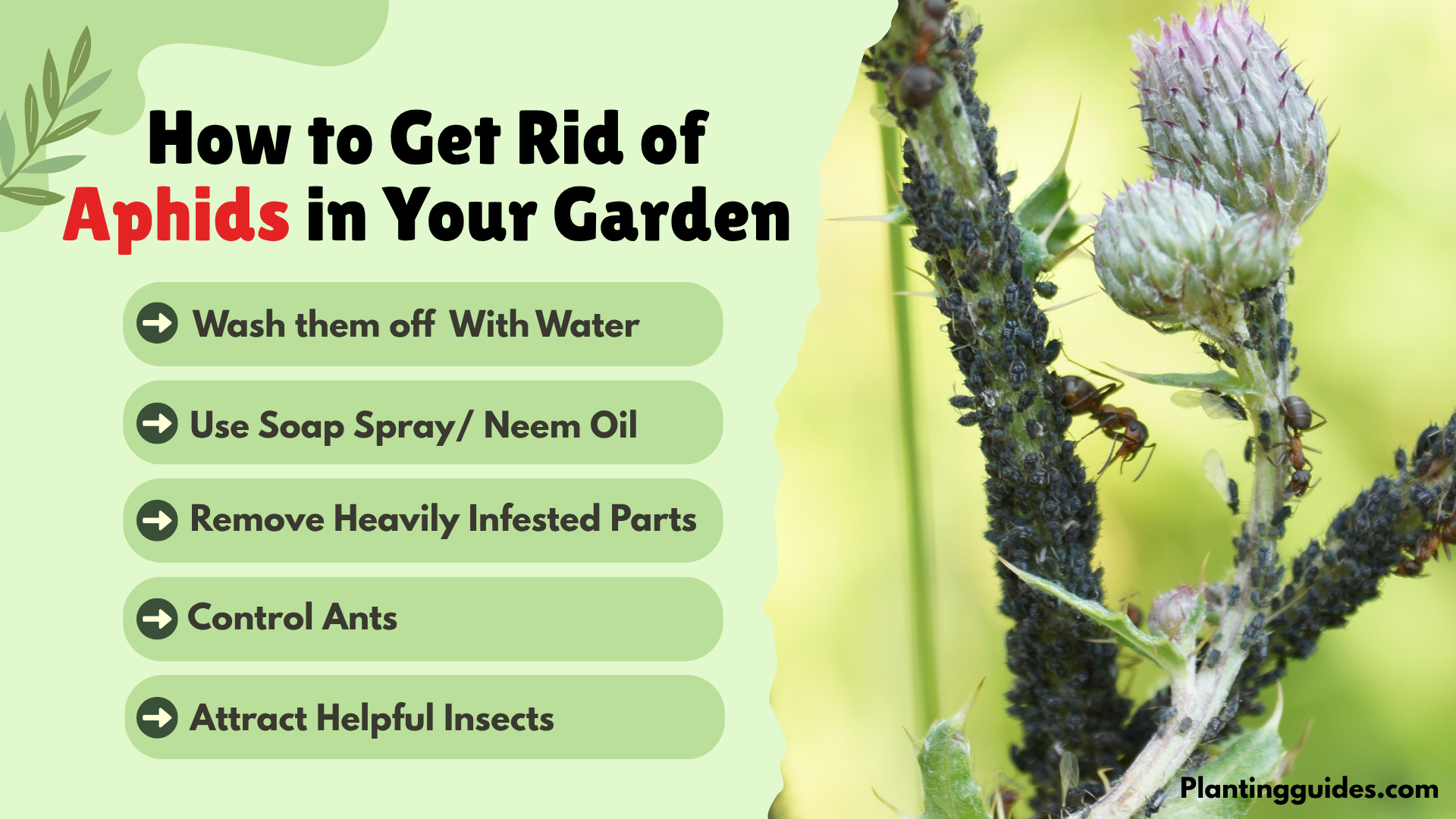
Aphids are not just one single insect. The word "aphids" actually refers to a whole group of tiny insects from the Aphididae family. They are extremely small, usually about 1 to 3 mm long and soft-bodied, so soft that you can easily crush them with your fingers.
You will see many types of aphids in the garden, like black bean aphids, green peach aphids, cabbage aphids, potato aphids, rose aphids, woolly apple aphids, etc. These are the most common aphids that we usually notice on plants. Even though they look different in color, they all behave in almost the same way and damage plants by sucking sap from new leaves, buds, and stems.
So don't worry too much about identifying the exact type. You don't need different treatments for each one – the control methods are almost the same for all types of aphids.
I have dealt with aphids in my garden many times, and one thing I have clearly noticed is that they always go for the soft, new parts of the plant. Whenever I gave too much nitrogen fertilizer or when the plant started growing fast, aphids showed up almost immediately.
They actually don't care about the old, hard leaves. They mainly stick to new leaves, buds, and soft stems because that's where they can feed easily.
First, Understand How Aphids Damage Your Plants
Aphids suck sap from your plants, which slowly makes them weak from the inside. Because of this, leaves start curling, buds don't grow properly, and the plant looks slow and unhealthy. They also release a sticky substance where they feed. This attracts ants and can also lead to black fungus later.
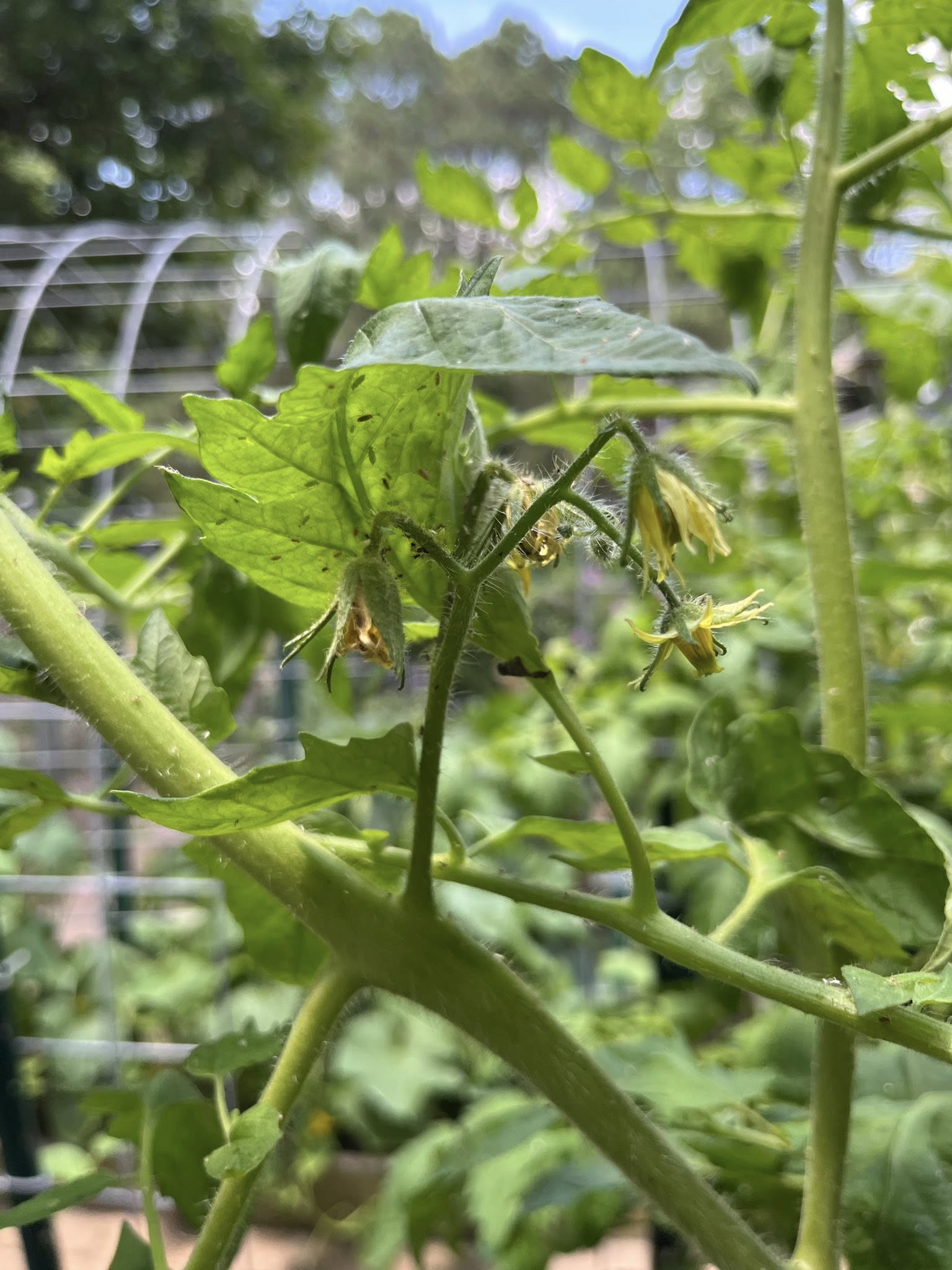
We all know that aphids spread very fast, but did you ever think about how they do it?
Let me tell you the real fact behind it. Aphids don't always need a male aphid to reproduce. Most of the time, the female gives birth on her own.
And you know what's the craziest part? Even newborn aphids already carry baby aphids inside them. Just one aphid can produce 5–6 or even more babies in a single day. That's why they spread so fast and suddenly take over your plants.
As aphids multiply very fast, it's important to take action as soon as you notice them before they spread everywhere. So, in this guide, I will show you the exact methods that worked best for me to control aphids in my garden.
First thing I did – Washed them off With Water
This was the very first method I tried, and it gave me instant results.
I used a water spray on them and simply washed them away. It cleared a lot of aphids instantly, and the plant looked much cleaner within minutes.
Keep in mind, the water pressure should not be too strong, because it can damage your plants, especially if you are spraying on soft stems and buds.
Make sure to spray under the leaves because that's where most aphids hide.
Now, I will tell you the simple truth. I completely washed them off and cleaned my plants, but after 2–3 days, they started coming back again.
So, I realized this method works well to reduce them quickly, but it's only the first step, not a complete solution.
Then I Used Soap Spray
After using the water spray, I noticed aphids were still coming back. So I decided to use a soap solution properly.
I mixed 1–2 teaspoons of liquid dish soap in 1 liter of water and sprayed it directly on the aphids. I properly covered all the problem areas, especially the undersides of leaves, soft stems, and buds, where they hide.
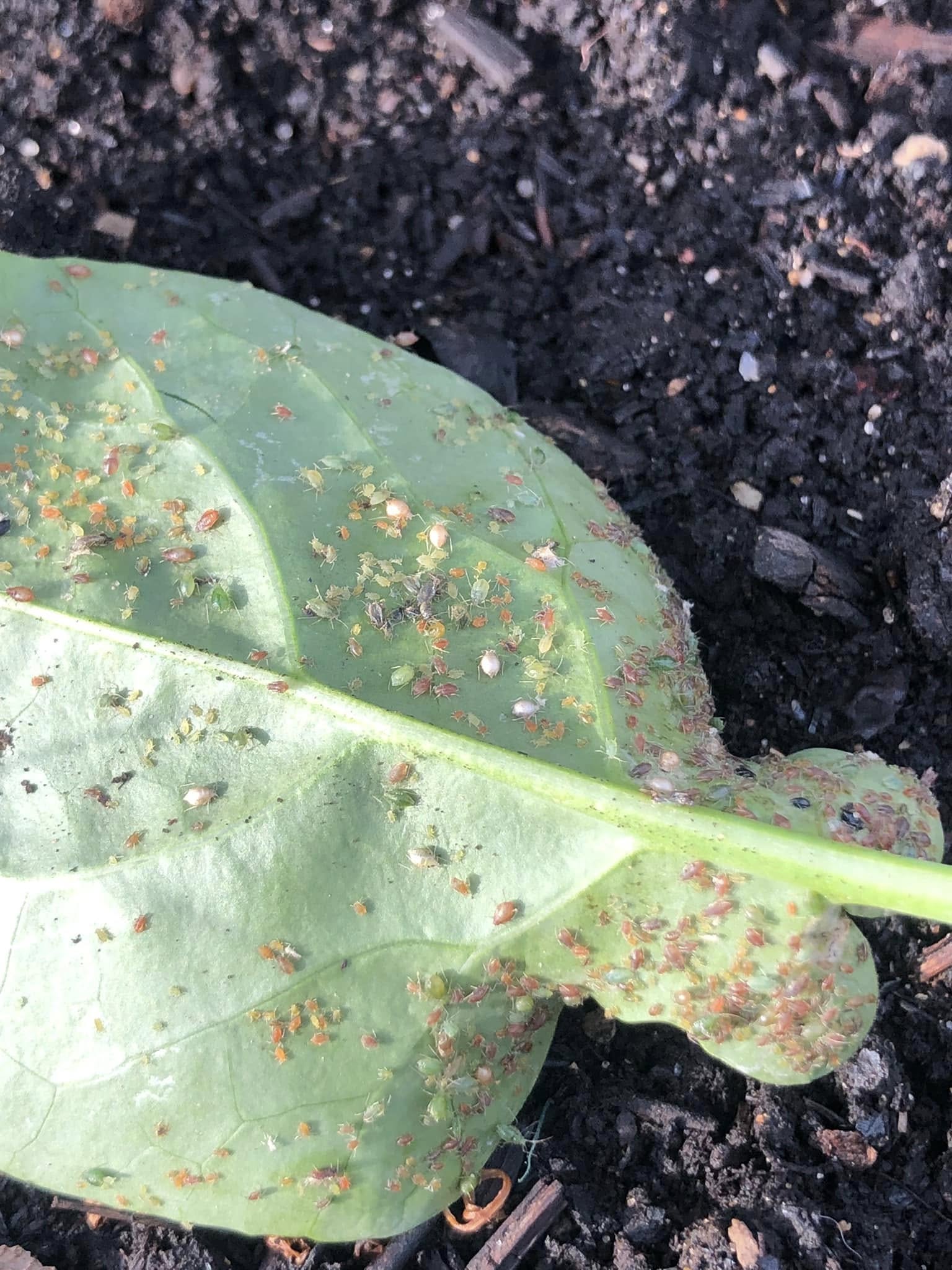
I recommend you first test the spray on one leaf and wait for a few hours. If you don't see any damage, then you can safely spray the whole plant.
You should repeat this every 3 – 4 days, and also spray again after rain because rain can wash it away.
Trust me, I'm telling this from my personal experience. If you use it properly, you'll see changes within a few hours. Repeat it 2–3 times, and the problem will be gone.
Neem Oil Spray
Neem oil or harsh pesticides are not always necessary to manage aphids because aphids are actually easy to control if you catch them early.
In most cases, if you stay consistent with water spray and soap spray, that alone is enough to control aphids.
In my case, I used neem oil because I still saw a few aphids on my hibiscus and chilli plants, especially on the new leaves and buds, even after using water and soap spray. They kept coming back, so I needed something stronger to control them properly. That's when I started using neem oil to control them properly. You can also use it if you notice aphids returning again and again.
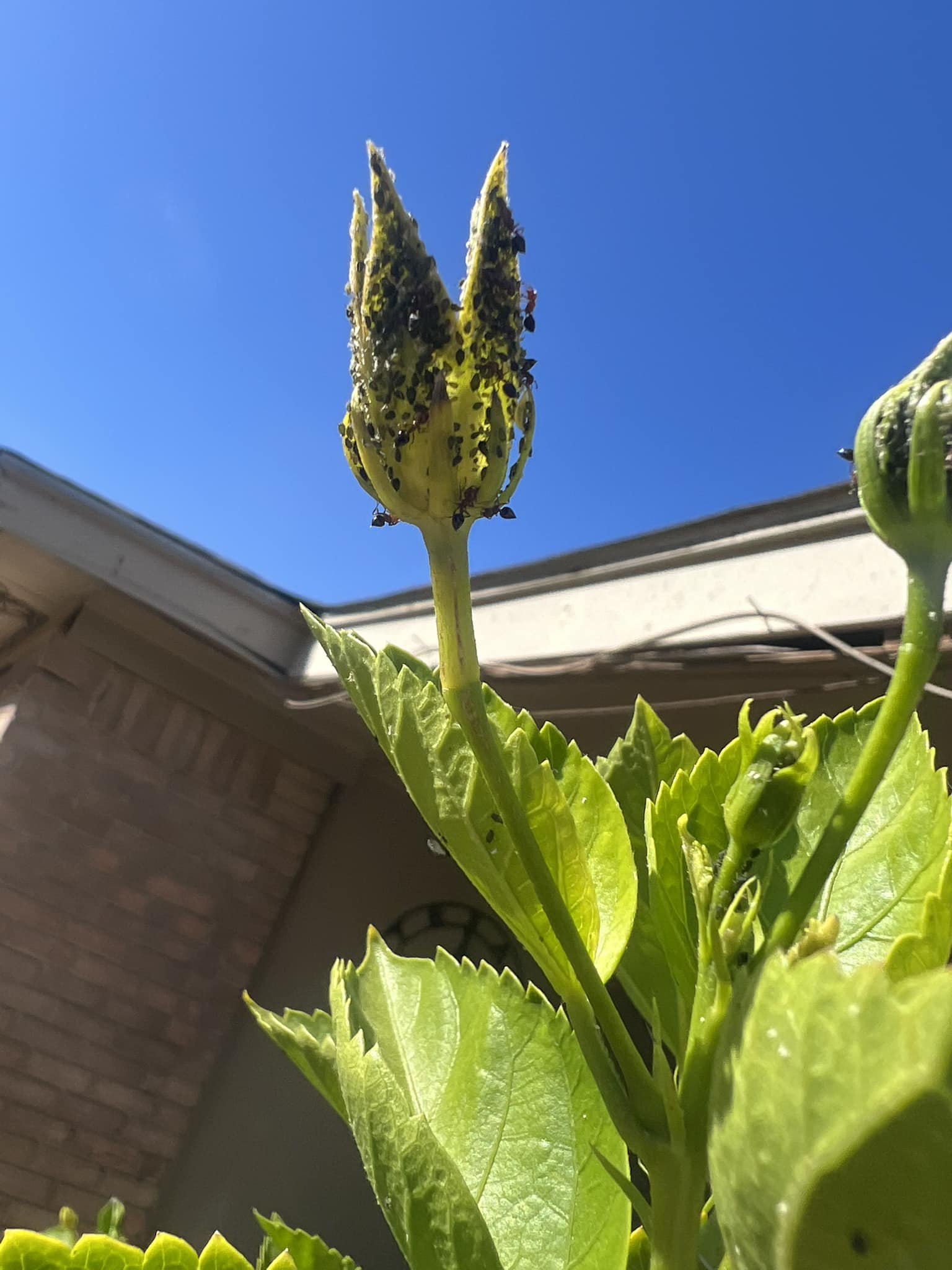
Here's exactly what I did:
- I mixed the neem oil by following the instructions written on the bottle, usually about 2–3 ml in 1 liter of water.
- I added a few drops of liquid dish soap so it mixes well and sticks to the leaves.
- Then I sprayed the entire plant carefully.
Too much neem oil can harm the plant and also affect helpful insects in the garden. So, I didn't use neem oil every day. I sprayed it once every 5–7 days when aphids were still there.
If you take action early and use simple methods, you can control aphids easily without jumping straight to neem oil or harsh pesticides.
I Removed Heavily Infested Parts
I know this sounds crazy, but trust me, I had no choice – I had to do it.
One day, I saw my Rose stems and buds fully covered with aphids, especially the new growth. There were so many that trying to clean them didn't make sense.
So, I didn't waste time spraying anything on them. I just cut off those heavily infested parts and threw them away. This is an instant solution and stops aphids from spreading to the rest of the plant.
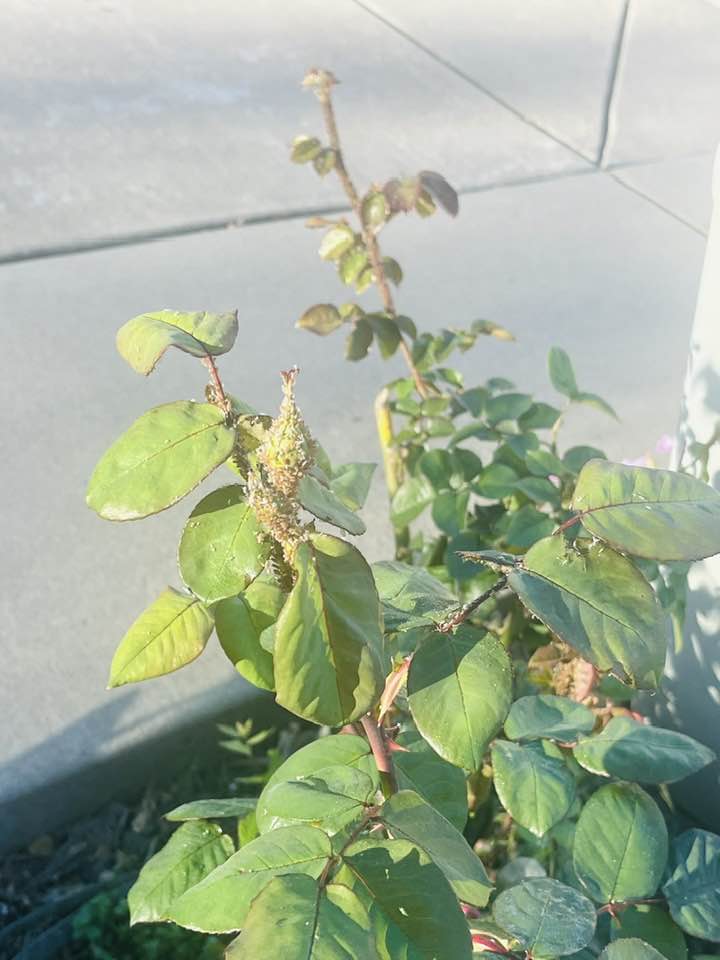
I used a clean pair of scissors and trimmed about 2–3 inches below the affected area, not just where the aphids were visible.
After I cut off the badly affected parts, I sprayed a soap solution over the whole plant to clear out any remaining aphids.
Control Ants
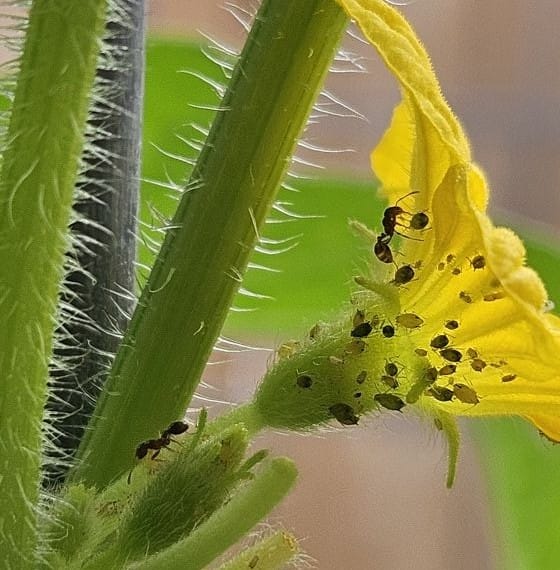
I noticed a simple thing – wherever there were aphids, ants were always there too, and that made me curious why.
Aphids actually leave a sweet, sticky liquid called honeydew when they feed. Ants are strongly attracted to it and come to eat it regularly.
In return, ants protect the aphids from insects that eat aphids, like ladybugs and lacewings. They can even carry aphids to other parts of the plant, which helps them spread faster.
So, it's important to control ants.
I have created a detailed guide on how you can control ants in your garden. You can check that out from here: How to get rid of ants organically. But keep in mind, not all ant species are harmful.
Attract Helpful Insects
After all this, I started focusing on prevention so the aphids wouldn't come back again.
I planted a few companion plants like marigolds, dill, and fennel in my garden. After a few weeks, I started noticing ladybugs and other small beneficial insects coming into the garden.
These insects don't harm your plants. They eat aphids and help control them naturally.
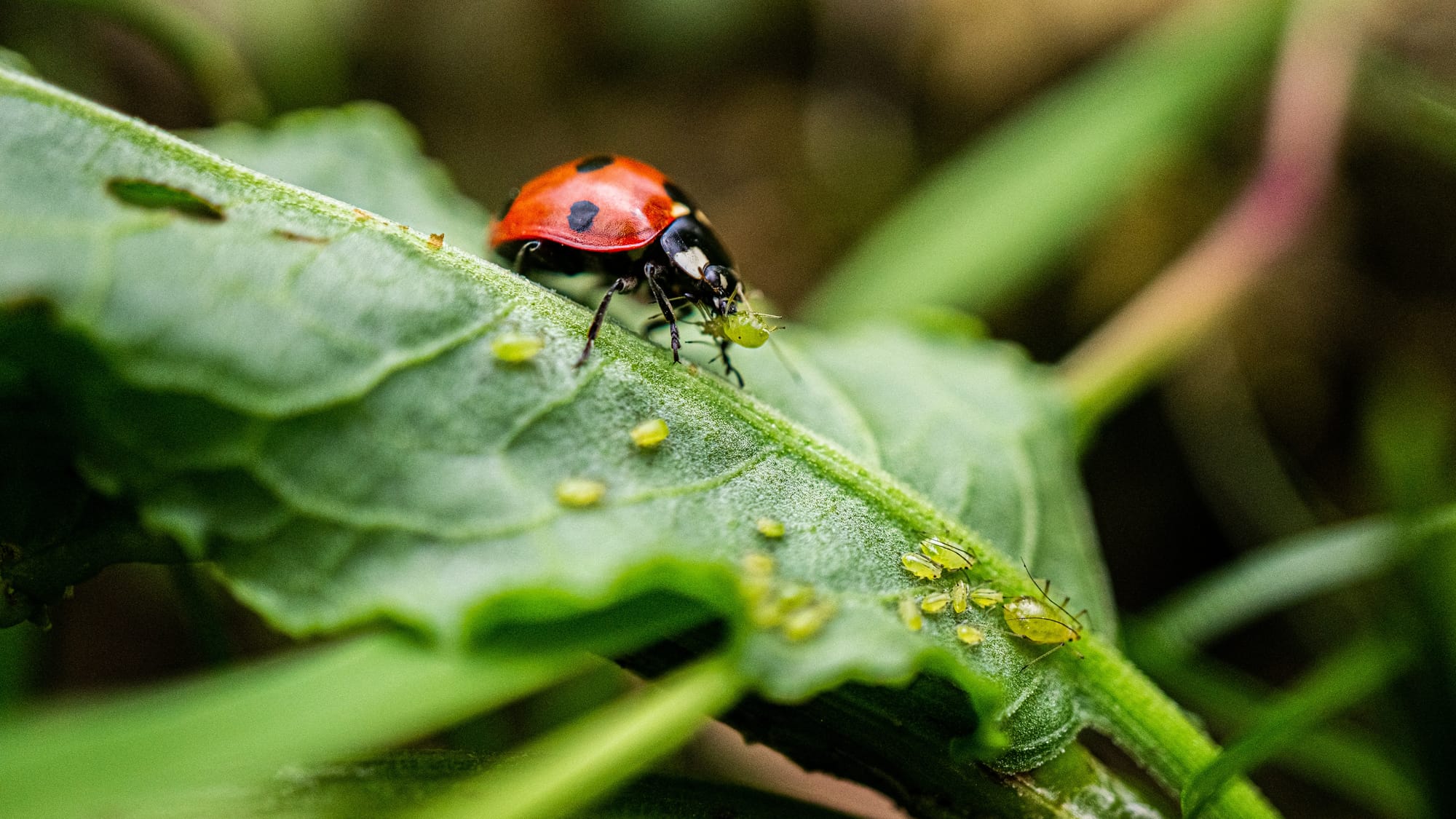
A single ladybug can eat dozens of aphids in a day. So, you don't have to remove them again and again, as these insects will do the work for you.
It won't work fast like water or soap spray. It will take some time, but once these insects settle in, they will slowly reduce the aphids and make the problem much easier to manage.
Don't waste money buying ladybugs. In most cases, if your garden has the right plants and a safe environment, ladybugs and other helpful insects will come naturally on their own.