Get Rid of Japanese Beetles in the Garden Organically
By Parvez Akhtar Pasha | Jun 26, 2026
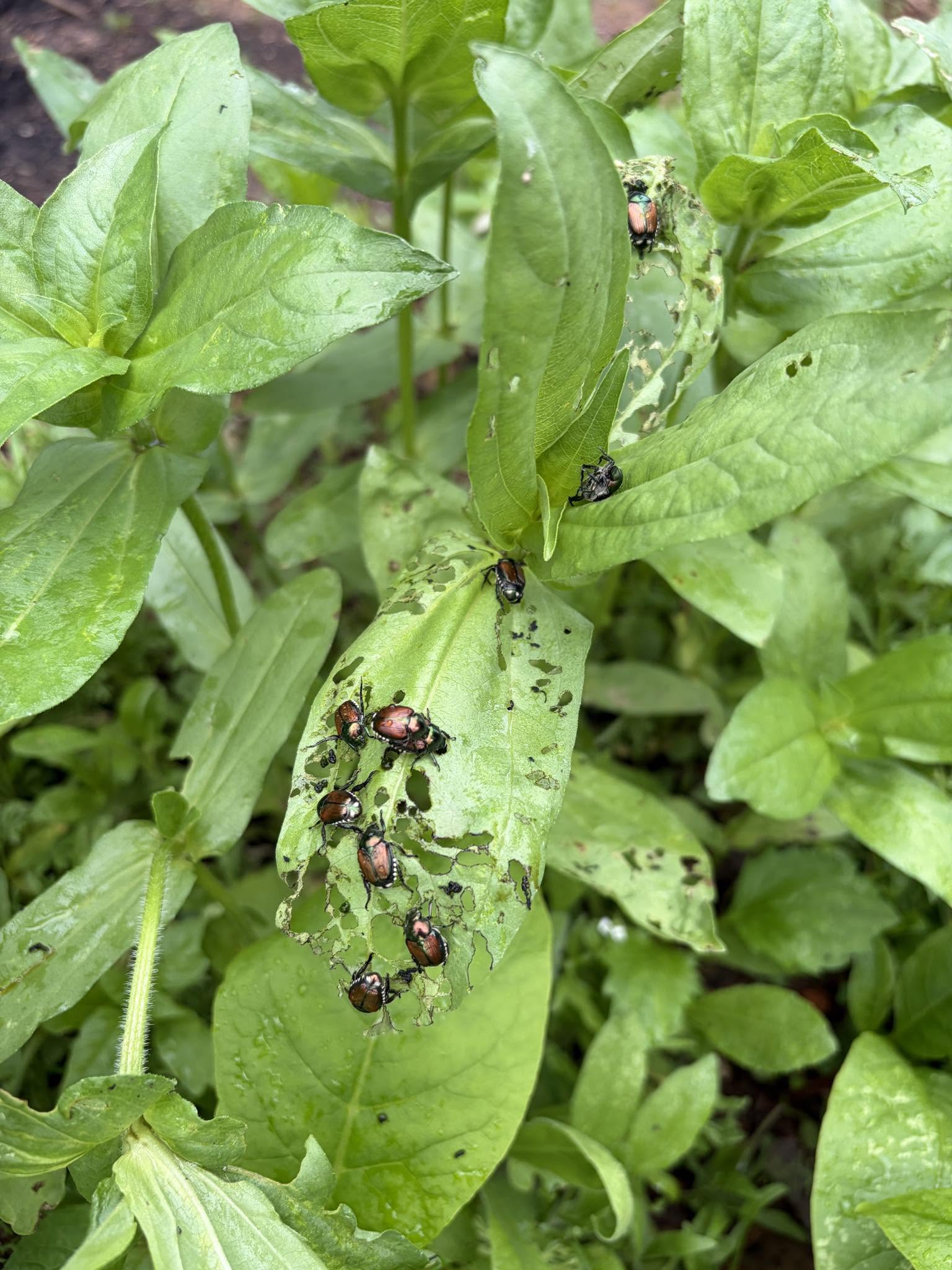
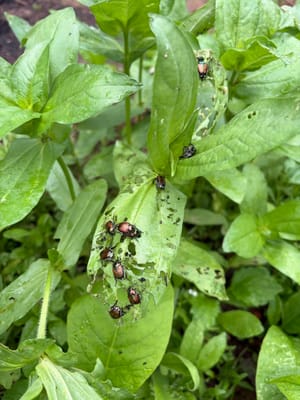
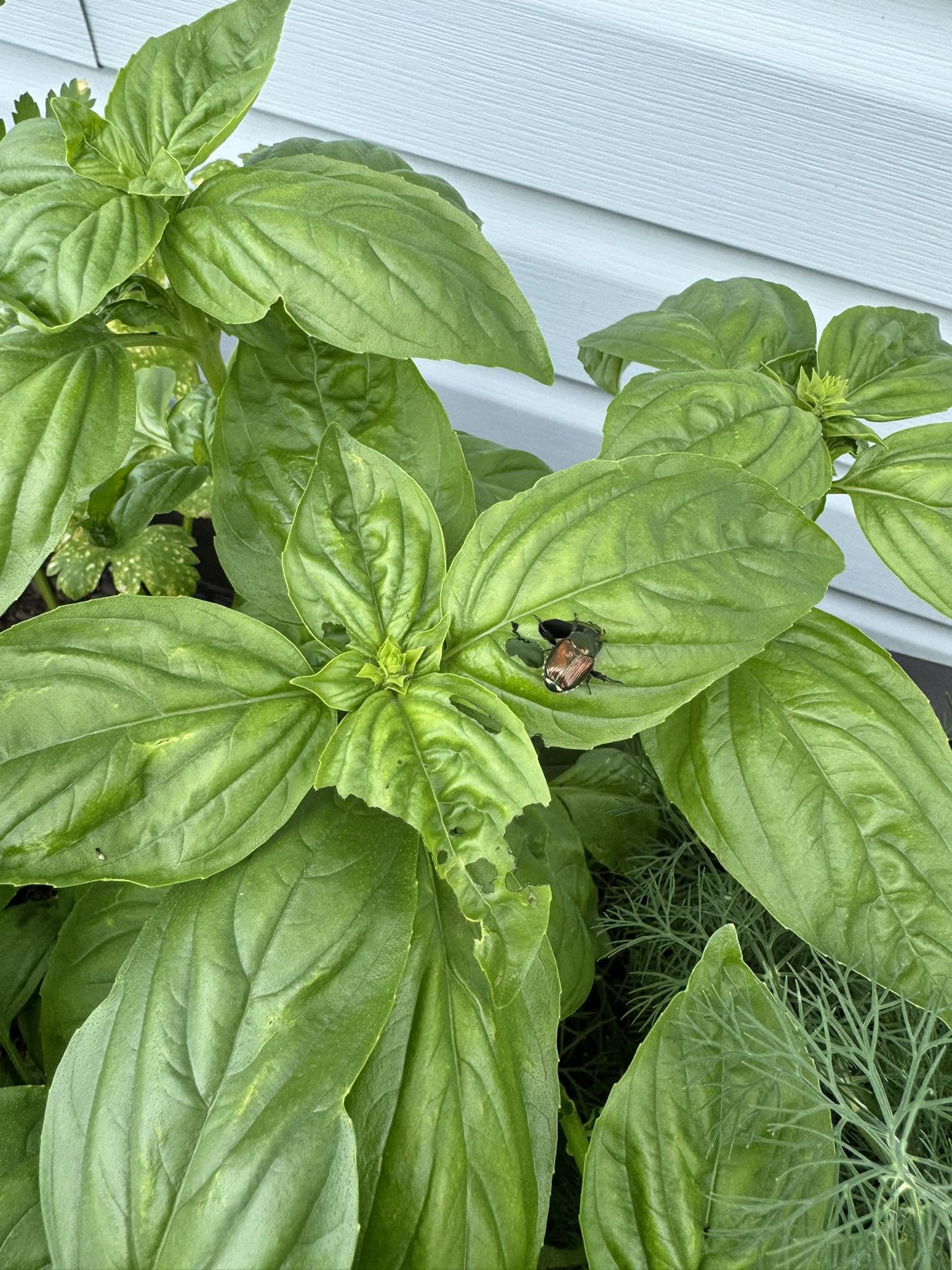
I have dealt with Japanese beetles in my garden a few years ago on a zinnia plant near my garden fence. They had eaten most of the flower petals and left the leaves looking like skeletons.
At first, I thought some caterpillars were eating the leaves. But when I took a closer look, I saw many shiny green and bronze beetles eating the leaves and flowers. That's when I fought with the Japanese beetles for the first time.
You can easily recognize adult Japanese beetles. They have shiny green bodies with bronze-colored wings and small white spots along their sides. They actually look quite beautiful when you first see them. But trust me, once they start feeding, they can become one of the most damaging pests in the garden.
If you have never dealt with Japanese beetles before, don't underestimate them. Trust me, these beetles can destroy a healthy-looking plant almost overnight.
In this guide, I'll share the exact organic methods that experienced gardeners use to protect their flowers, vegetables, fruit plants, and other plants from Japanese beetles.
Life Cycle of Japanese Beetles
If you truly want to eliminate Japanese beetles, you must understand their life cycle.
By interrupting the life cycle at the grub stage, you can significantly reduce the number of adult Japanese beetles.
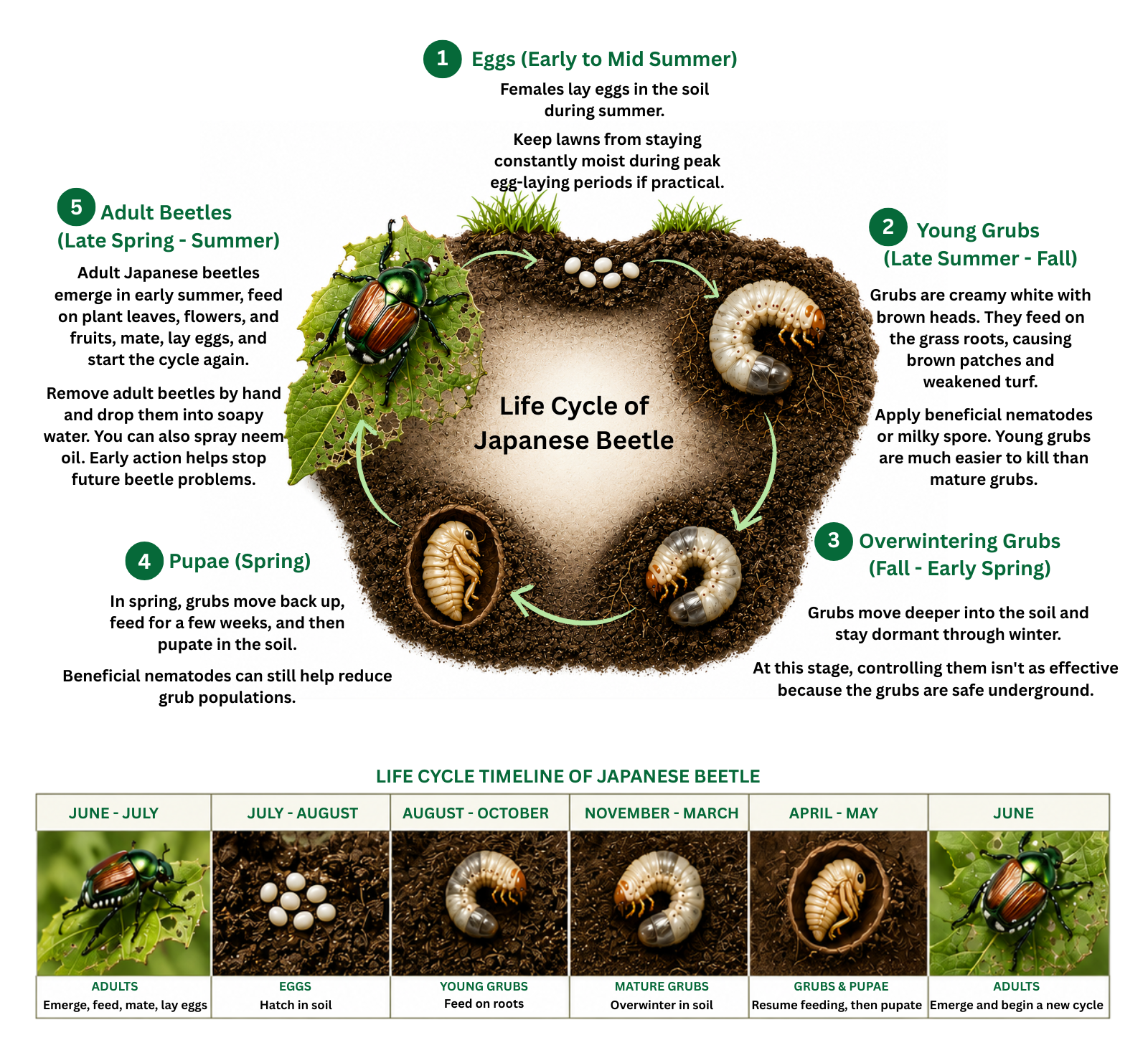
Japanese beetles spend about 10 months underground as grubs and only 4–6 weeks above ground as adults.
Now, let's dive into the practical solutions and control methods that can help you eliminate Japanese beetles from your garden.
Hand Picking – The Most Effective Method
It might sound too simple, but this method is one of the most effective ways to keep their numbers under control.
To be honest, I didn't believe it at first. I thought there was no way removing a few beetles by hand could make much of a difference. But after doing it regularly, I quickly saw the results.
The best time to remove Japanese beetles is early in the morning. They are much less active when it's cool outside, and don't fly away as easily.
I usually take a small bucket of water mixed with a little dish soap and walk around the garden. Whenever I spot beetles on my plants, I gently knock them into the bucket.
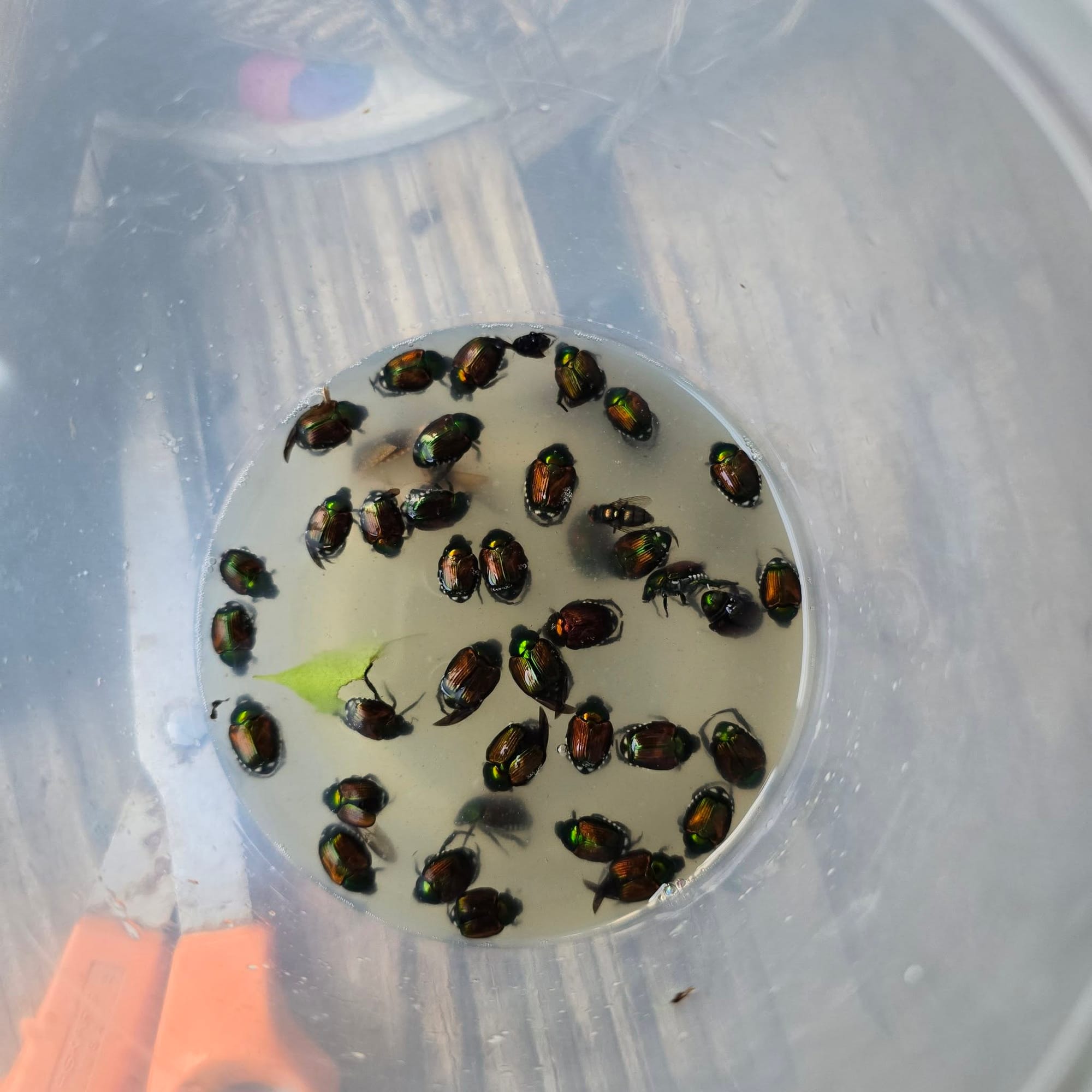
The dish soap breaks the surface tension of the water, so the beetles cannot float on top. Once they fall into the bucket, they sink into the water and are unable to climb back out or fly away.
At first, you may only see a few Japanese beetles on a plant, but if you leave them there, they can quickly attract dozens more. That's why I remove them as soon as I notice them.
Using Neem Oil for Organic Control
Neem oil is one of the most popular organic products for controlling Japanese beetles, and I can see why many gardeners recommend it.
Don't expect neem oil to kill Japanese beetles instantly. That's not how it works. Neem affects insect feeding and reproduction. When you spray neem oil on your plants, Japanese beetles usually don't feed as much, so they cause less damage. Neem oil can also disrupt their life cycle over time, which helps reduce their numbers in your garden.
I actually spoke with many experienced gardeners while I was dealing with Japanese beetles in my own garden. Many of them recommended neem oil as a first line of defense.
I also asked my uncle how he manages Japanese Beetles. He literally smiled and pointed to a bottle of neem oil. He told me that he starts spraying as soon as he spots the first Japanese beetles of the season.
Always try to spray neem oil in the evening when bees and other helpful insects are less active. Also, make sure to read and follow the instructions on the bottle so you use it the right way.
Why Grub Control Matters
Many gardeners only focus on the Japanese beetles they can actually see on their plants, even I was one of them. But picking off the adults does help reduce the damage, but it doesn't fully solve the problem.
Japanese beetles spend most of their life underground as grubs.
In the summer, the females lay eggs in lawns, garden beds, and grassy spots. A few weeks later, those eggs hatch into little white, C-shaped grubs. The grubs start eating the grass roots and stay hidden in the soil all through fall, winter, and spring. Then they finally turn into adult beetles and come out the next summer.
This is why some gardeners seem trapped in an endless cycle of infestations. They remove adult beetles every year but never address the grubs.
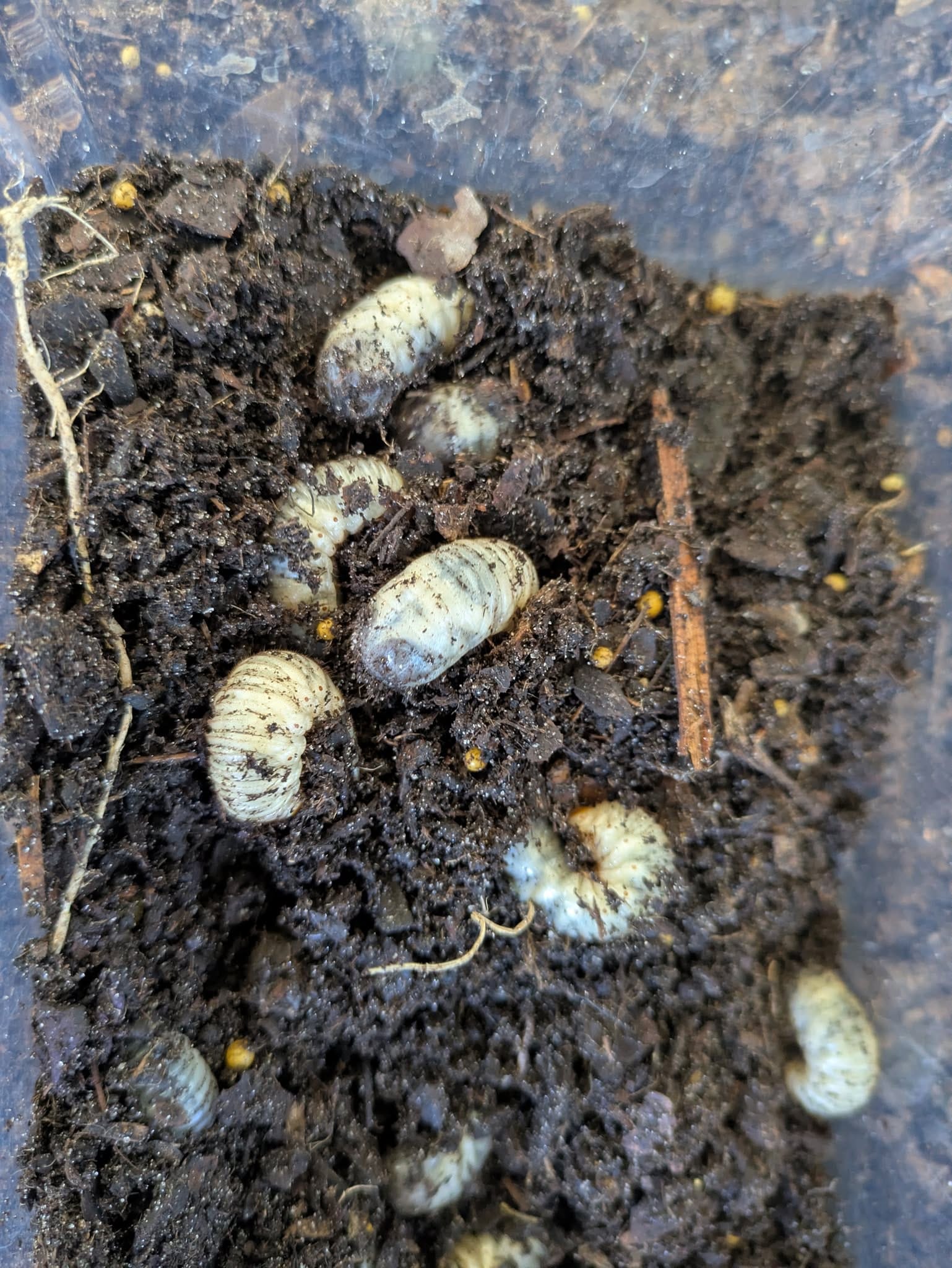
Now, have a look at the table below to control grubs in your garden.
| Method | Target Stage | Best Timing | Where to Apply | How to Apply | How Often |
|---|---|---|---|---|---|
| Milky Spore | Grubs | Spring, Summer, or Fall when soil is workable | Lawns, grassy areas, and garden beds where beetles lay eggs | Spread powder in a grid pattern and water lightly so it goes into the soil | Do this 3 times a year for 2 to 3 years to get long-term control. |
| Nematodes | Grubs | Late August to Mid-September when grubs are small and actively feeding | Moist lawns, turfgrass, and garden soil | Mix beneficial nematodes with water according to label directions, spray onto moist soil during the evening, and water immediately afterward | Once a year is usually enough, but apply it more often if the grub pressure is severe. |
| Bt-g | Grubs & Adults | Late Summer for grubs; June–August for adult beetles | Soil around infested lawns for grubs; leaves, flowers, and stems for adults | Use a pump sprayer to apply as a soil drench for grubs or spray directly onto plant foliage where adult beetles are feeding | Once per season for grub control; every 7–10 days for active adult beetle infestations |
I have listed 3 methods in the table above, but that doesn't mean you need to use all of them. Just choose one method based on your need.
Use nematodes if you want quick results in the same season.
I actually use Milky Spore the most because it gives long-lasting protection in the garden.
Bt-g is useful when you need to control both grubs and adult beetles, depending on the situation.
Should You Use Japanese Beetle Traps?
This is one of the most debated topics among gardeners.
At first, beetle traps may look like a simple and effective solution. They use a scent to attract Japanese beetles and then catch them in a bag or container. It sounds like an easy way to reduce the problem.
But it's not always that helpful.
Many gardeners, including me, notice that these traps can actually attract more beetles to the garden. Even though lots of beetles get caught, some still land on nearby plants and start eating them before they go into the trap.
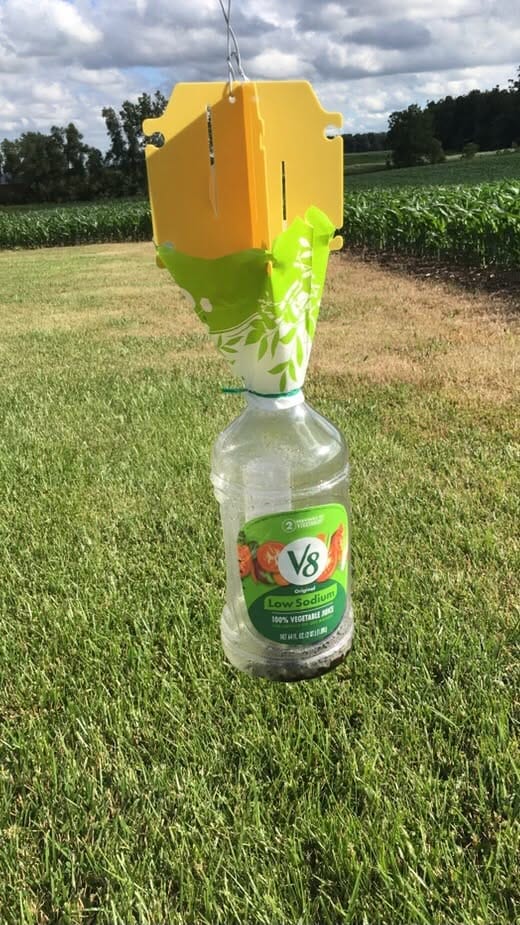
I don't use any beetle traps in my garden, and I don't recommend them either.
If you wish to use them, placement is very important. Always keep the traps far away from your valuable plants.
You can try companion planting to reduce Japanese beetle problems in your garden. Just plant some strong-smelling herbs like garlic, chives, catnip, mint, tansy, and sage among your vegetables. They won't completely solve the problem, but they can help keep beetles away and reduce damage.
I also used a Handheld Vacuum to remove Japanese beetles from my plants. Just look at the picture below.
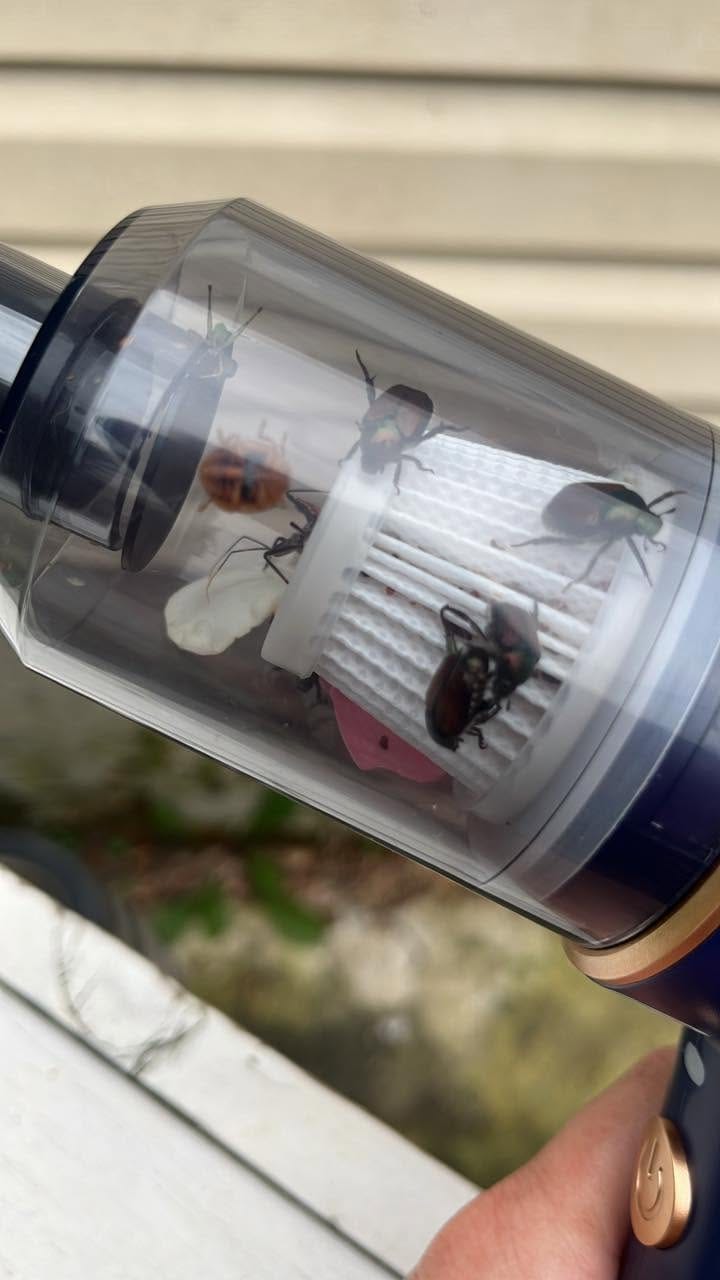
I usually vacuum them early in the morning because they are slower and don't fly away as easily. It only takes a few minutes to remove dozens of beetles from my roses, grape vines, and other plants.
After I'm done, I empty the vacuum into a bucket of soapy water to make sure the beetles can't crawl back out.