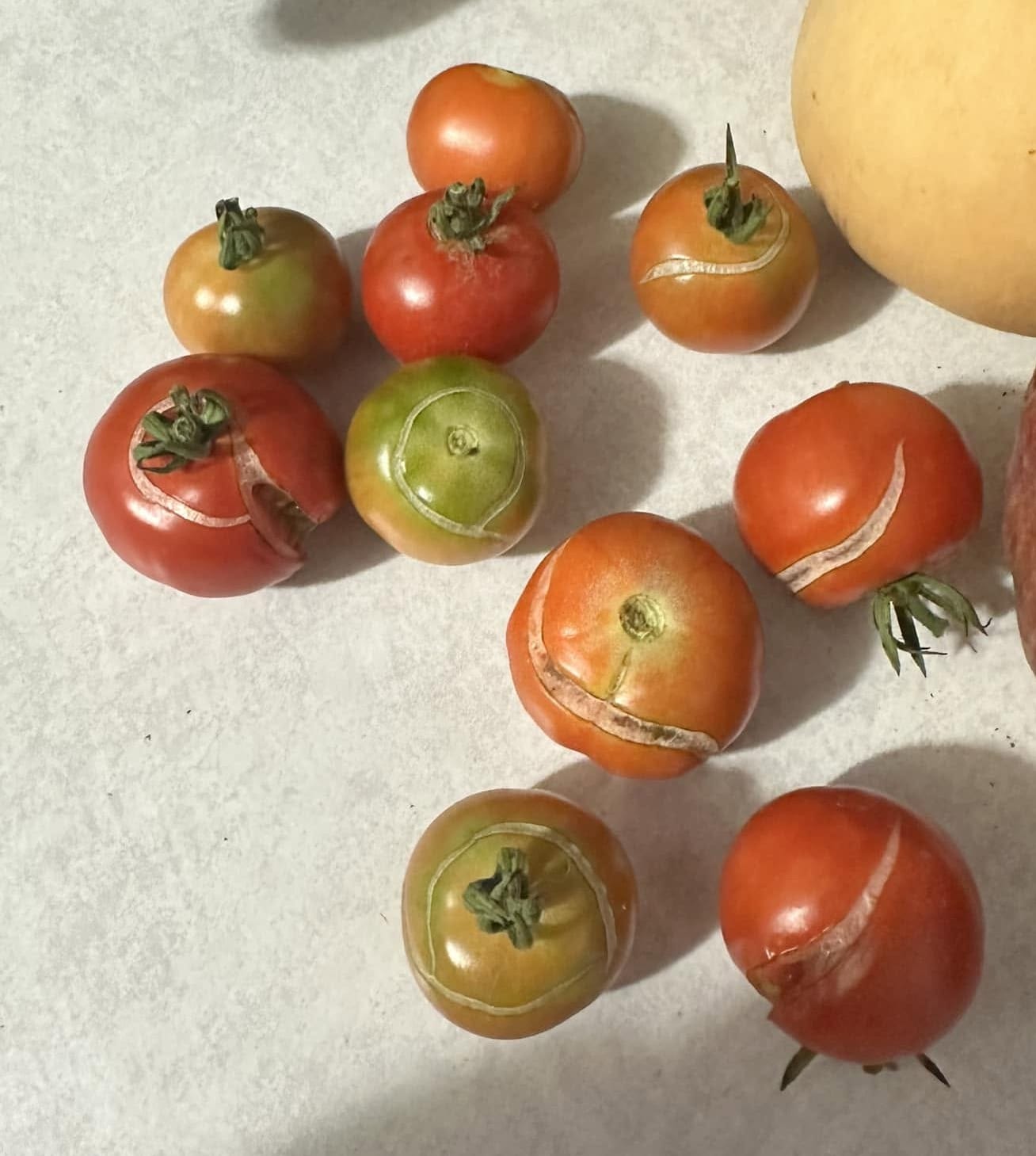
I think almost every tomato grower has dealt with split tomatoes at some point, especially during the hottest part of summer. I have also faced the same problem in my own garden, so I know how frustrating it can be.
I'll be honest, the first time it happened, I assumed it was a disease. I literally worried that I was about to lose my entire tomato harvest.
But after talking to a few experienced gardeners and doing some research, I realized it is actually a physiological disorder, not a disease. In most cases, the biggest reason is inconsistent watering.
This is also called tomato cracking.
Now, let's look at the most common reasons why tomatoes split and how to fix them.
Inconsistent Watering – The Most Common Reason
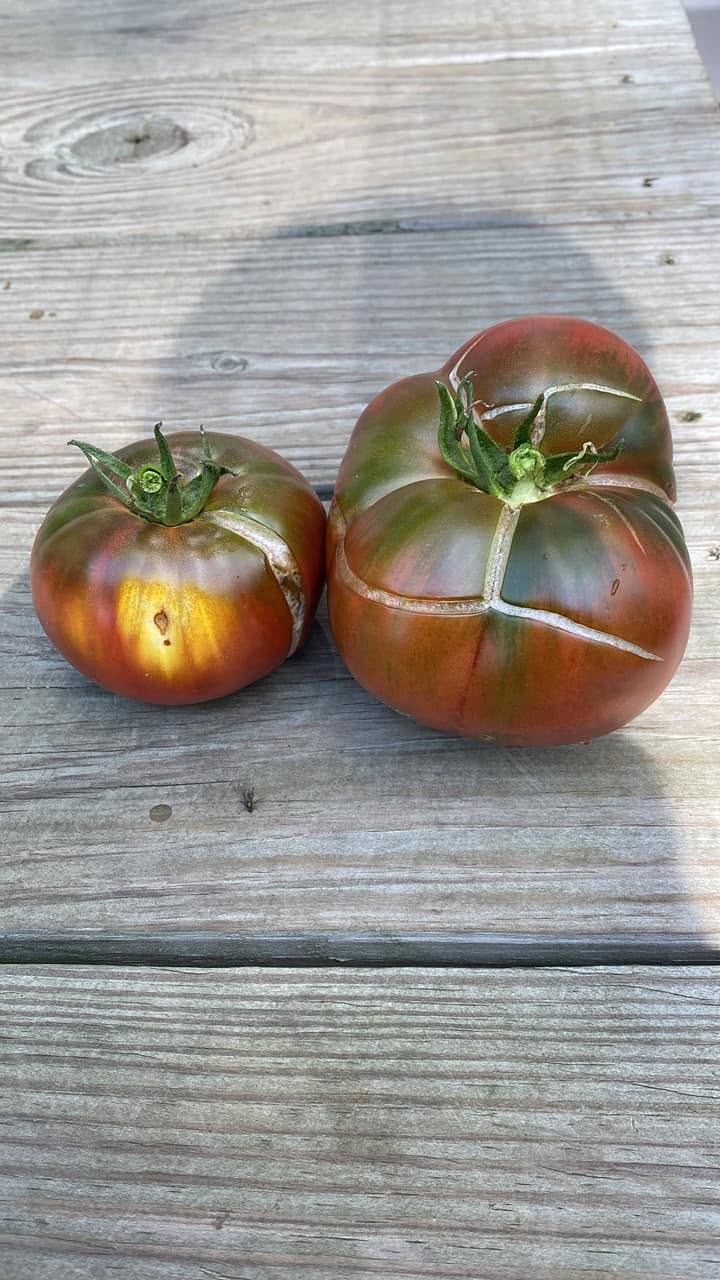
Tomatoes usually split when they get too much water after staying in dry soil for a while.
Suppose your tomato plant sits in dry soil for four or five hot days. Then, a heavy rain comes, or you give the plant a lot of water because the leaves look wilted and thirsty.
Within an hour, the roots start soaking up water as quickly as they can.
So, the tomato grows fast from the inside, but the skin simply can't stretch that quickly, and it starts to split.
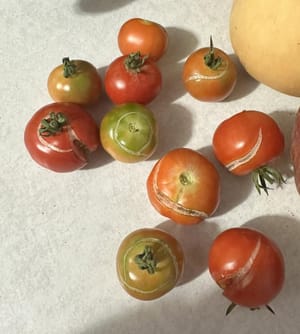
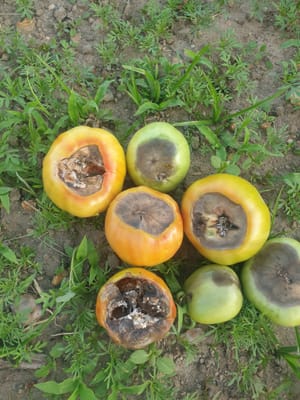
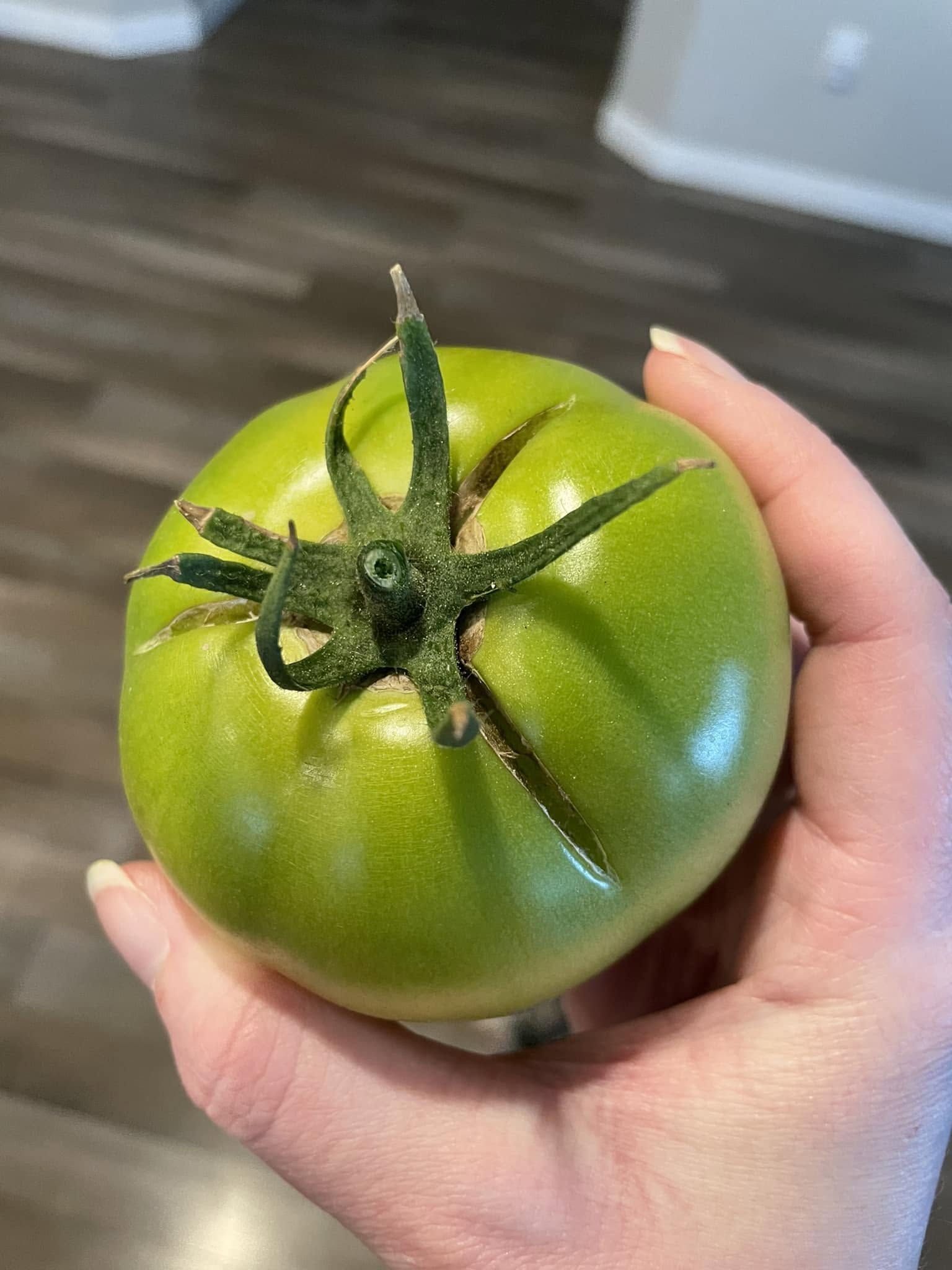
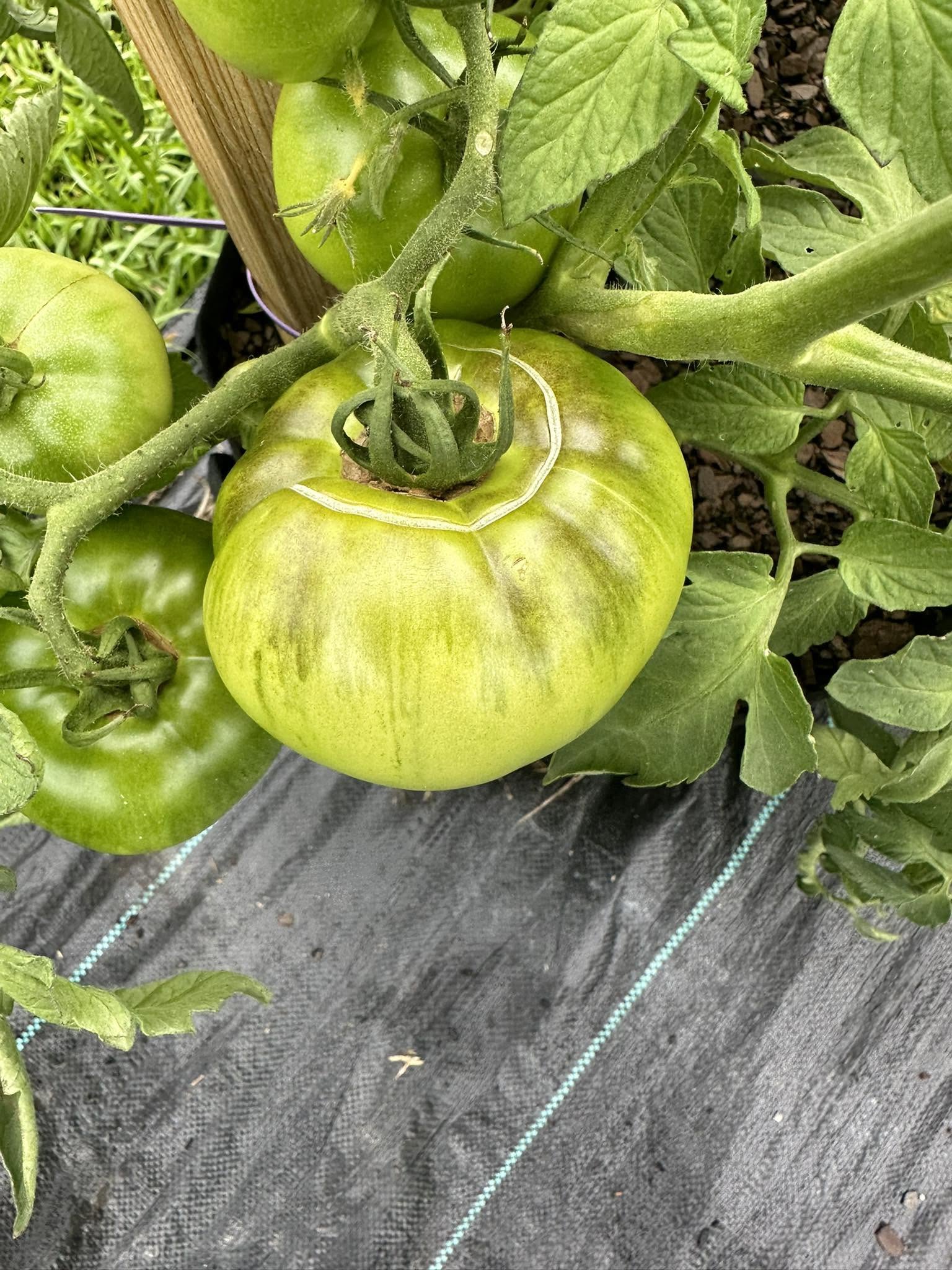
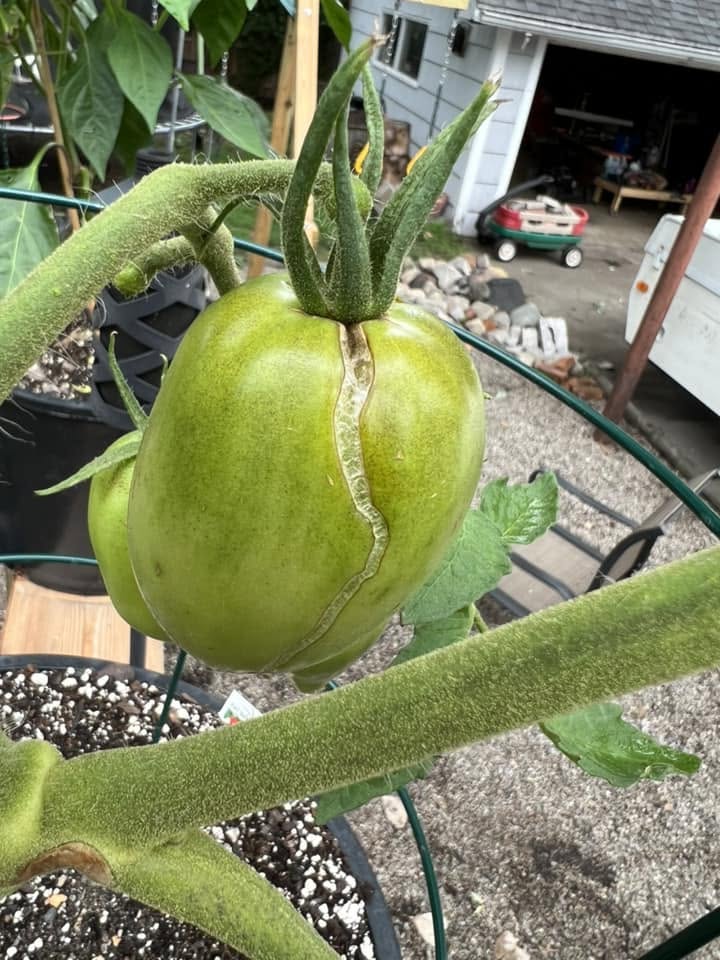
Just look at the pictures below. If your tomatoes look similar, they're most likely splitting because of uneven watering.
How I Prevent Tomato Splitting Now
I always check the soil with my finger before watering my plants. If the top 1–2 inches feel dry, I give them a good, deep watering.
I try to keep the soil moist like a damp sponge, not too wet and not too dry. During hot summer days, I check more often because the soil dries out quickly.
I always put a 2-3 inch layer of mulch around my tomato plants. Straw and shredded leaves are my favorites. It keeps the soil moist for longer, so it doesn't dry out too fast. This helps keep the moisture steady and prevents the tomatoes from splitting.
Harvest Tomatoes Early
Don't wait until tomatoes become fully red on the vine.
Pick tomatoes when they are still mostly green but have started showing a small pink or light red patch.
This is called the breaker stage. At this stage, the tomato will continue to ripen after picking and will still taste good.
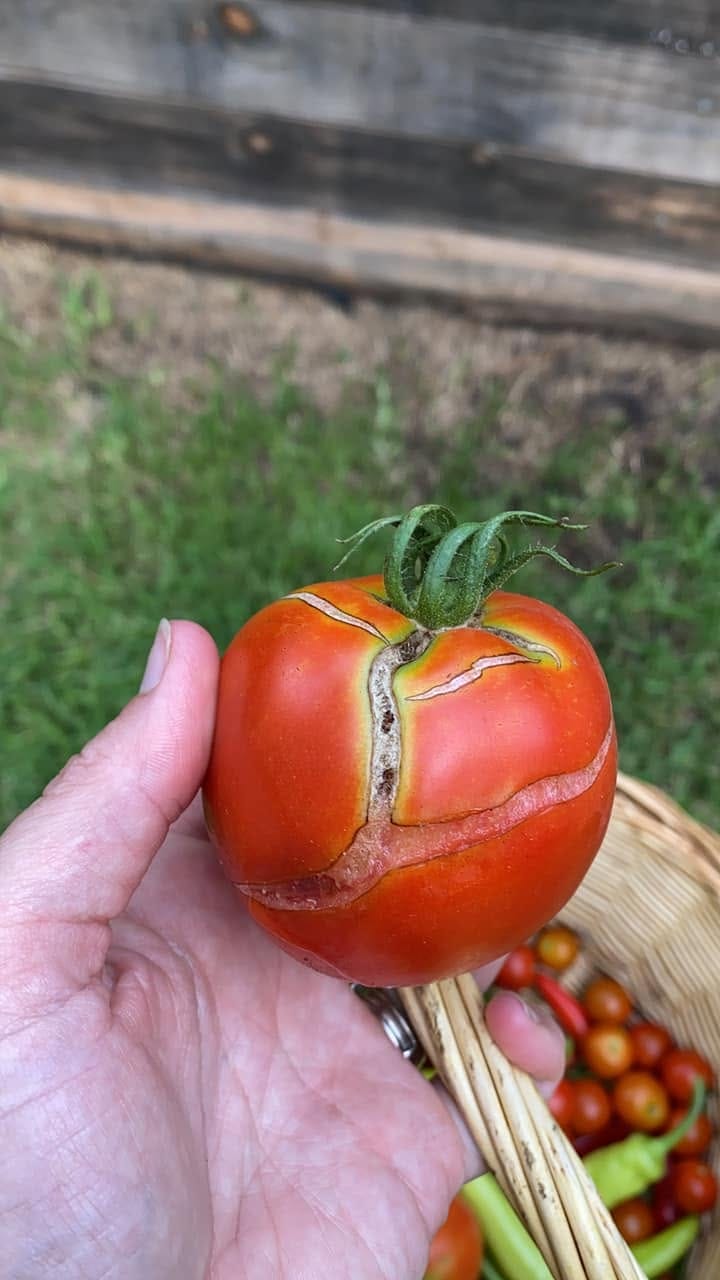
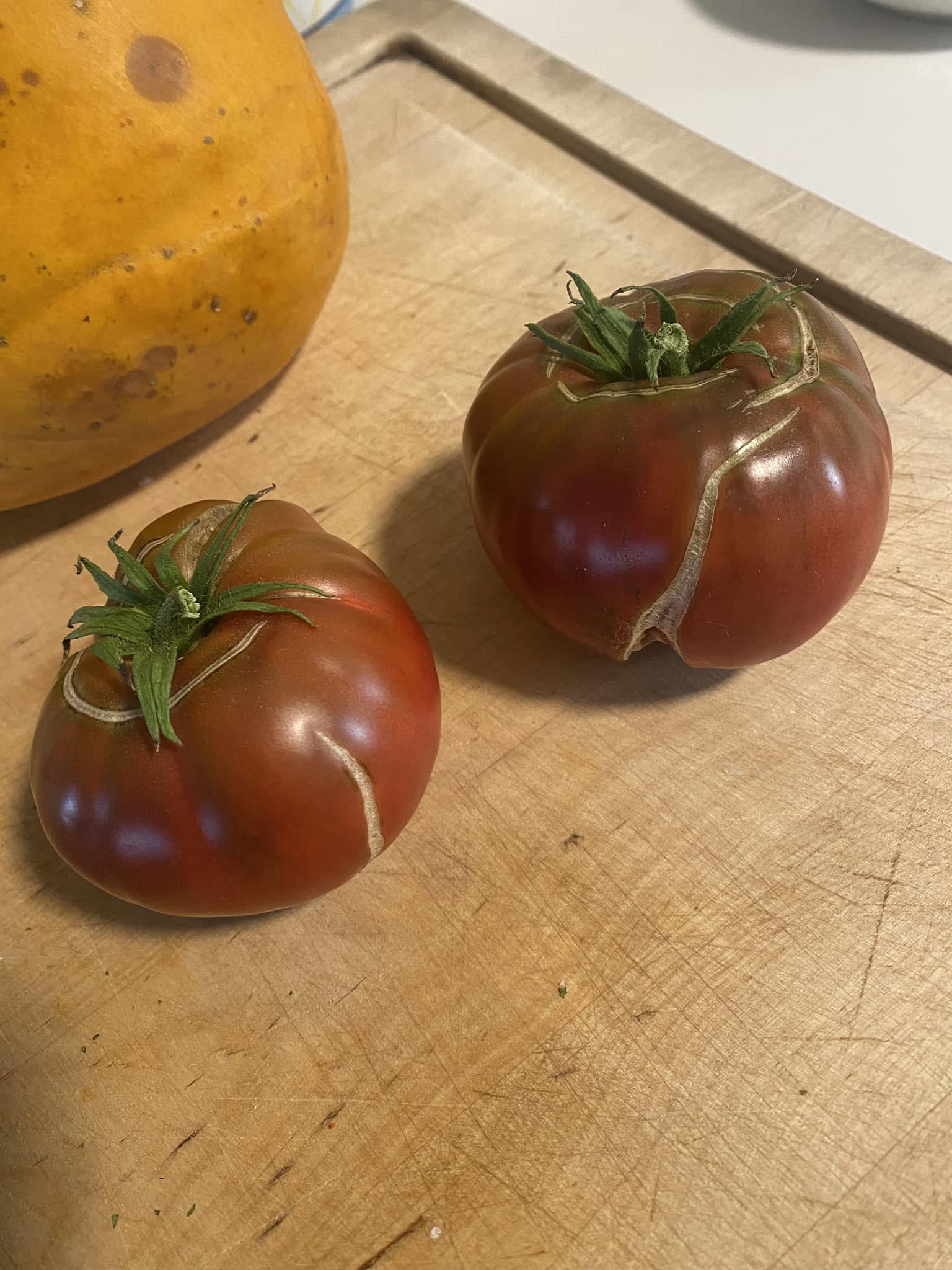
Just look at the pictures above. If these tomatoes were picked a little earlier, they may not have cracked.
If you pick tomatoes a little early, you don't have to worry about sudden rain, heat, or changes in watering causing cracks. They will continue to ripen indoors and stay protected from stress on the plant.
If you see heavy rain or a storm in the forecast and your tomatoes are just starting to turn from green to red (the breaker stage), it's a good idea to pick them early. They'll ripen just fine on your kitchen counter, and you won't have to worry about them spliting or cracking after the rain.
Don't Use Too Much Fertilizer
Tomatoes need nutrients to grow well, but too much fertilizer can actually hurt them more than it helps.
Don't use too much nitrogen fertilizer, especially after your tomatoes start forming. Too much nitrogen makes the fruits grow too quickly, and the skin may not be able to stretch fast enough, so the fruits may crack.
I always stop using high-nitrogen fertilizers once my tomato plants start forming fruit. Instead, I switch to a balanced tomato fertilizer. I've found this helps the tomatoes grow at a nice and steady pace instead of rushing too fast.
Some Tomato Varieties Split More Easily
Over the years, I've grown many different kinds of tomatoes, and I've noticed that some split and crack a lot more than others.
Big heirloom tomatoes like Red Slicer, Brandywine, and Cherokee Purple have thin skins and grow really large. They taste fantastic, but they crack or split easily after heavy rain or if you water them a lot all of a sudden.
Have a look at the picture below. You can clearly see how a Red Slicer tomato has split.
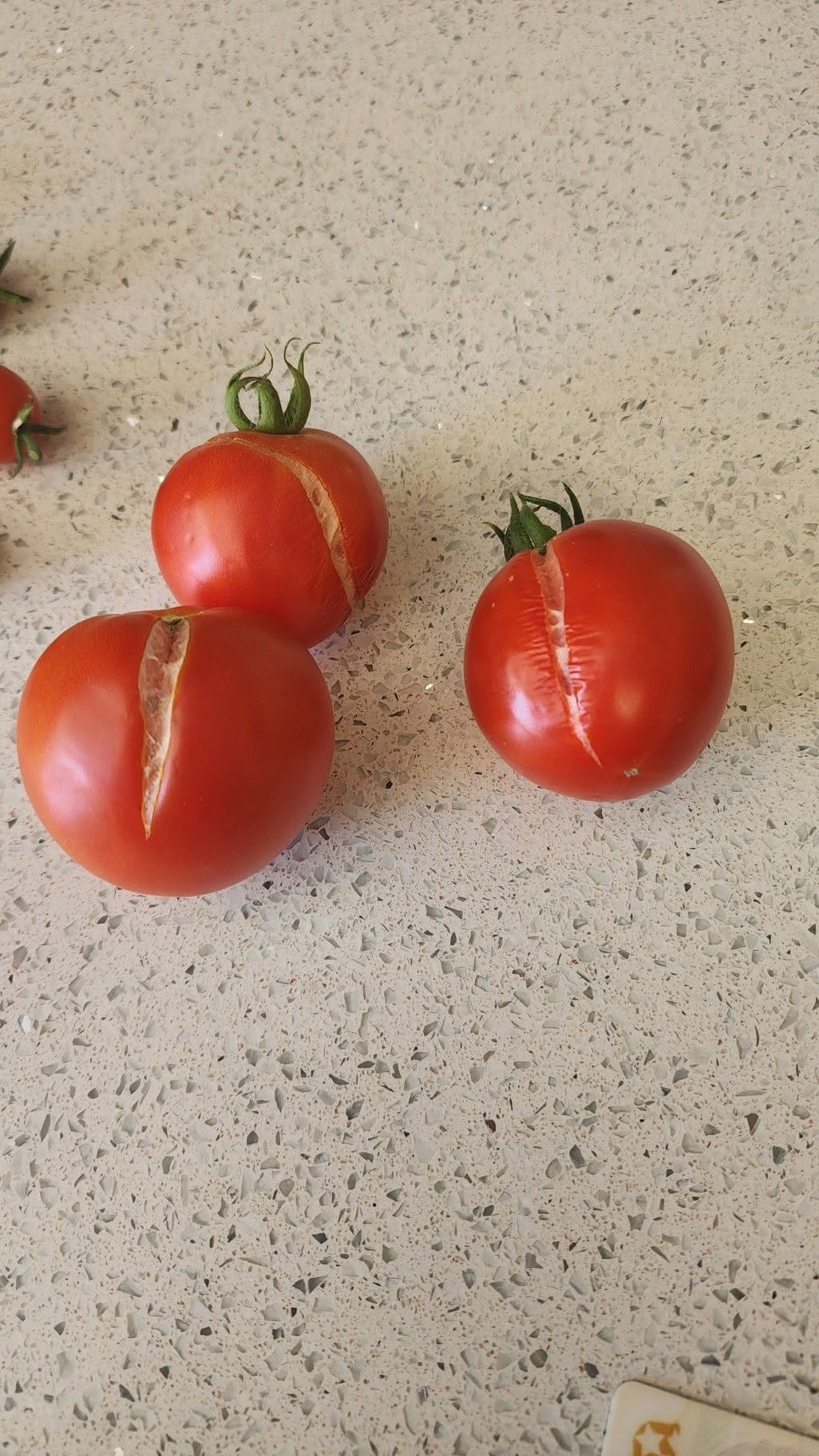
On the other hand, many hybrid varieties like Celebrity, Big Beef, and Jet Star have stronger skins because they were bred that way. They usually don't crack as much.
If your tomatoes split or crack every year even when you water them carefully, the variety might be the problem. So, next season, consider planting a crack-resistant variety.
Sometimes, temperature changes can also be a problem. They don't usually crack tomatoes on their own, but they can make the problem worse when watering is uneven.
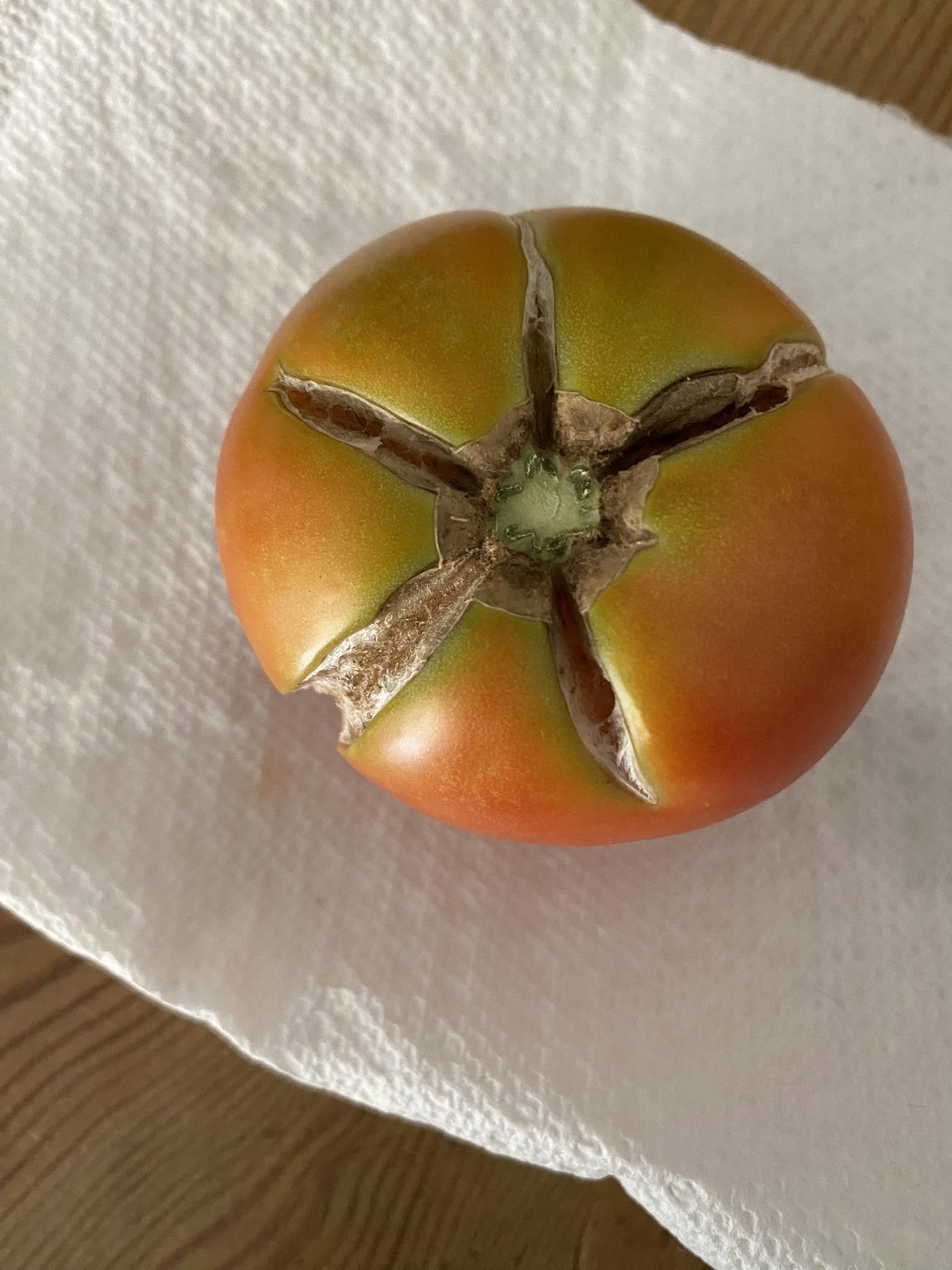
If you look at the picture above, you can clearly see how badly uneven watering and temperature fluctuations together can split tomatoes.
Can We Eat Split Tomatoes
Absolutely.
Most split tomatoes are perfectly safe to eat if they are harvested soon after cracking.
Whenever I find a cracked or split tomato in my garden, I simply harvest it, wash it well, cut away the cracked portion, and use the rest.
Don't eat tomatoes that are soft, moldy, or have insect damage inside the crack. Just throw it away.
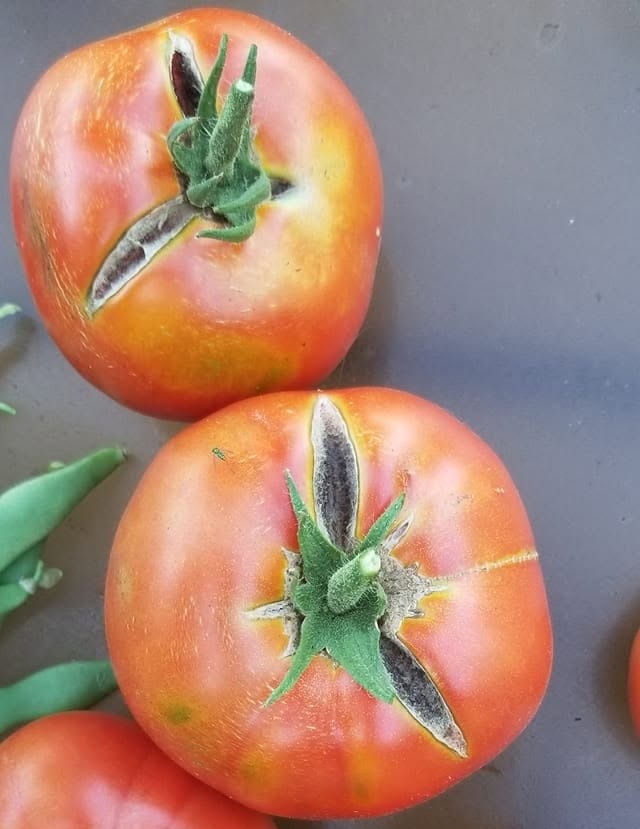
If you look closely at the picture above, you can clearly see that these tomatoes became moldy after splitting.
So, always check cracked tomatoes before eating them, and throw away any that are soft, moldy, or have damage inside the crack.
But if the tomatoes are still firm and fresh, there's no reason to waste them.