When to Harvest Root Vegetables - A Complete Guide
By Parvez Akhtar Pasha | Sep 10, 2026
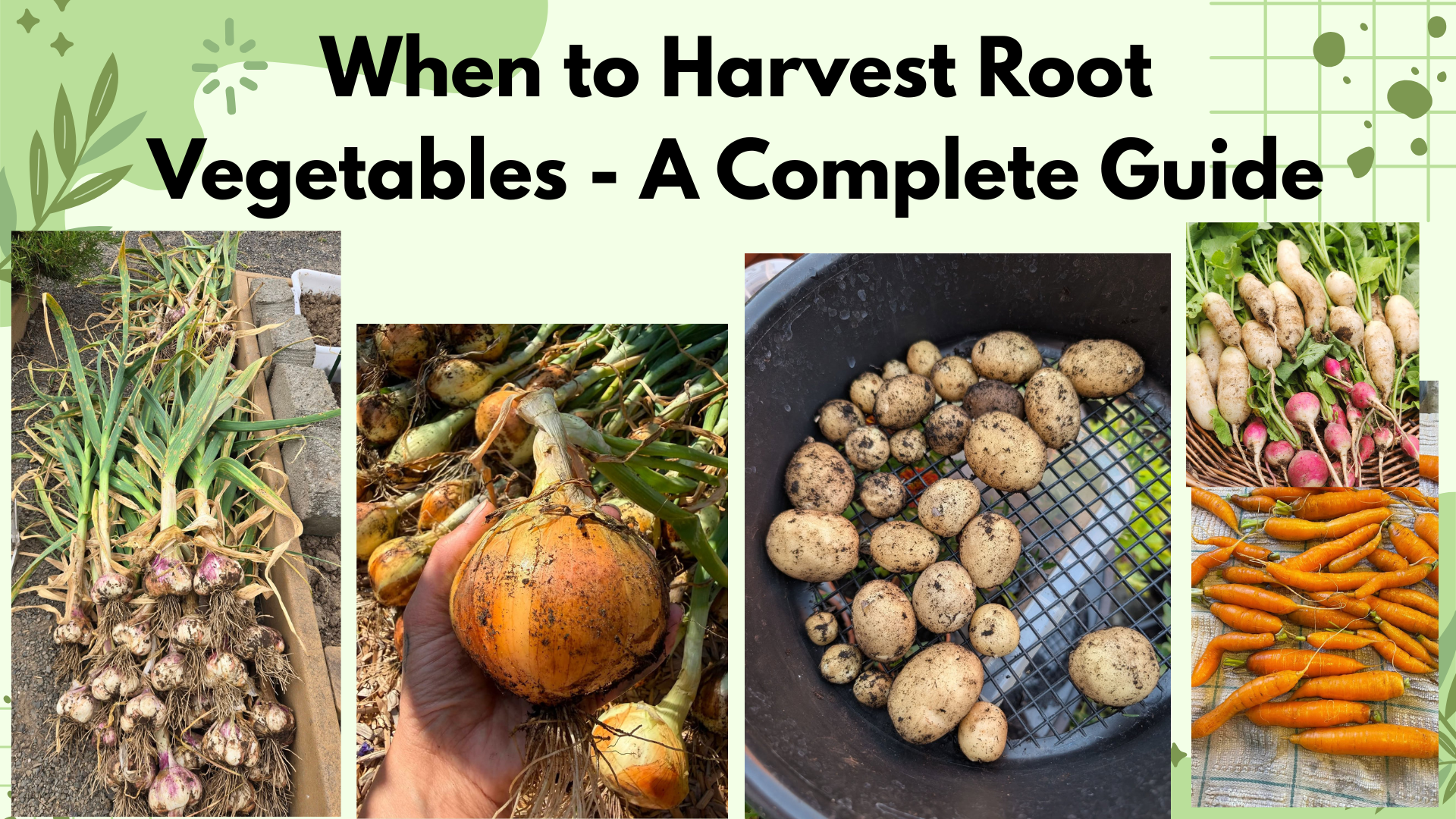
"When should you harvest root vegetables?" I think that's one of the most asked questions for new gardeners because the part you're waiting for is hidden underground.
You can look at a tomato and see when it's turning red. You can watch a cucumber grow bigger day by day. But what about a carrot, beet, or potato? You can't see much because all the action is happening under the soil.
That's what makes growing root vegetables so much fun. You never know what's growing under the soil until you pull them out.
I still remember the first time I pulled a carrot from the garden. The leafy top looked so healthy that I was sure there would be a big carrot underneath. I gave it a gentle tug, but out came something that looked more like an orange pencil than a carrot. I had simply harvested it too early.
After making a few mistakes, I learned this: Don't rely only on the calendar. Check your plants and look for signs that they're ready.
The number of days listed on a seed packet is a useful guide. It gives you a rough idea of when to harvest, but weather, soil, watering, variety, and growing conditions can all affect the actual harvest date.
In this guide, I'll show you when to harvest root vegetables, what signs to look for above the soil, how big they should be, and a few simple ways to check if they're ready before you dig up the whole row.
When Is the Best Time to Harvest Root Vegetables?
The best time to harvest root vegetables depends on the crop.
Some root veggies, like radishes and baby turnips, taste best when you pick them young and soft. Others, like parsnips, do better when you leave them in the ground longer, especially when the weather turns cool.
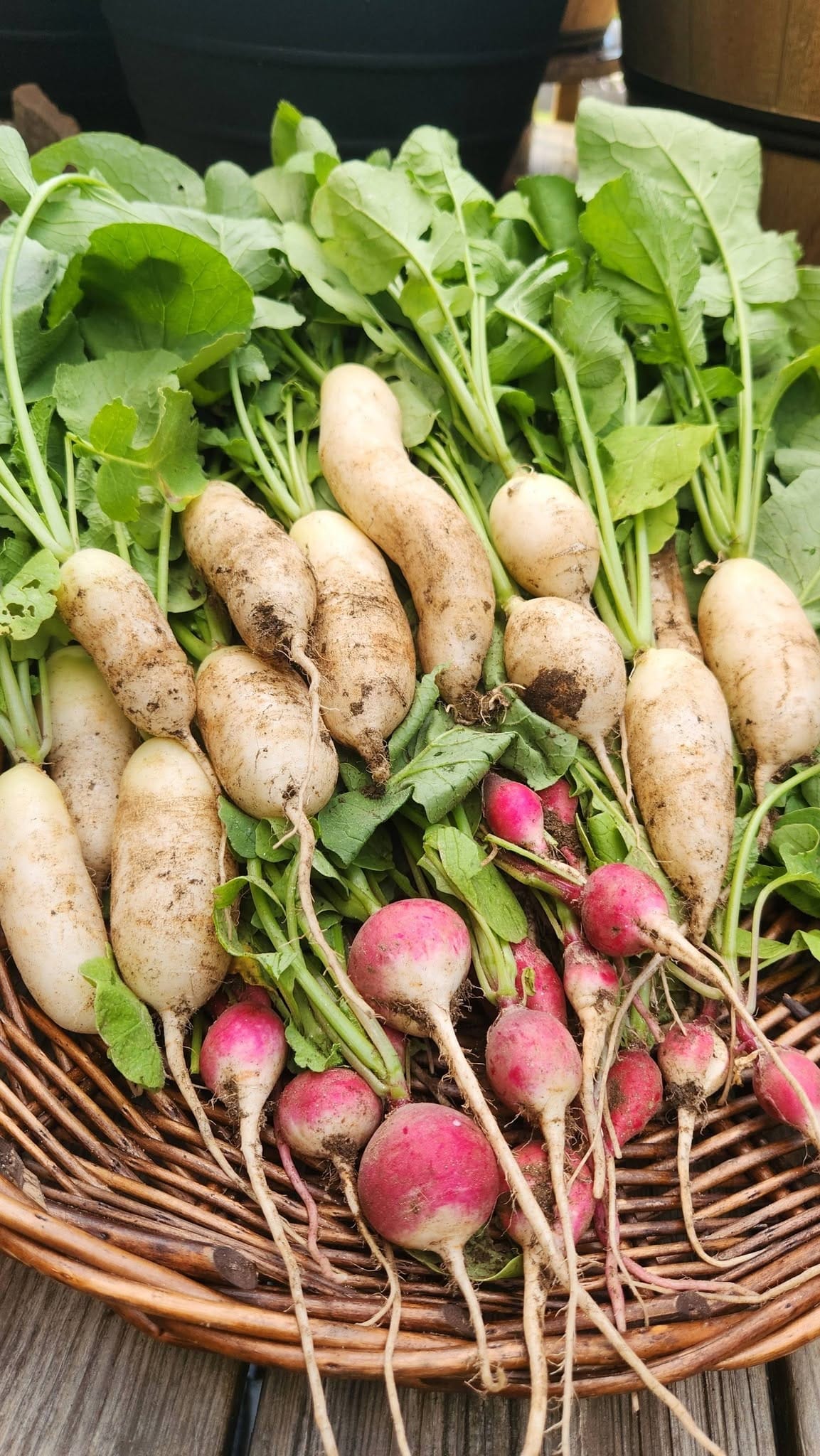
Onions and garlic also give you clear signs. When their leaves start turning yellow and flopping over, it usually means it's almost time to harvest.
Just have a look at the table below for a clear idea of when to harvest each root crop, what signs to watch for, and how to know it's ready to pull.
| Crop | Typical Timeline | Above-Ground Signs | The Size/Touch Test | How to Harvest | Gardener's Tips |
|---|---|---|---|---|---|
| Radishes | About 3–6 weeks | The top of the radish starts to show above the soil, and the leaves look healthy. | Brush a little soil away. Most radishes taste best when they are about 1–2 inches wide, depending on the variety. | Loosen the soil around the radish and gently pull it up by the leaves. | Don't wait too long. Older radishes can become hot, hollow, or woody. |
| Turnips | About 5–10 weeks | The top of the turnip starts to peek above the soil and looks rounded. | Check the top of the root. Turnips around 2–4 inches wide are usually tender and tasty. | Loosen the soil around the root, then gently pull it up by the leaves. | Smaller turnips usually have the best texture. Large ones can get tough. |
| Beets | About 7–10 weeks | The round top of the beet starts to show above the soil. | Check the shoulder of the beet. About 1½–3 inches wide is a good size for most varieties. | Loosen the soil around the beet and gently pull it out. Cut off the leaves after harvesting. | Baby beets are delicious too. Don't let them get huge unless the variety is meant to grow large. |
| Carrots | About 8–12 weeks, sometimes longer | The top of the carrot may start to show above the soil while the leaves still look healthy. | Brush away some soil and check the shoulder. The best size depends on the variety. | Water the soil if it is dry, loosen it with a garden fork, and gently pull the carrot straight up. | Pull one carrot first. If it looks and tastes good, the rest are probably ready too. |
| New Potatoes | About 2–3 weeks after flowering, or when they reach the size you want | The plants are still green and growing. Flowers may be open or may have recently finished. | Carefully dig around the plant. New potatoes have thin skins that rub off easily. | Gently dig around the plant with your hands or a garden fork and pick out the potatoes. | Harvest only what you plan to eat soon. New potatoes don't store well. |
| Storage Potatoes | About 90–120+ days, depending on the variety | The leaves turn yellow, then the plants die back and fall over. | Dig up one plant and check a potato. The skin should be firm and shouldn't rub off easily. | Let the soil dry a little, then carefully dig up the potatoes with a garden fork. | Stop watering as the plants die back. This helps the potatoes develop tougher skins for storage. |
| Sweet Potatoes | About 90–150 days, depending on the variety | The leaves may start turning yellow as the weather gets cooler, but this isn't always a clear sign. | Carefully uncover one or two roots and check their size. They should look well-filled and healthy. | Loosen the soil several inches away from the plant with a garden fork, then lift the roots carefully. | Harvest before a hard frost. Cold soil can damage sweet potatoes. |
| Rutabagas | About 12–16 weeks | The large top of the root becomes visible, and some lower leaves may turn yellow. | Check the root size. Around 3–5 inches wide is a common size to harvest. | Loosen the soil around the root with a garden fork, then pull or lift it out. | A light frost can make rutabagas sweeter, but don't leave them in frozen soil. |
| Parsnips | About 3–5 months | The leaves stay above the soil, but there may not be any obvious sign that the root is ready. | Carefully dig beside the root and check its size. Look for a well-developed root without much splitting. | Use a garden fork to loosen the soil beside the root, then lift it out carefully. | Parsnips can stay in the ground for a while. Cool weather can make them taste sweeter. |
| Onions | About 3–4 months, depending on the type | The tops start turning yellow and bend or fall over near the neck. | The bulb should feel firm and have a dry, papery skin starting to form. | Gently pull or lift the onions from the soil, then let them dry in a cool, dry, airy place. | When about half to most of the tops have fallen over, stop watering and let the bulbs finish drying. |
| Garlic | About 7–9 months after planting | Several of the lower leaves turn brown while some of the upper leaves stay green. | Check one bulb. The cloves should be well formed and covered with firm skins. | Loosen the soil beside the bulb with a garden fork, then gently lift the garlic. Don't pull hard on the leaves. | Don't wait until every leaf turns brown. A few green leaves help protect the bulb and its cloves. |
The timeline in the table is a starting point, not a deadline.
The exact time can change depending on the variety you planted, when you planted it, your weather, soil, watering, and how well the plant is growing.
A carrot planted in cool spring soil won't always grow at the same speed as one planted later when the soil is warmer.
That's why experienced gardeners don't just count the days on the packet.
They look, touch, and test.
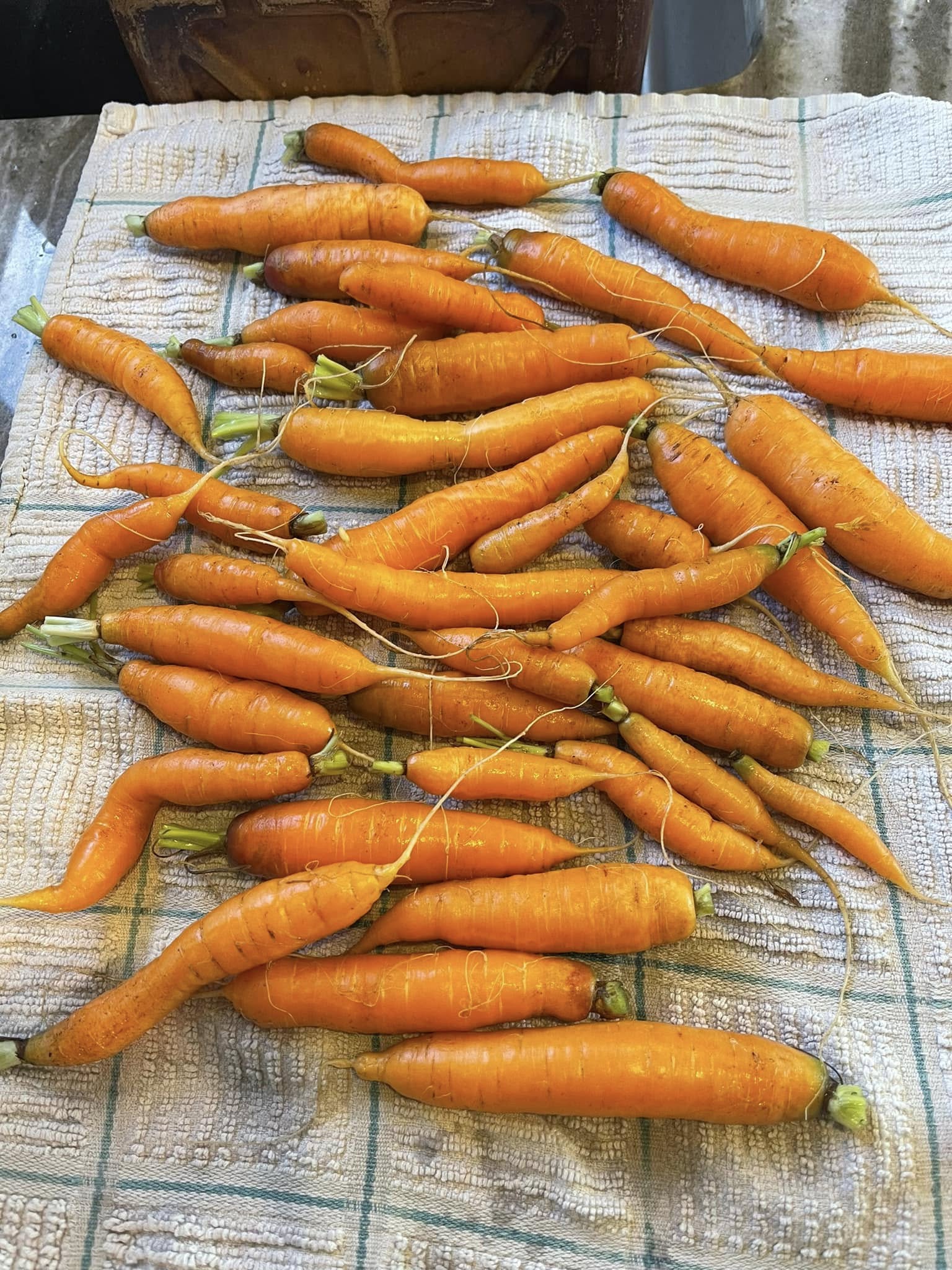
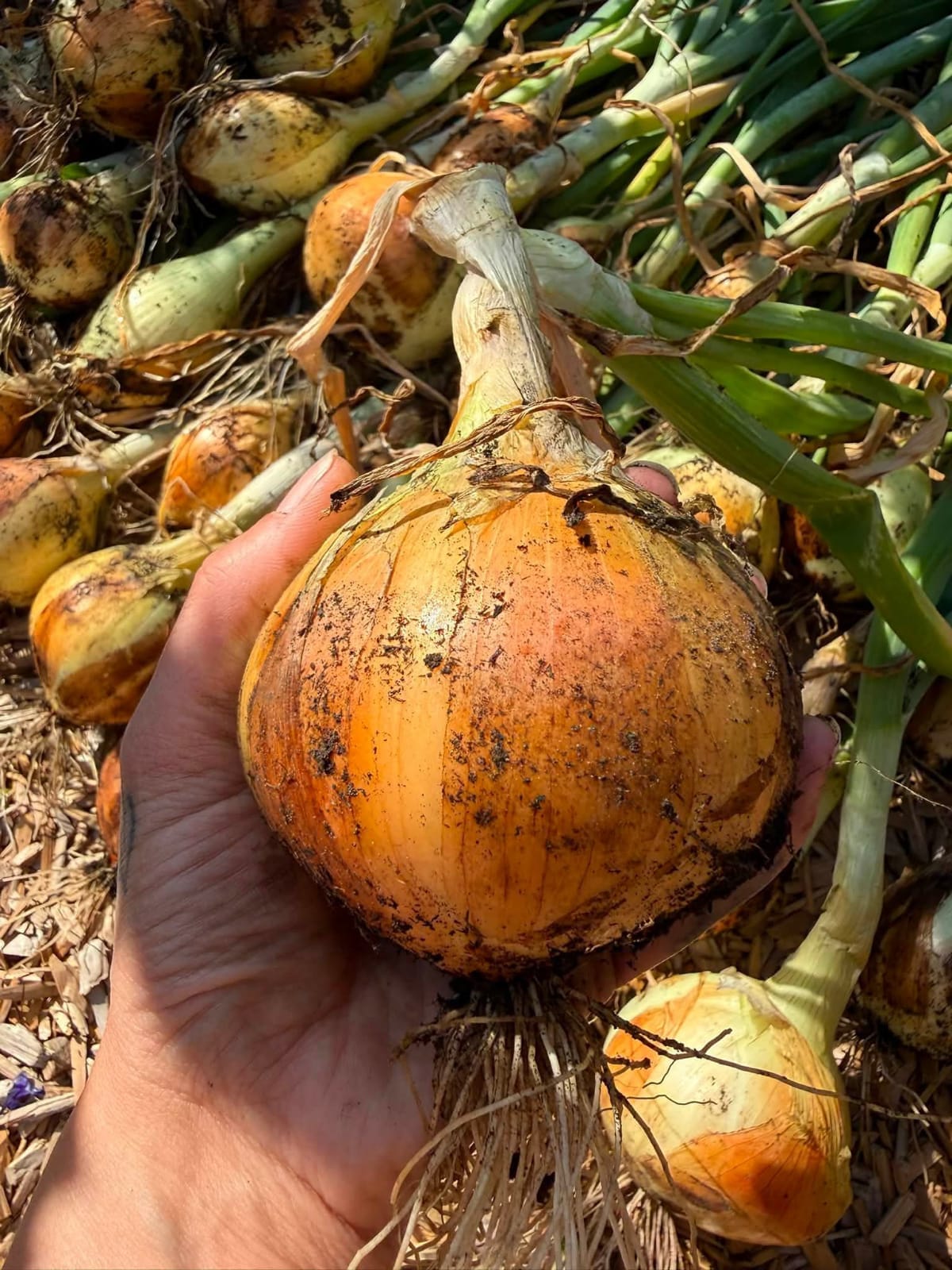

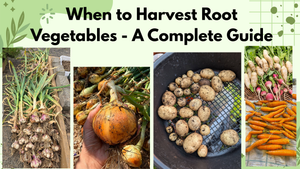
Freshly Harvested Carrots, Onions and Garlic
If you're not sure, dig up just one plant. That's one of the best tips I can give you. Pull a carrot. Dig up a beet. Check a potato. Taste it.
If it looks ready, you're good to harvest. If it's not, just put the soil back and give the rest more time.
Potatoes Can Be Harvested Two Ways – New and Storage Potatoes
If you're looking at the list and thinking, "Wait, potatoes have two different harvest times?", you're not alone. Some root crops can be a little confusing, but don't worry. Just stay with me, and I'll show you exactly when they're ready to harvest.
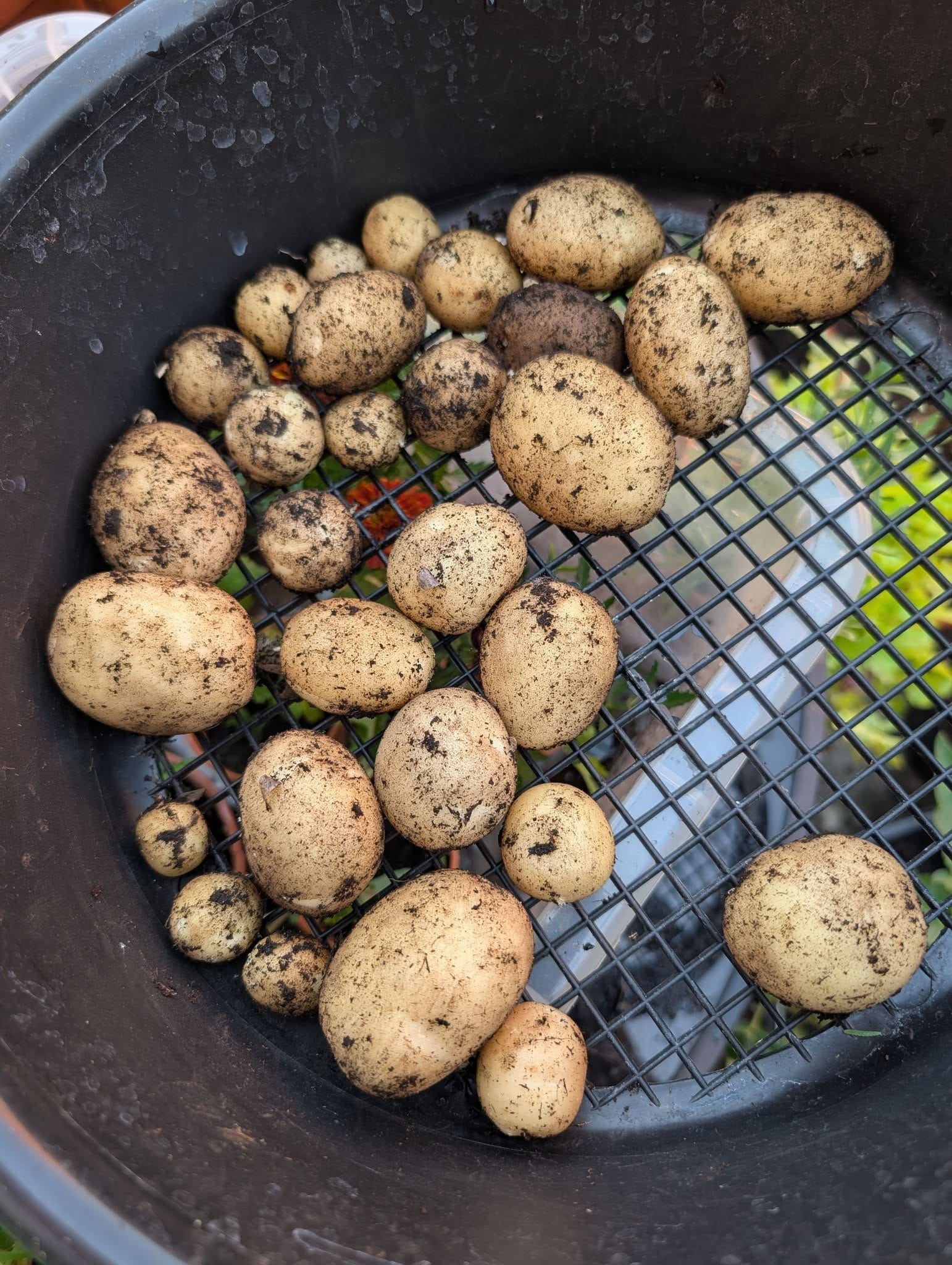
Potatoes are cool because you can get two different harvests from the same plant.
"New" potatoes aren't a special kind of potato. They're just young potatoes that you harvest while the plant is still green and growing. They're soft, creamy, and delicious. But their skins are very thin, so you can't store them for long.
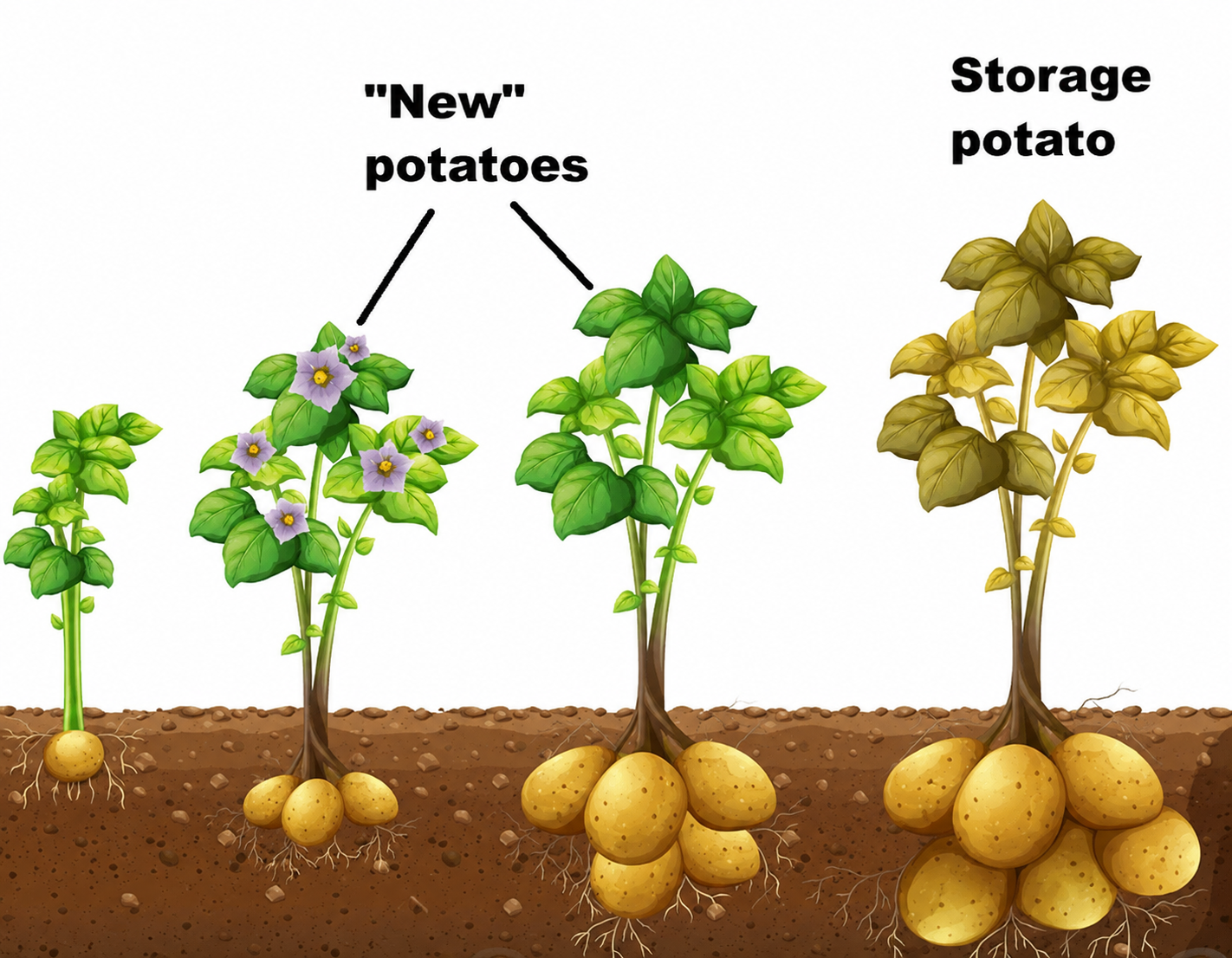
"Storage" potatoes are potatoes that you leave in the ground longer so they can fully mature. This gives the skins time to get thicker and tougher, so the potatoes don't get damaged easily and can stay good in storage for months.
I leave my potatoes in the ground until the plants die back and the vines turn brown and dry. Then I wait about two more weeks before I dig them up.
So, if you want potatoes that will last through the winter, don't dig them up too early.