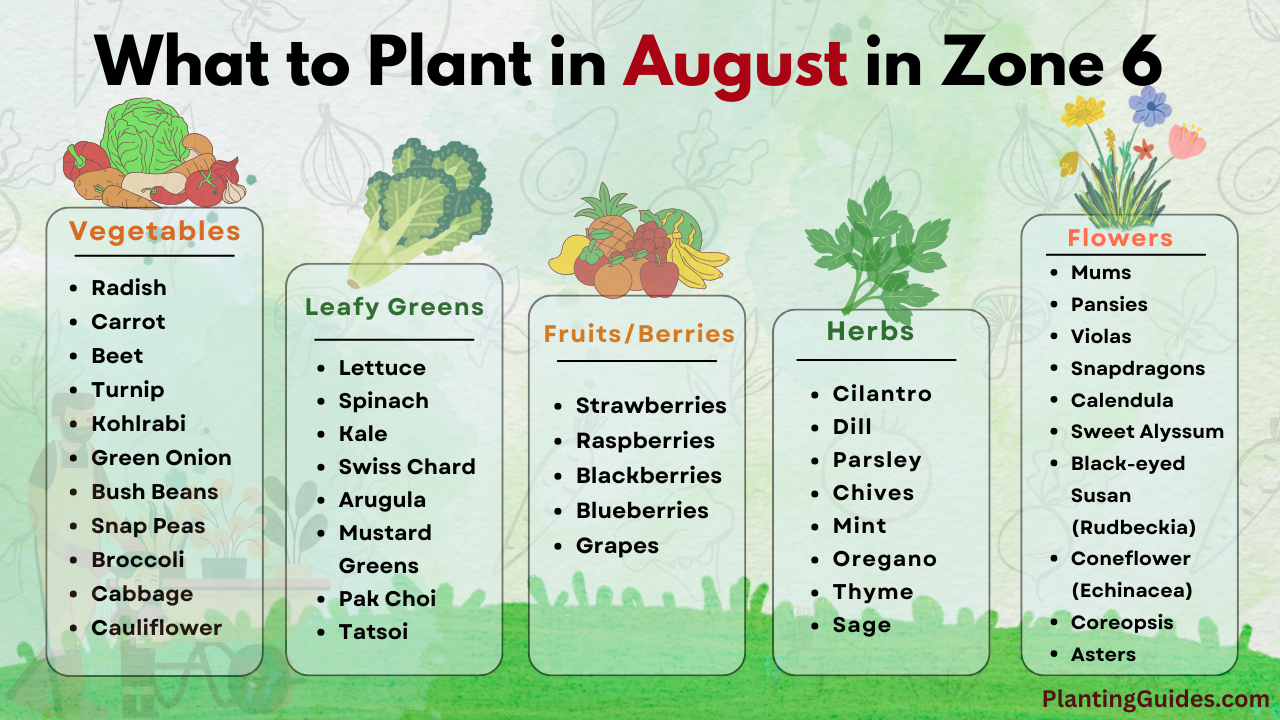
It may be August, but don't put your garden tools away just yet. In Zone 6, you still have enough time to plant several vegetables, flowers, herbs, and fruits for a fall harvest. You just have to pick fast-growing crops that grow quickly and can handle cooler fall weather.
In August, the days are still pretty warm, usually somewhere between 75 and 90°F, but the nights start cooling down. That mix of warm soil and cooler air is actually perfect for planting spinach, kale, lettuce, carrots, beets, radishes, and turnips.
These veggies grow really well once the summer heat starts to ease up, and some of them even get a bit sweeter when the weather gets cooler.
One thing you need to keep in mind is how much time you have before the first frost. In most parts of USDA Zone 6, the first frost usually arrives between mid-October and early November. So depending on where you live, you might still have about 60 to 90 frost-free days left starting from August.
So, it's best to choose crops that grow quickly and can mature before the first frost. Fast-growing vegetables can give you a good harvest.
Leafy Greens to Plant in Zone 6
| Leafy Green | Planting Method | Transplanting Time (After Sowing) | First Harvest | Sunlight Requirement | Variety Recommendations |
|---|---|---|---|---|---|
| Lettuce (Leaf, Romaine, Buttercrunch) | Direct sow or transplants | 3 to 4 weeks | 30 to 45 days | 4 to 6 hours | Black Seeded Simpson, Paris Island Cos, Buttercrunch |
| Spinach | Direct sow | N/A | 40 to 50 days | 4 to 6 hours | Bloomsdale Long Standing, Space |
| Kale | Transplants preferred | 4 to 5 weeks | 55 to 60 days | 6 to 8 hours | Lacinato (Dinosaur), Red Russian, Curly Blue Scotch |
| Swiss Chard | Direct sow or transplants | 4 to 5 weeks | 50 to 55 days | 4 to 6 hours | Bright Lights, Fordhook Giant |
| Arugula & Mustard Greens | Direct sow | N/A | 25 to 35 days | 4 to 6 hours | Roquette, Red Giant Mustard, Mizuna |
| Asian Greens (Pak Choi, Tatsoi) | Direct sow or transplants | 3 to 4 weeks | 45 to 50 days | 4 to 6 hours | Black Summer Pak Choi, Tah Tsai |
If the temperatures are still above 85°F, give your young seedlings some shade in the afternoon for the best results.
Give your greens enough space to grow. Don't plant them too close together just to fit more in the garden. If plants are too crowded, air doesn't move well between them. That can cause powdery mildew and ruin your harvest.
Vegetables to Plant in August in Zone 6
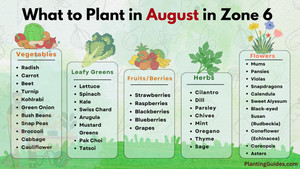
If you want the most reliable results, choose fast-growing vegetables such as radishes, turnips, beets, carrots, and kohlrabi.
The table below only shows the vegetables that actually make sense to plant in August if you're in Zone 6.
| Vegetable | Planting Method | Transplanting Time (After Sowing) | First Harvest | Variety Recommendations |
|---|---|---|---|---|
| Radish | Direct sow | N/A | 25–35 days | Cherry Belle, French Breakfast |
| Carrot | Direct sow | N/A | 60–75 days | Nantes, Danvers |
| Beet | Direct sow | N/A | 50–65 days | Detroit Dark Red, Chioggia |
| Turnip | Direct sow | N/A | 40–60 days | Purple Top White Globe, Tokyo Cross |
| Kohlrabi | Direct sow or transplant | 3–4 weeks | 45–60 days | Early White Vienna, Kossak |
| Green Onion | Direct sow, sets, or transplants | 3–4 weeks | 30–60 days | White Lisbon, Evergreen Hardy White |
| Bush Beans | Direct sow | N/A | 50–60 days | Provider, Blue Lake 274 |
| Snap Peas | Direct sow | N/A | 55–70 days | Sugar Ann, Oregon Sugar Pod |
| Broccoli | Transplant healthy seedlings | N/A | 60–90 days | Waltham 29, Green Magic |
| Cabbage | Transplant healthy seedlings | N/A | 60–90 days | Early Jersey Wakefield, Copenhagen Market |
| Cauliflower | Transplant healthy seedlings | N/A | 60–90 days | Snow Crown, Amazing |
You can also plant broccoli, cabbage, and cauliflower, but if you're already well into August, it's better to use healthy transplants instead of starting them from seed.
Always check the "Days to Maturity" on your seed packets carefully. In Zone 6, the first hard frost usually comes around mid to late October, so choose crops that have enough time to grow and mature before the ground freezes solid.
Fruits & Berries to Plant in Zone 6
Plant only healthy container-grown plants, not bare-root plants, and plant them as early in August as possible.
The main goal is to give the plants enough time to establish roots before winter.
| Fruit / Berry | Planting Method | First Harvest | Variety Recommendations | Soil Type | Plant Height |
|---|---|---|---|---|---|
| Strawberries | Container-grown plants or plugs | Following spring | Jewel, Allstar, Earliglow | Well-drained, slightly acidic soil | 6–12 inches |
| Raspberries | Container-grown plants | Following summer | Heritage, Caroline, Latham | Well-drained, loamy soil | 4–6 feet |
| Blackberries | Container-grown plants | Following summer | Chester, Triple Crown | Well-drained, loamy soil | 3–6 feet |
| Blueberries | Container-grown plants | 1–2 years | Bluecrop, Jersey, Patriot | Acidic, well-drained soil | 4–8 feet |
| Grapes | Container-grown vines | 2–3 years | Concord, Reliance, Mars | Well-drained, loamy soil | 6–10 feet |
I wouldn't recommend planting apples, peaches, pears, cherries, plums, or other fruit trees in August in Zone 6. It's just too hot for them to settle in well.
It's usually better to plant fruit trees when they are dormant and the weather is cool.
Flowers to Plant in August in Zone 6
| Flower Name | Planting Method | First Bloom | Perennial or Annual | Flower Color | Sunlight Requirement |
|---|---|---|---|---|---|
| Mums (Chrysanthemums) | Transplant nursery plants | Late summer–fall | Perennial | White, yellow, pink, red, purple, bronze | Full sun |
| Pansies | Transplant nursery plants | Fall–spring | Annual/biennial* | Purple, yellow, white, blue, orange, red | Full sun–partial shade |
| Violas | Transplant nursery plants | Fall–spring | Annual/biennial* | Purple, yellow, white, blue, orange | Full sun–partial shade |
| Snapdragons | Transplant seedlings | Fall | Annual | White, yellow, pink, red, orange, purple | Full sun |
| Calendula | Direct sow or transplant | 6–8 weeks | Annual | Yellow, orange, cream | Full sun–partial shade |
| Sweet Alyssum | Direct sow or transplant | 6–8 weeks | Annual | White, pink, purple | Full sun–partial shade |
| Black-eyed Susan (Rudbeckia) | Transplant established plants | Late summer–fall | Perennial | Yellow, gold, orange | Full sun |
| Coneflower (Echinacea) | Transplant established plants | Late summer–fall | Perennial | Pink, purple, white, yellow, orange | Full sun |
| Coreopsis | Transplant established plants | Late summer–fall | Perennial | Yellow, pink, red, orange | Full sun–partial shade |
| Asters | Transplant established plants | Late summer–fall | Perennial | Purple, blue, pink, white | Full sun |
Don't assume August is the best time to grow all perennials from seed.
This month in Zone 6, established plants from a nursery usually have a better chance to settle in before winter.
Water new plants deeply and regularly during the August heat, and add a thin layer of mulch to keep the soil moist.
Herbs to Plant in August in Zone 6
In USDA Zone 6, August is a good time to switch from summer herbs to herbs that grow well in fall.
The best choices are herbs that can handle warm soil now and cooler temperatures later.
| Herb | Planting Method | First Harvest | Flavor | Variety Recommendations |
|---|---|---|---|---|
| Cilantro | Direct sow | 30–50 days | Fresh, citrusy | Santo, Calypso |
| Dill | Direct sow | 40–55 days | Fresh, slightly tangy | Bouquet, Fernleaf |
| Parsley | Transplant or direct sow | 60–75 days | Fresh, grassy | Italian Giant, Moss Curled |
| Chives | Transplant divisions or established plants | 30–60 days | Mild onion-like | Common Chives |
| Mint | Container-grown transplant | 30–60 days | Cool, refreshing | Spearmint, Peppermint |
| Oregano | Container-grown transplant | 30–60 days | Strong, earthy | Greek Oregano |
| Thyme | Container-grown transplant | 30–60 days | Earthy, slightly minty | English Thyme |
| Sage | Container-grown transplant | 60–75 days | Earthy, peppery | Common Sage |
If you're planning to plant herbs this month, cilantro and dill can be great choices for late-summer planting because they prefer cooler weather than many typical summer herbs.
Protect tender herbs when frost is coming. Move potted herbs to a safe, sheltered spot, and cover garden herbs if a cold night is expected.
Remember that Zone 6 varies by location. So, check your local first frost date before planting, especially if you're growing herbs from seed.