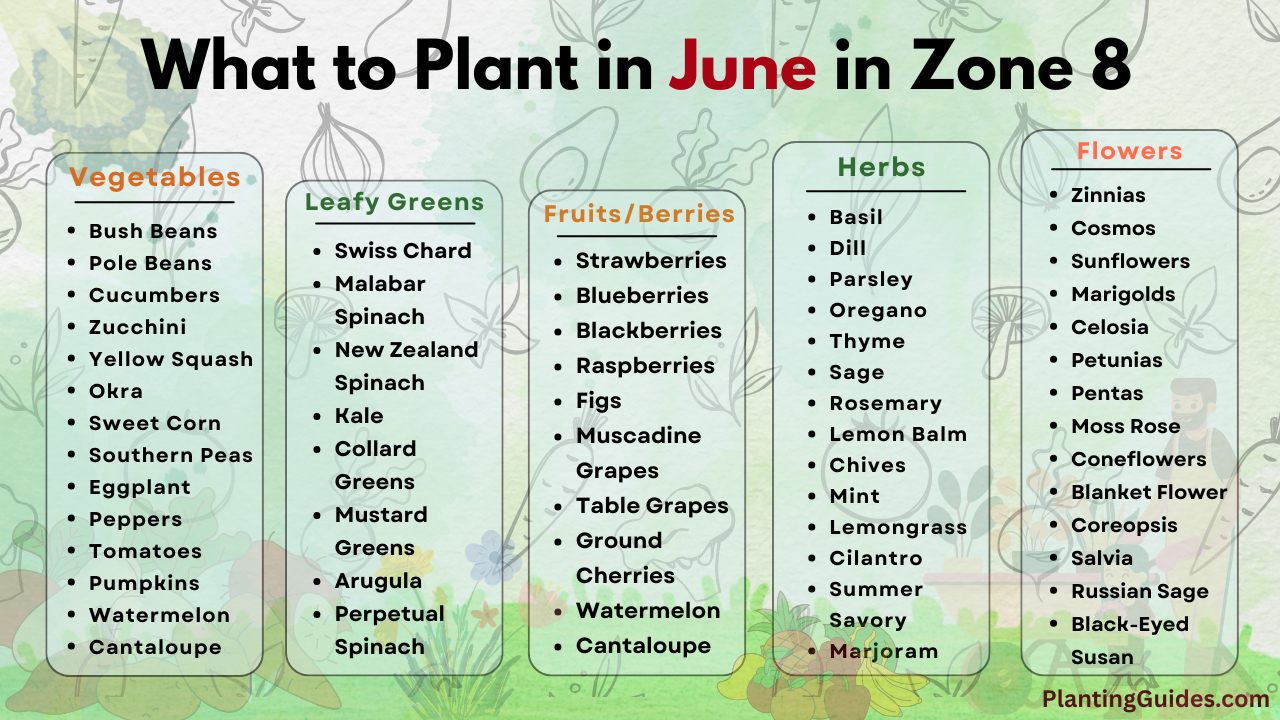
If gardening in Zone 8 had favorite months, June would probably be near the top of the list.
Most of the plants grow fast in June. The days are long, the soil is warm, and it's the perfect environment for plants to grow healthy and quickly.
If you are from Zone 8, you know very well that by June, summer heat is no longer coming - it has already arrived.
So, successful gardening in June is not just about planting anything you want. It's about choosing plants that can grow well in the summer heat, handle strong sunshine, and continue producing even as temperatures rise.
During heat waves, water plants regularly, apply mulch, and use shade cloth if needed to protect plants from excessive heat and sun exposure.
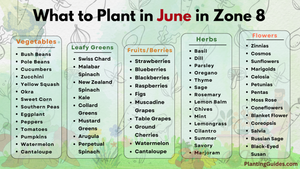
This guide focuses only on the plants (vegetables, herbs, fruits, berries, leafy greens, and flowers) that grow best when you plant them in June in Zone 8.
Leafy Greens to Plant in June in Zone 8
Growing leafy greens in June can be a little challenging because the weather is much warmer for most of them.
Choose the varieties that can handle warm temperatures and continue producing even during hot June weather.
Traditional cool-season greens often bolt quickly once temperatures rise.
The following options can handle June conditions much better.
| Leafy Green | Planting Method | Transplanting Time (After Sowing) | First Harvest | Sunlight Requirement | Variety Recommendations |
|---|---|---|---|---|---|
| Swiss Chard | Direct sow or transplant | 3–4 weeks (if started indoors) | 30–50 days | 6–8 hours of sun; afternoon shade helpful in hot areas | Bright Lights, Fordhook Giant |
| Malabar Spinach | Direct sow | N/A | 50–70 days | 6–8+ hours of direct sun for best growth | Red Stem, Green Stem |
| New Zealand Spinach | Direct sow | N/A | 50–65 days | 6–8+ hours of direct sun; tolerates heat well | Standard Variety |
| Kale | Direct sow or transplant | 4–6 weeks (if started indoors) | 40–60 days | 4–6 hours of sun; afternoon shade beneficial in summer | Red Russian, Lacinato |
| Collard Greens | Direct sow | N/A | 45–60 days | 6–8 hours of direct sun; tolerates light shade | Champion, Georgia Southern |
| Mustard Greens | Direct sow | N/A | 25–40 days | 4–6 hours of sun; partial shade helps slow bolting | Southern Giant, Red Giant |
| Arugula | Direct sow in partial shade | N/A | 20–30 days | 3–5 hours of morning sun; shade during hot afternoons | Astro, Rocket |
| Perpetual Spinach | Direct sow | N/A | 40–55 days | 4–6 hours of sun; performs well with afternoon shade | Standard Variety |
Put a 2–3 inch thick layer of mulch (like straw, dry leaves, or grass clippings) around your plants. It helps the soil stay moist for longer and keeps the roots cool during hot summer days.
I have created a detailed guide on mulching. You can check that out from here: Mulching Guide - Types of Mulch and the Right Way to Use Them
In the warmer parts of Zone 8, consider using shade cloth during heat waves when the temperature goes above 90°F (32°C).
Vegetables to Plant in Zone 8
In Zone 8, warm-season vegetables grow very fast in June. The warm soil and long days help them settle quickly and grow faster than they did in early spring.
Here are some of the best vegetables to grow in June for Zone 8.
| Vegetable | Planting Method | Transplanting Time (After Sowing) | First Harvest | Variety Recommendations |
|---|---|---|---|---|
| Bush Beans | Direct sow in rows | Not needed | 45–55 days | Contender, Provider, Blue Lake Bush |
| Pole Beans | Direct sow near trellis | Not needed | 55–70 days | Kentucky Wonder, Fortex |
| Cucumbers | Direct sow or transplant | 3–4 weeks (if started indoors) | 50–60 days | Marketmore 76, Straight Eight, Diva |
| Zucchini | Direct sow or transplant | 3–4 weeks (if started indoors) | 40–50 days | Black Beauty, Raven |
| Yellow Squash | Direct sow | Not needed | 45–55 days | Early Prolific Straightneck |
| Okra | Direct sow after soil is hot | Not needed | 50–60 days | Clemson Spineless, Burgundy |
| Sweet Corn | Direct sow in blocks (not single row) | Not needed | 70–90 days | Silver Queen, Bodacious |
| Southern Peas (Cowpeas) | Direct sow | Not needed | 60–80 days | Pinkeye Purple Hull, Mississippi Silver |
| Eggplant | Transplant (strong seedlings only) | 6–8 weeks | 70–85 days | Black Beauty, Listada de Gandia |
| Peppers (Hot & Sweet) | Transplant | 6–8 weeks | 70–90 days | Jalapeño, Cayenne, California Wonder |
| Tomatoes (Heat-tolerant types) | Transplant | 5–7 weeks | 60–85 days | Heatmaster, Celebrity, Roma |
| Pumpkins | Direct sow (needs space) | Not needed | 90–120 days | Jack-o’-Lantern, Small Sugar |
| Watermelon | Direct sow or transplant | 3–4 weeks (if started indoors) | 75–95 days | Sugar Baby, Crimson Sweet |
| Cantaloupe | Direct sow or transplant | 3–4 weeks (if started indoors) | 70–90 days | Hale’s Best, Athena |
These plants perform well during this time and are great choices for summer gardening.
If you are starting seedlings, this guide might be helpful for you: Best Soil for Starting Seedlings - A Complete Guide
Add mulch right after planting to keep the soil moist. If you are planting transplants, give them some light shade for the first few days to help them adjust to the summer sun.
For beans, corn, squash, and peas, skip the transplanting step and sow the seeds directly in the garden this month for the best results.
Fruits & Berries to Plant in June in Zone 8
June is a good time to establish container-grown fruit plants and berry bushes because warm soil encourages root development.
However, newly planted shrubs may need temporary shade during extreme heat.
| Fruit or Berry | Planting Method | Soil Type | Plant Height | First Harvest | Variety Recommendations |
|---|---|---|---|---|---|
| Strawberries | Potted plants or runners | Well-drained, fertile, slightly acidic soil | 6–12 inches | Next spring | Albion, Seascape, Ozark Beauty |
| Blueberries | Container-grown shrubs | Acidic, well-drained soil | 4–8 feet | 1–2 years | Bluecrop, Premier, Brightwell |
| Blackberries | Container-grown canes | Well-drained, fertile soil | 4–8 feet | Next year | Natchez, Ouachita, Triple Crown |
| Raspberries | Container-grown canes | Well-drained, rich soil | 3–6 feet | Next year | Heritage, Caroline, Anne |
| Figs | Container-grown trees | Well-drained, loamy soil | 10–20 feet | 1–2 years | Celeste, Brown Turkey, Chicago Hardy |
| Muscadine Grapes | Potted vines | Well-drained, slightly acidic soil | 15–20 feet vine length | 2–3 years | Carlos, Noble, Supreme |
| Table Grapes | Potted vines | Well-drained, fertile soil | 10–20 feet vine length | 2–3 years | Reliance, Mars, Jupiter |
| Ground Cherries | Transplants | Well-drained, fertile soil | 1–3 feet | 70–90 days | Aunt Molly's, Pineapple |
| Watermelon | Direct sow or transplant | Sandy, well-drained soil | 6–12 inches tall, 6–10 feet spread | 75–95 days | Sugar Baby, Crimson Sweet, Jubilee |
| Cantaloupe | Direct sow or transplant | Sandy, well-drained soil | 1–2 feet tall, 4–6 feet spread | 75–90 days | Athena, Hale's Best, Ambrosia |
Avoid planting bare-root fruit plants in June; container-grown plants are usually a much better choice.
Most fruit plants need at least 6–8 hours of direct sunlight for good production.
Add 2–3 inches of mulch around your plants to keep roots cool and conserve moisture.
If you have room for only one berry crop, blueberries are often the best choice for Zone 8 gardens. A healthy blueberry bush can produce fruit for many years.
Flowers to Plant in Zone 8 in June
If you want a colorful garden this summer, June is one of the best months to plant flowers.
Many summer-blooming flowers grow quickly in June, fill the garden with bright colors, and continue blooming until fall.
| Flower Name | Planting Method | Flower Color | First Bloom | Perennial or Annual | Sunlight Requirement |
|---|---|---|---|---|---|
| Zinnias | Direct sow seeds outdoors or plant nursery transplants | Red, Pink, Orange, Yellow, White, Purple | 50–70 days | Annual | Full sun (6–8+ hours daily) |
| Cosmos | Direct sow seeds outdoors after last frost | Pink, White, Red, Purple | 50–70 days | Annual | Full sun (6–8+ hours daily) |
| Sunflowers | Direct sow seeds outdoors in garden beds | Yellow, Orange, Red, Bronze | 70–100 days | Annual | Full sun (8+ hours daily) |
| Marigolds | Direct sow seeds or transplant young nursery plants | Yellow, Orange, Red, Gold | 45–60 days | Annual | Full sun (6–8+ hours daily) |
| Celosia | Sow seeds outdoors or transplant nursery-grown seedlings | Red, Pink, Orange, Yellow, Purple | 60–80 days | Annual | Full sun (6–8+ hours daily) |
| Gomphrena | Direct sow seeds outdoors in warm soil | Purple, Pink, White, Red | 60–80 days | Annual | Full sun (6–8+ hours daily) |
| Petunias | Plant nursery-grown transplants | Pink, Purple, Red, White, Yellow | 30–50 days | Annual | Full sun (6+ hours daily) |
| Pentas | Plant nursery-grown transplants | Red, Pink, White, Purple, Lavender | 45–60 days | Annual (Perennial in warm climates) | Full sun to light afternoon shade (6+ hours daily) |
| Moss Rose | Direct sow seeds or transplant young plants | Pink, Red, Yellow, Orange, White | 45–60 days | Annual | Full sun (8+ hours daily) |
| Coneflowers | Plant nursery transplants or container-grown plants | Purple, Pink, White, Yellow | Summer | Perennial | Full sun to light shade (6+ hours daily) |
| Blanket Flower | Plant nursery transplants or divisions | Red, Orange, Yellow | Summer | Perennial | Full sun (6–8+ hours daily) |
| Coreopsis | Plant nursery transplants or divisions | Yellow, Orange, Red | Summer | Perennial | Full sun to partial shade (6+ hours daily) |
| Salvia | Plant nursery-grown transplants | Blue, Purple, Red, Pink, White | Summer | Perennial | Full sun (6–8+ hours daily) |
| Russian Sage | Plant container-grown nursery plants | Lavender-Blue | Summer | Perennial | Full sun (8+ hours daily) |
| Black-Eyed Susan | Plant nursery transplants or divisions | Yellow with Dark Center | Late Summer | Perennial | Full sun to partial shade (6+ hours daily) |
These are some of the most reliable flowers to plant in Zone 8 this month. They tolerate heat well, bloom for a long time, and continue looking good even when temperatures fluctuate.
Many of these flowers also attract bees, butterflies, and other pollinators, which makes them beneficial for the garden as well as beautiful. More pollinators often means better fruit and vegetable production.
Herbs to Plant in June in Zone 8
Many herbs actually prefer the heat of early summer and produce more flavorful leaves when grown in warm, sunny conditions.
The biggest challenge for herb gardeners in June is preventing the soil from drying out too quickly. Most herbs love full sun, but newly planted herbs need regular watering until their roots become established. So mulching is the best option to keep the soil from drying out quickly.
| Herb | Planting Method | First Harvest | Flavour | Variety Recommendations |
|---|---|---|---|---|
| Basil | Direct sow or transplant | 30–50 days | Sweet, slightly peppery, aromatic | Genovese, Sweet Basil, Thai Basil |
| Dill | Direct sow | 40–60 days | Fresh, tangy, slightly anise-like | Bouquet, Fernleaf, Mammoth |
| Parsley | Direct sow or transplant | 60–75 days | Fresh, mild, slightly peppery | Italian Flat Leaf, Giant of Italy |
| Oregano | Transplant | 45–60 days | Strong, earthy, slightly bitter | Greek Oregano, Italian Oregano |
| Thyme | Transplant | 45–60 days | Earthy, minty, slightly lemony | English Thyme, German Winter Thyme |
| Sage | Transplant | 60–75 days | Savory, earthy, slightly peppery | Common Sage, Berggarten Sage |
| Rosemary | Transplant | 60–90 days | Pine-like, woody, aromatic | Arp, Tuscan Blue, Hill Hardy |
| Lemon Balm | Transplant | 40–60 days | Light lemon flavor, refreshing | Standard Lemon Balm |
| Chives | Transplant or division | 30–45 days | Mild onion flavor | Common Chives, Garlic Chives |
| Mint | Transplant | 30–45 days | Cool, sweet, refreshing | Spearmint, Peppermint, Chocolate Mint |
| Lemongrass | Transplant | 75–90 days | Strong citrus, lemony | West Indian Lemongrass |
| Cilantro | Direct sow in partial shade | 30–45 days | Bright, citrusy, slightly peppery | Santo, Calypso, Cruiser |
| Summer Savory | Direct sow or transplant | 45–60 days | Peppery, mildly spicy | Standard Summer Savory |
| Marjoram | Direct sow or transplant | 45–60 days | Sweet, mild, slightly floral | Sweet Marjoram |
Herbs grown in containers usually need water more often because pots dry out much faster than garden soil, especially during hot June weather.
In warmer parts of Zone 8, cilantro may bolt quickly during hot weather. So, plant it where it gets a little afternoon shade, or cover it with a light shade cloth to extend the harvest period.
If you want a productive herb garden all summer, don't harvest more than one-third of a plant at a time. Many gardeners get excited when herbs start growing and cut too much too soon. Regular light harvesting helps plants stay healthy, grow fuller, and provide fresh herbs for a longer time.