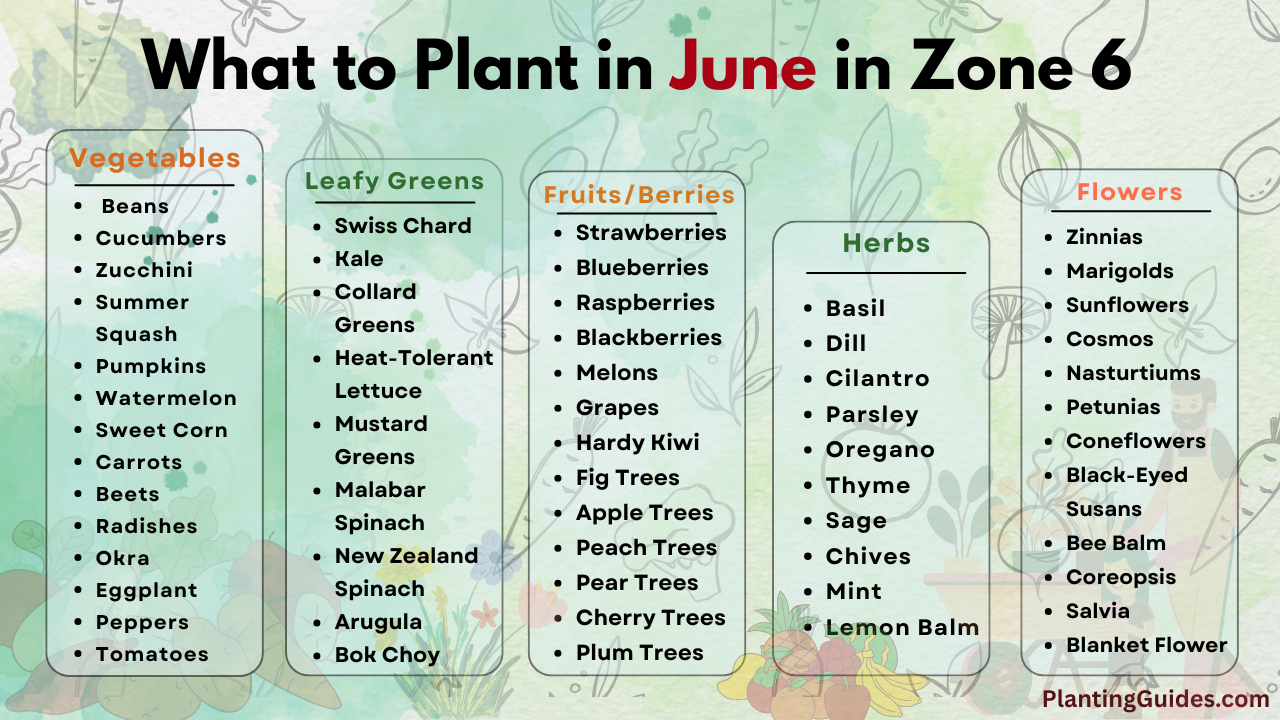
If you live in Zone 6, you have probably been waiting for this month. Actually, this is the month when gardening in Zone 6 starts getting really exciting.
By now, the danger of frost is usually gone, and the soil is warm enough for plants to grow well. Many vegetables, flowers, and herbs start growing much faster than they did in spring. If you have been waiting for the perfect time to plant warm-season crops, June is when the garden really comes to life.
And remember one thing: Not every plant likes June heat equally.
So, if you choose plants that grow well in June, such as warm-season vegetables, herbs, berries, and flowers that can handle the heat, you will have healthier plants, better harvests, and fewer problems to deal with as summer goes on.
No matter if you are growing plants in pots, raised beds, or a backyard garden, this guide will help you get the best results from your garden.
If you are looking for a simple, reliable, and practical planting guide for Zone 6, you are in the right place. Let's look at what you should plant this month for a healthy and productive garden.
Leafy Greens to Plant in June in Zone 6
Many people think leafy greens can only be grown in spring, but that's not true. Many greens grow well in June too, especially if you pick heat-tolerant varieties and give them some afternoon shade during hot weather.
The simple trick is avoiding the varieties that bolt quickly in heat. Don't worry, I will help you choose the best one.
| Leafy Green | Planting Method | Transplanting Time (Days After Sowing) | Sun Requirements | First Harvest | Variety Recommendations |
|---|---|---|---|---|---|
| Swiss Chard | Direct sow or transplant | 20–30 days (if started indoors) | 6–8 hours of sun; afternoon shade helpful in hot areas | 30–50 days | Bright Lights, Fordhook Giant |
| Kale | Direct sow or transplant | 25–35 days (if started indoors) | 6–8 hours of sun; tolerates light afternoon shade | 40–60 days | Lacinato, Red Russian |
| Collard Greens | Direct sow | N/A | 6–8+ hours of direct sun | 45–60 days | Champion, Georgia Southern |
| Heat-Tolerant Lettuce | Direct sow | N/A | 4–6 hours of sun; afternoon shade recommended | 25–40 days | Jericho, Nevada, Summer Crisp |
| Mustard Greens | Direct sow | N/A | 6–8 hours of sun; some afternoon shade in warm weather | 25–40 days | Red Giant, Southern Giant |
| Malabar Spinach | Direct sow | N/A | 6–8+ hours of direct sun; thrives in heat | 50–70 days | Red Stem, Green Stem |
| New Zealand Spinach | Direct sow | N/A | 6–8+ hours of direct sun; handles hot summer conditions well | 50–65 days | Standard Variety |
| Arugula | Direct sow | N/A | 4–6 hours of sun; afternoon shade helps prevent bolting | 20–30 days | Astro, Rocket |
| Bok Choy | Direct sow carefully | N/A | 4–6 hours of sun; afternoon shade helps reduce heat stress | 30–45 days | Toy Choy, Joi Choi |
If temperatures suddenly rise above 85°F (29°C) for several days, leafy greens like lettuce and arugula can become bitter and bolt faster. To maintain better flavor and extend the harvest period, use a shade cloth or plant them near taller vegetables that provide some afternoon shade.
If you're new to gardening and only want to plant a few leafy greens this month, start with Swiss chard, kale, collard greens, and Malabar spinach. They are easy to grow, don't need much special care, handle warm weather well, and can keep producing fresh leaves for harvest throughout the season.
One of the smartest tricks for growing leafy greens in June is planting them where they receive morning sun and some shade during the hot afternoon hours.
Vegetables to Plant in Zone 6
June is one of the best months to plant vegetables in Zone 6. Honestly, the soil is now warm enough for seeds to sprout quickly, roots grow faster, and plants get established much more easily than they do earlier in the season.
The most important thing to remember is that June is the prime time for warm-season vegetables. So, focus on plants that love the warm weather.
| Vegetable | Planting Method | Transplanting Time (Days After Sowing) | First Harvest | Variety Recommendations |
|---|---|---|---|---|
| Bush Beans | Direct sow | NA | 50–60 days | Provider, Blue Lake |
| Pole Beans | Direct sow | NA | 60–75 days | Kentucky Wonder, Fortex |
| Cucumbers | Direct sow or transplant | 20–25 days (if started indoors) | 50–65 days | Marketmore 76, Diva |
| Zucchini | Direct sow or transplant | 20–25 days (if started indoors) | 45–55 days | Black Beauty, Dunja |
| Summer Squash | Direct sow | NA | 50–60 days | Yellow Crookneck, Zephyr |
| Pumpkins | Direct sow | NA | 90–120 days | Jack Be Little, Howden |
| Watermelon | Direct sow or transplant | 20–25 days (if started indoors) | 75–95 days | Sugar Baby, Crimson Sweet |
| Cantaloupe | Direct sow or transplant | 20–25 days (if started indoors) | 75–90 days | Hale’s Best, Athena |
| Sweet Corn | Direct sow | NA | 70–90 days | Honey Select, Silver Queen |
| Carrots | Direct sow | NA | 60–80 days | Nantes, Bolero |
| Beets | Direct sow | NA | 50–70 days | Detroit Dark Red, Chioggia |
| Radishes | Direct sow | NA | 20–30 days | French Breakfast, Cherry Belle |
| Okra | Direct sow | NA | 50–65 days | Clemson Spineless |
| Eggplant | Transplant | 60–70 days | 70–90 days | Black Beauty, Fairy Tale |
| Peppers | Transplant | 60–70 days | 70–90 days | California Wonder, Jalapeño |
| Tomatoes | Transplant | 50–60 days | 60–90 days | Celebrity, Sungold, Roma |
| Sweet Potatoes | Transplant (Slips) | NA | 90–120 days | Beauregard, Georgia Jet, Covington |
| Cabbage | Indoor Seedling (for Fall harvest) | 25–35 days | 65–90 days (after transplant) | Late Flat Dutch, Brunswick, Copenhagen Market |
Wait until soil temperatures reach at least 60°F for beans, cucumbers, and squash for faster germination. These plants prefer slightly warmer soil than the other vegetables listed above.
Important note for Tomato & Pepper:
Even in June, sudden cool nights can temporarily slow peppers and tomatoes in some Zone 6 areas.
If the temperature suddenly drops, the plants may stop growing for a while. Their leaves might turn a little purple.
This is normal, and they usually recover when the nights become warm again. Don't add fertilizer quickly, because it can actually make the problem worse.
Best Fruits & Berries to Plant in June in Zone 6
June is a great month to get fruit plants established in Zone 6. The warm soil and longer days help them grow strong roots to settle in, so they can handle the summer heat better and produce more fruit later.
These are the best fruits & berries that you can plant this month in Zone 6.
| Fruit or Berry | Planting Method | First Harvest | Variety Recommendations | Soil Type | Plant Height |
|---|---|---|---|---|---|
| Strawberries | Plant crowns or rooted runners | Next season mostly | Albion, Seascape | Well-drained sandy loam, pH 5.5–6.5, rich in organic matter | 6–12 inches |
| Blueberries | Plant container-grown shrubs with acidic soil mix | 1–2 years | Bluecrop, Patriot | Highly acidic sandy loam, pH 4.5–5.5, peat-rich, low lime | 4–6 feet |
| Raspberries | Plant bare-root canes or potted canes in rows with support trellis | Next year mostly | Heritage, Caroline | Well-drained loam, pH 5.8–6.5, high organic content | 4–6 feet |
| Blackberries | Plant thornless potted canes along trellis or fence line | Next year mostly | Chester, Triple Crown | Fertile loam, pH 5.5–6.5, well-drained but moisture-retentive | 3–8 feet |
| Ground Cherries | Transplant seedlings started indoors or nursery plants after frost | 70–90 days | Aunt Molly’s | Light sandy loam, pH 6.0–7.0, moderately fertile, well-drained | 2–3 feet |
| Melons | Direct sow seeds in mounds or transplant seedlings carefully | 75–95 days | Sugar Cube, Athena | Sandy loam, pH 6.0–6.8, warm, fast-draining, nutrient-rich | Vine (6–10 feet spread) |
| Grapes | Plant dormant potted vines at base of trellis or arbor | 2–3 years | Concord, Niagara | Deep sandy loam, pH 5.5–6.5, well-drained, slightly gravelly | 6–20 feet (vine) |
| Hardy Kiwi | Plant young male/female vines near strong support structure | 3–5 years | Anna, Issai | Rich loam, pH 5.5–6.5, moist but well-drained, high organic matter | 10–20 feet (vine) |
| Fig Trees | Plant container-grown trees in ground or large pots | 1–2 years | Brown Turkey, Chicago Hardy | Loamy to sandy loam, pH 6.0–7.0, well-drained, moderately fertile | 10–15 feet |
| Apple Trees | Plant grafted bare-root or container saplings in deep holes | 2–4 years | Honeycrisp, Gala | Deep loam, pH 6.0–7.0, well-drained, moderately fertile | 8–15 feet |
| Peach Trees | Plant grafted bare-root or potted trees in well-prepared soil | 2–4 years | Elberta, Redhaven | Sandy loam, pH 6.0–6.8, well-drained, slightly acidic | 8–15 feet |
| Pear Trees | Plant grafted bare-root or container trees in deep, fertile soil | 3–5 years | Bartlett, Bosc | Loamy soil, pH 6.0–7.0, well-drained, moisture-retentive | 10–15 feet |
| Cherry Trees | Plant grafted bare-root or potted trees in raised, well-drained beds | 3–5 years | Bing, Stella | Sandy loam, pH 6.2–6.8, very well-drained, low clay content | 10–20 feet |
| Plum Trees | Plant grafted bare-root or potted trees in fertile orchard soil | 3–5 years | Santa Rosa, Methley | Loamy soil, pH 6.0–7.0, well-drained, moderately fertile, slightly moist | 10–15 feet |
Water your plants deeply 2–3 times a week for the first 2–3 weeks so the water reaches the roots, not just the top soil. New plants need deep watering during hot June weather to establish strong roots.
Don't plant during extreme hot weather, because new plants can get stressed and their roots may not develop properly.
Soil preparation is very important in summer. Mix compost into the soil before planting so the roots can easily get the nutrients they need to grow well.
This month is best for planting container-grown or already established plants. Bare-root trees and shrubs can't handle the summer heat well and may not settle in well.
Add a 2–3 inch layer of mulch right after planting to keep the soil cool and moist. It also stops weeds from growing around your plant.
I have created a detailed guide on mulching. You can check it out here: Mulching Guide - Types of Mulch and the Right Way to Use Them.
Herbs to Plant in Zone 6
Herbs grow very well in June, especially Mediterranean herbs that love warm weather.
In Zone 6, the warm soil helps herbs grow faster. But not all herbs behave the same; some grow really well in the heat, while others may slow down or look a little stressed when it gets too hot.
So you need to plant the right herbs in the right way, or they won't give good results.
| Herb | Planting Method | First Harvest | Variety Recommendations | Flavour |
|---|---|---|---|---|
| Basil | Best as transplant; direct sow only if soil is very warm (70°F+) | 25–40 days (baby leaves), 40–50 days full harvest | Genovese, Thai Basil, Italian Large Leaf | Sweet, slightly peppery, aromatic |
| Dill | Direct sow only (does not like root disturbance) | 35–55 days (leaves), 60–80 days (seeds) | Bouquet, Fernleaf (container-friendly) | Fresh, grassy, mild anise flavor |
| Cilantro | Direct sow in partial shade; avoid peak afternoon heat | 25–40 days (leaf harvest before bolting) | Santo, Calypso (slow-bolt types) | Fresh, citrusy, slightly soapy for some |
| Parsley | Transplant preferred for faster start; seeds are slow | 50–70 days | Italian Flat Leaf, Curly Parsley | Mild, fresh, slightly peppery |
| Oregano | Transplant (slow starter but heat-tough once established) | 45–60 days | Greek Oregano (best flavor) | Strong, earthy, slightly bitter |
| Thyme | Transplant into well-drained soil; hates wet feet | 45–65 days | English Thyme, Lemon Thyme | Earthy, minty, slightly lemony |
| Sage | Transplant only; prefers dry, sunny conditions | 60–75 days | Common Sage, Purple Sage | Earthy, savory, slightly pine-like |
| Chives | Transplant or division of existing clumps | 25–40 days (light harvest), full clump after establishment | Common Chives, Garlic Chives | Mild onion flavor |
| Mint | Transplant only (always in containers!) | 20–35 days | Spearmint, Peppermint, Chocolate Mint | Cool, refreshing, sweet |
| Lemon Balm | Transplant; spreads quickly if unchecked | 40–60 days | Standard Lemon Balm | Lemon-like, citrusy, minty |
Basil can be a great choice to grow this month in Zone 6 because it loves warm weather. But if nights get cooler than about 55°F or the soil is still cold, it may not grow well. Once it gets warm soil and settles in, it grows very fast.
Cilantro does NOT like hot weather. In June, it can bolt quickly (go to seed). So plant it in a cooler or slightly shaded place and keep the soil cool with mulch.
Always grow mint in a pot or container. Because mint grows like crazy. If you plant it in the ground, it will spread everywhere.
Flowers to Plant in June in Zone 6
June is when Zone 6 gardens fully shift into summer. The soil is warm, nights are steady, and direct sowing works well now.
But the main thing to remember is: Always go for flowers that grow fast, love heat, and bloom for a long time. Avoid flowers that struggle in hot weather.
Below are the exact flowers that consistently perform best when planted in June in Zone 6.
| Flower Name | Planting Method | Flower Color | First Bloom | Perennial or Annual | Sunlight Requirement |
|---|---|---|---|---|---|
| Zinnias | Direct sow outdoors or transplant | Pink, red, yellow, white | 50–70 days | Annual | 6–8 hours full sun daily |
| Marigolds | Direct sow or transplant after frost | Yellow, orange | 45–60 days | Annual | 6–8 hours full sun daily |
| Sunflowers | Direct sow in garden soil | Yellow, red, brown | 70–100 days | Annual | 6–8+ hours full sun daily |
| Cosmos | Direct sow after last frost | Pink, white, purple | 50–70 days | Annual | 6–8 hours full sun daily |
| Nasturtiums | Direct sow after frost in garden soil | Red, orange, yellow | 45–60 days | Annual | 4–6 hours sun (tolerates partial shade) |
| Petunias | Transplant seedlings outdoors | Purple, pink, white | 30–50 days | Annual | 6–8 hours full sun daily |
| Coneflowers | Transplant young plants | Purple, pink, white | Summer to next year | Perennial | 6–8 hours full sun daily |
| Black-Eyed Susans | Transplant nursery plants | Yellow with dark center | Late summer | Perennial | 6+ hours full sun daily |
| Bee Balm | Transplant in garden soil | Red, pink, purple | Mid to late summer | Perennial | 4–6 hours sun (tolerates partial shade) |
| Coreopsis | Transplant in sunny spot | Yellow, gold | Summer | Perennial | 6–8 hours full sun daily |
| Salvia | Transplant in well-drained soil | Blue, purple, red | Summer | Perennial | 6–8 hours full sun daily |
| Blanket Flower | Transplant in sunny, dry soil | Red, yellow, orange | Summer | Perennial | 6–8+ hours full sun daily |
If you buy young plants from a nursery, try to plant them on a cloudy day or in the late afternoon to prevent transplant shock from the strong afternoon sun.
For perennials like Coneflowers or Bee Balm, water them regularly (about 2–3 times a week, depending on heat and rain) during their first season so they can develop strong roots before winter arrives.
If you want nonstop pollinators in your garden, plant zinnias, cosmos, bee balm, and sunflowers. Bees absolutely love them.