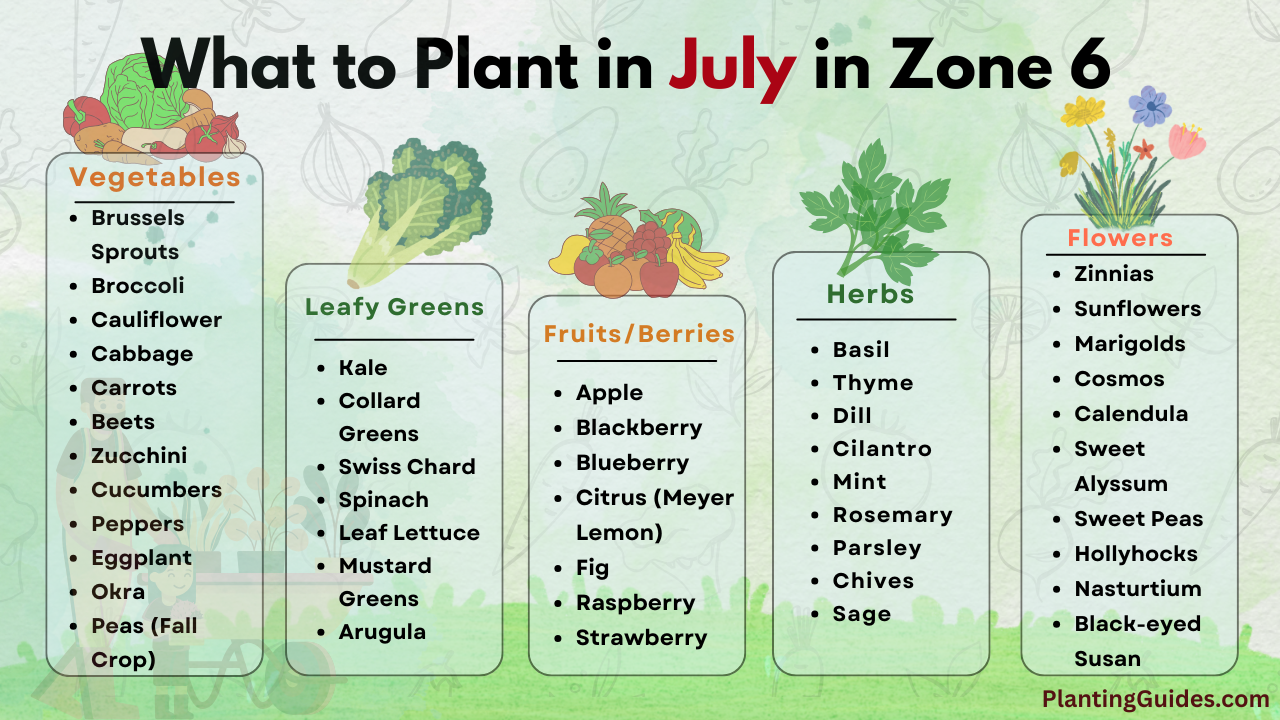
If you are thinking July is too late to plant a garden, you're not alone. I used to think the same thing when I first started gardening.
But I was completely wrong.
Trust me, your gardening season isn't over yet. There are still plenty of vegetables, herbs, flowers, and even some fruits you can grow. You just need to choose the right crops and the right varieties for July.
You know what: July isn't just about summer gardening. It's actually the perfect time to start planting for your fall harvest.
July is one of the hottest months in Zone 6. Daytime temperatures usually stay between 75°F and 90°F (24°C to 32°C). So, Don't forget to use shade cloth and mulch this month. At least add a 2–3 inch layer of mulch around your plants this month.
I have also created a detailed guide on mulching; you can check that out from here: Mulching Guide - Types of Mulch and the Right Way to Use Them
If you're not sure what to plant this month, just read this article. It will clear your confusion and help you find the right crops for this season, along with some useful gardening tips.
One good thing about July is the warm soil. Seeds germinate quickly in warm soil, but young plants will need regular watering to handle the summer heat.
This article also includes tables with all the important details about each crop and helpful gardening information.
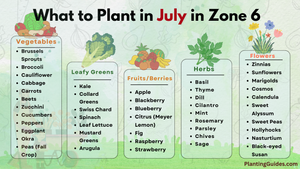
Leafy Greens to Plant in Zone 6
Leafy greens don't like hot soil. If the soil is too hot, seeds may not sprout properly.
So, before planting seeds, I always water the soil well and cover it with cardboard or other mulch for a few days. This keeps the soil cool and dark, so the seeds can sprout instead of drying out or getting damaged.
If I decide to plant leafy greens in July, I always go for heat-tolerant varieties that can handle high summer temperatures.
| Leafy Green | Planting Method | Transplanting Time (After Sowing) | First Harvest | Sunlight Requirement | Variety Recommendations |
|---|---|---|---|---|---|
| Kale | Start indoors or direct sow | 4–5 weeks | 55–65 days | 6–8 hours of direct sun | Lacinato, Winterbor |
| Collard Greens | Start indoors or direct sow | 4–5 weeks | 60–75 days | 6–8 hours of direct sun | Georgia Southern, Champion |
| Swiss Chard | Direct sow | N/A (thin at 21 days) | 50–60 days | 4–6 hours of sun; partial shade is ideal in hot weather | Fordhook Giant, Lucullus |
| Spinach | Direct sow | N/A | 35–45 days | 4–6 hours of sun; partial shade helps in warm weather | Bloomsdale Long Standing, Giant Winter |
| Leaf Lettuce | Direct sow | N/A | 30–45 days | 4–6 hours of sun; afternoon shade prevents bolting | Jericho (Heat tolerant), Buttercrunch |
| Mustard Greens | Direct sow | N/A | 30–40 days | At least 6 hours of direct sun | Florida Broadleaf, Red Giant |
| Arugula | Direct sow | N/A | 25–35 days | 4–6 hours of morning sun; afternoon shade is beneficial | Astro, Sylvetta (Wild) |
If possible, give plants shade in the afternoon using shade cloth or a simple garden cover to protect them from strong heat.
I always pick the leaves when they are small, soft, and tender for the best taste.
Always water your plants deeply 2–3 times a week in summer, so the water goes down to the roots and the soil stays moist for longer.
Vegetables to Plant in July in Zone 6
July is the perfect time to plant and grow fast-growing vegetables and many root crops. Trust me, they grow well in warm soil, and many of them taste even better when cooler fall weather arrives.
Remember, I am listing only the plants that grow best in July in Zone 6.
| Vegetable | Planting Method | Transplanting Time (Days After Sowing) | First Harvest | Best Varieties |
|---|---|---|---|---|
| Brussels Sprouts | Start indoors, then transplant | 35–45 days | 90–110 days | Long Island Improved, Diablo |
| Broccoli | Start indoors, then transplant | 25–35 days | 60–80 days | Packman, Premium Crop |
| Cauliflower | Start indoors, then transplant | 30–45 days | 70–90 days | Snowball, Graffiti |
| Cabbage | Start indoors, then transplant | 25–40 days | 60–90 days | Golden Acre, Early Jersey Wakefield |
| Carrots | Direct sow | N/A | 60–80 days | Nantes, Danvers 126 |
| Beets | Direct sow | N/A | 50–65 days | Detroit Dark Red, Chioggia |
| Winter Radishes | Direct sow | N/A | 50–70 days | Daikon, Black Spanish |
| Turnips | Direct sow | N/A | 40–60 days | Purple Top White Globe |
| Bush Beans | Direct sow | N/A | 50–60 days | Provider, Blue Lake Bush |
| Zucchini | Direct sow or start indoors then transplant | 20–30 days | 45–55 days | Black Beauty, Cocozelle |
| Summer Squash | Direct sow or start indoors then transplant | 20–30 days | 50–60 days | Yellow Crookneck, Zephyr |
| Cucumbers | Direct sow or start indoors then transplant | 20–30 days | 50–65 days | Marketmore 76, Diva |
| Cantaloupe | Direct sow or start indoors then transplant | 20–30 days | 75–90 days | Hale’s Best, Athena |
| Peppers | Start indoors, then transplant | 50–70 days | 70–90 days | California Wonder, Jalapeño |
| Eggplant | Start indoors, then transplant | 45–60 days | 70–90 days | Black Beauty, Listada de Gandia |
| Okra | Direct sow or start indoors then transplant | 20–30 days | 50–65 days | Clemson Spineless |
| Peas (Fall Crop) | Direct sow | N/A | 55–70 days | Sugar Ann, Little Marvel |
| Pumpkin | Direct sow | N/A | 90–100 days | Sugar Pie, Jack Be Little |
DON'T let your newly planted seed dry out. In hot weather, the top layer of soil can dry within a few hours. So it's important to keep the soil evenly moist until the seeds sprout.
The biggest challenge in July is stopping the soil from drying out too fast.
So, you can spread a 2–3 inch layer of mulch around your plants and water them deeply every 2–3 days. This helps the soil stay moist for longer and keeps the roots cool during hot summer days.
Fruits & Berries to Plant in July
I promised to be 100% honest with you. So here is the truth: Do not plant any fruits or berries right now.
July isn't the best time to plant fruit trees, because the soil is very hot right now. Young fruit trees and berry bushes can struggle to settle in and may not survive the heat.
BUT if you absolutely have to add fruit to your garden in July, only go for container-grown plants.
Never use bare-root stock in July. Container plants come with their own soil, which protects the roots from transplant shock.
These are some plants you can grow this month in Zone 6, but remember, this is not the best time to plant them.
| Fruit or Berry | Planting Method | Soil Type | Plant Height | First Harvest | Variety Recommendations |
|---|---|---|---|---|---|
| Apple | Container-grown tree | Well-drained, loamy soil | 8–20 feet (depending on rootstock) | 2–4 years | Honeycrisp, Gala, Fuji |
| Blackberry | Container-grown canes | Well-drained, fertile soil | 4–8 feet | Next year | Natchez, Ouachita, Triple Crown |
| Blueberry | Container-grown shrubs | Acidic, well-drained soil | 4–8 feet | 1–2 years | Bluecrop, Premier, Brightwell |
| Citrus (Meyer Lemon) | Container-grown tree | Well-drained, sandy loam soil | 6–10 feet | 1–2 years | Improved Meyer Lemon |
| Fig | Container-grown tree | Well-drained, loamy soil | 10–20 feet | 1–2 years | Celeste, Brown Turkey, Chicago Hardy |
| Raspberry | Container-grown canes | Well-drained, rich soil | 3–6 feet | Next year | Heritage, Caroline, Anne |
| Strawberry | Potted plants or runners | Well-drained, fertile, slightly acidic soil | 6–12 inches | Next spring | Albion, Seascape, Ozark Beauty |
If you are planting any fruit trees or berries in summer, mulching is one of the most important things you can do.
Apply a 2–3 inch layer of wood chips or straw around the base of the plants, but keep it a few inches away from the trunk or stems.
Water is non-negotiable. You can use a soaker hose or water by hand every day to keep the root area moist. Don't let the soil dry out, even for a single day.
Flowers to Plant in July in Zone 6
You might think it's too late to plant flowers, but it's not. If you plant fast-growing flowers now, they will bloom in September when your garden starts looking dull.
Also, Many flowers attract bees, butterflies, and other pollinators that help improve vegetable production.
Again, these are only the plants that grow best in July in Zone 6.
| Flower Name | Planting Method (Simple) | Flower Color | First Bloom | Sunlight Requirement | Perennial or Annual |
|---|---|---|---|---|---|
| Zinnias | Sow seeds directly in warm garden soil | Pink, red, yellow, orange | 55–70 days | 6–8 hours direct full sun daily | Annual |
| Sunflowers | Sow seeds directly in a sunny garden spot | Yellow | 60–80 days | 6–10 hours direct full sun daily | Annual |
| Marigolds | Sow seeds in garden or start indoors then transplant | Yellow, orange | 50–60 days | 6–8 hours direct full sun daily | Annual |
| Cosmos | Sow seeds directly in garden soil | Pink, white, purple | 50–70 days | 6+ hours full sun (tolerates light shade) | Annual |
| Calendula | Sow seeds directly in garden soil | Yellow, orange | 45–60 days | 4–6 hours sun daily (best in cool sun) | Annual |
| Sweet Alyssum | Sprinkle seeds directly on soil surface | White, pink, purple | 40–50 days | 4–6 hours sun or light shade | Annual |
| Sweet Peas | Sow seeds in cool soil near a trellis/support | Pink, purple, white | 60–90 days | 5–7 hours sun (prefers cool weather) | Annual (cool season) |
| Hollyhocks | Plant seeds or young plants near a wall/support | Pink, red, yellow, white | Next year | 6–8 hours full sun daily | Biennial / short-lived perennial |
| Nasturtium | Put seeds directly into garden soil | Red, orange, yellow | 45–60 days | 4–6 hours sun (tolerates partial shade) | Annual |
| Black-eyed Susan | Plant nursery-grown young plants in garden beds | Yellow with dark center | Next summer | 6–8 hours full sun daily | Perennial |
| Milkweed | Sow seeds directly outdoors or plant young nursery plants | Orange, pink, white | Next summer | 6–8 hours direct full sun daily | Perennial |
| Coneflower | Plant nursery-grown young plants in garden soil | Purple, pink, white | Next summer | 6–8 hours full sun daily | Perennial |
| Mums (Garden Chrysanthemums) | Plant nursery-grown plants in well-drained garden soil | Yellow, white, pink, purple, red | Late summer to fall | 6+ hours of direct full sun daily | Perennial |
| Shasta Daisy | Plant nursery-grown young plants in sunny garden area | White with yellow center | Next summer | 6+ hours full sun daily | Perennial |
If you want flowers that are easy to grow, go with zinnias or marigolds. They love the July heat and are a great choice for beginner gardeners.
Milkweed is a great choice for attracting monarch butterflies. It grows slowly at first, so be patient and don't expect flowers right away.
If you plant mums in July, pinch off the top 1–2 inches of the new growing tips about a week or two after planting. You can do this one more time before the end of July. This helps the plant grow bushier and produce more flowers in the fall.
Herbs to Plant in July in Zone 6
If you're thinking you've missed your chance to plant herbs, you're wrong. You can still plant many herbs that grow well in the summer heat.
Just choose the heat-loving herbs and the right varieties for Zone 6.
Don't worry about choosing the right herbs. I've already listed the best heat-loving herbs and the varieties that grow best in your area in the table below, so you can plant them with confidence.
| Herb | Planting Method | First Harvest | Flavour | Variety Recommendations |
|---|---|---|---|---|
| Basil | Sow seeds directly outdoors in early July or plant healthy nursery transplants | 30–50 days | Sweet, slightly peppery, aromatic | Genovese, Sweet Basil, Thai Basil |
| Thyme | Plant nursery-grown transplants in full sun and well-drained soil | 45–60 days | Earthy, minty, slightly lemony | English Thyme, German Winter Thyme |
| Dill | Direct sow seeds outdoors where plants will mature; avoid transplanting | 40–60 days | Fresh, tangy, slightly anise-like | Bouquet, Fernleaf, Mammoth |
| Cilantro | Direct sow seeds in partial shade and keep soil evenly moist | 30–45 days | Bright, citrusy, slightly peppery | Santo, Calypso, Cruiser |
| Mint | Plant rooted runners, divisions, or nursery transplants in containers or garden beds | 30–45 days | Cool, sweet, refreshing | Spearmint, Peppermint, Chocolate Mint |
| Rosemary | Plant established nursery transplants in a warm, sunny location | 60–90 days | Pine-like, woody, aromatic | Arp, Tuscan Blue, Hill Hardy |
| Parsley | Sow seeds outdoors or transplant young seedlings into fertile, moist soil | 60–75 days | Fresh, mild, slightly peppery | Italian Flat Leaf, Giant of Italy |
| Chives | Plant nursery-grown clumps or divided plants in full sun or partial shade | 30–45 days | Mild onion flavor | Common Chives, Garlic Chives |
| Sage | Plant healthy nursery transplants in a sunny location with well-drained soil | 60–75 days | Savory, earthy, slightly peppery | Common Sage, Berggarten Sage |
If you're planting herbs in July, give them a deep watering once or twice a week instead of watering them a little every day.
Don't use too much fertilizer. It may make your herbs grow lots of leaves, but the flavor and smell won't be as strong.
Parsley germinates slowly in warm weather, so keep the soil consistently moist until seedlings appear.
Rosemary and thyme don't like wet soil. Let the top layer of soil dry out before watering again, as too much water can damage their roots.