Bottom of Tomato Rotting – Causes and Treatment
By Parvez Akhtar Pasha | Jun 14, 2026
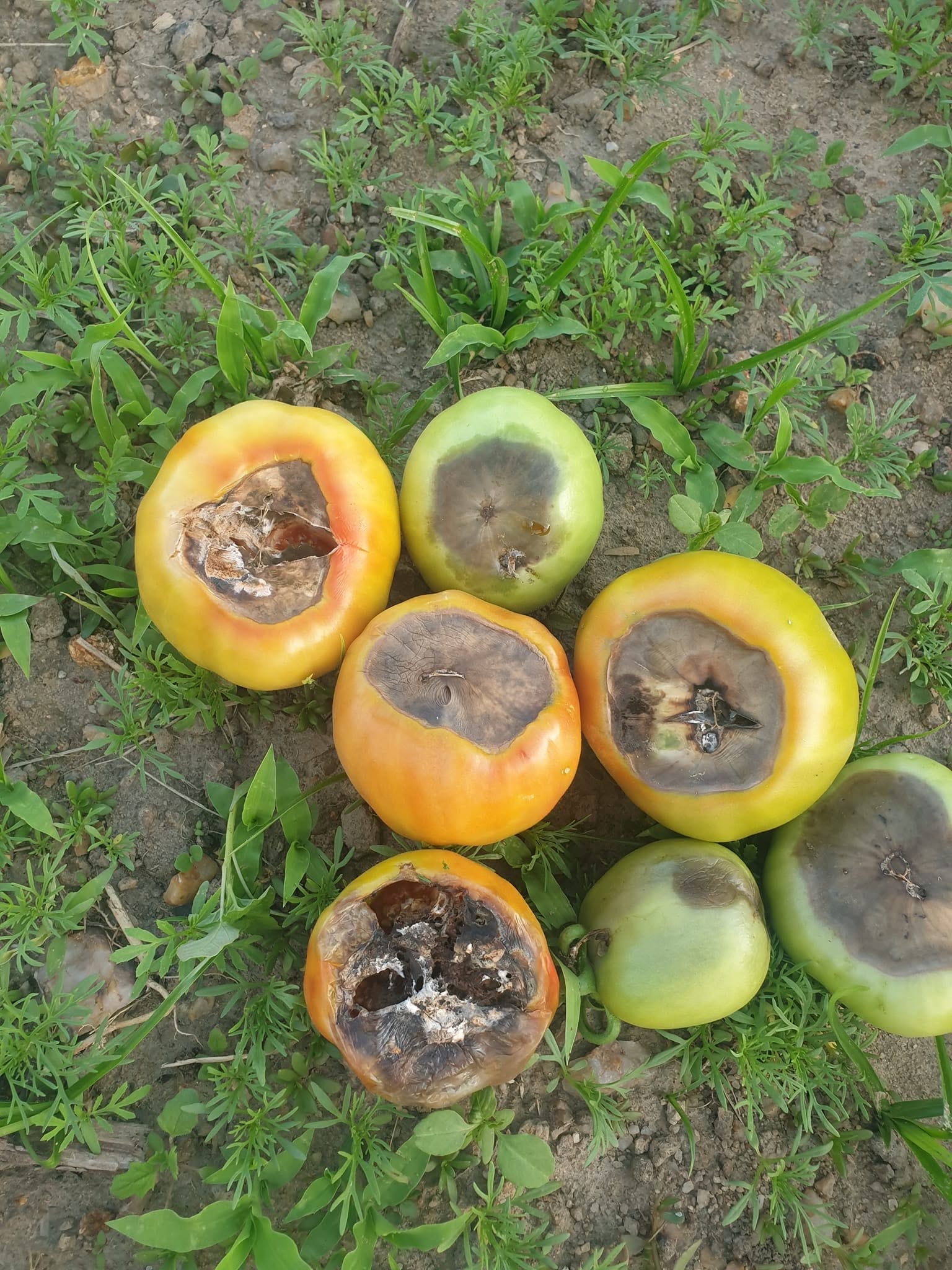
If the bottom of your tomatoes turns brown, black, and rotten, the problem is usually Blossom End Rot. This is not a disease; it's a common physiological disorder. It happens when the developing fruit does not get enough calcium.
Tomatoes need a steady supply of calcium while they are growing. Calcium helps build strong, healthy cells inside the fruit. If that calcium supply is interrupted, the cells at the very bottom of the fruit begin to die and collapse. This creates the dark brown or black patch known as blossom end rot.
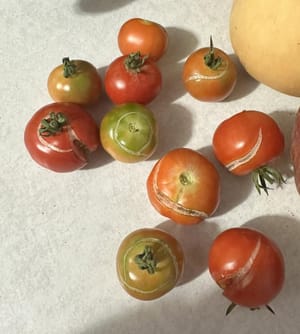
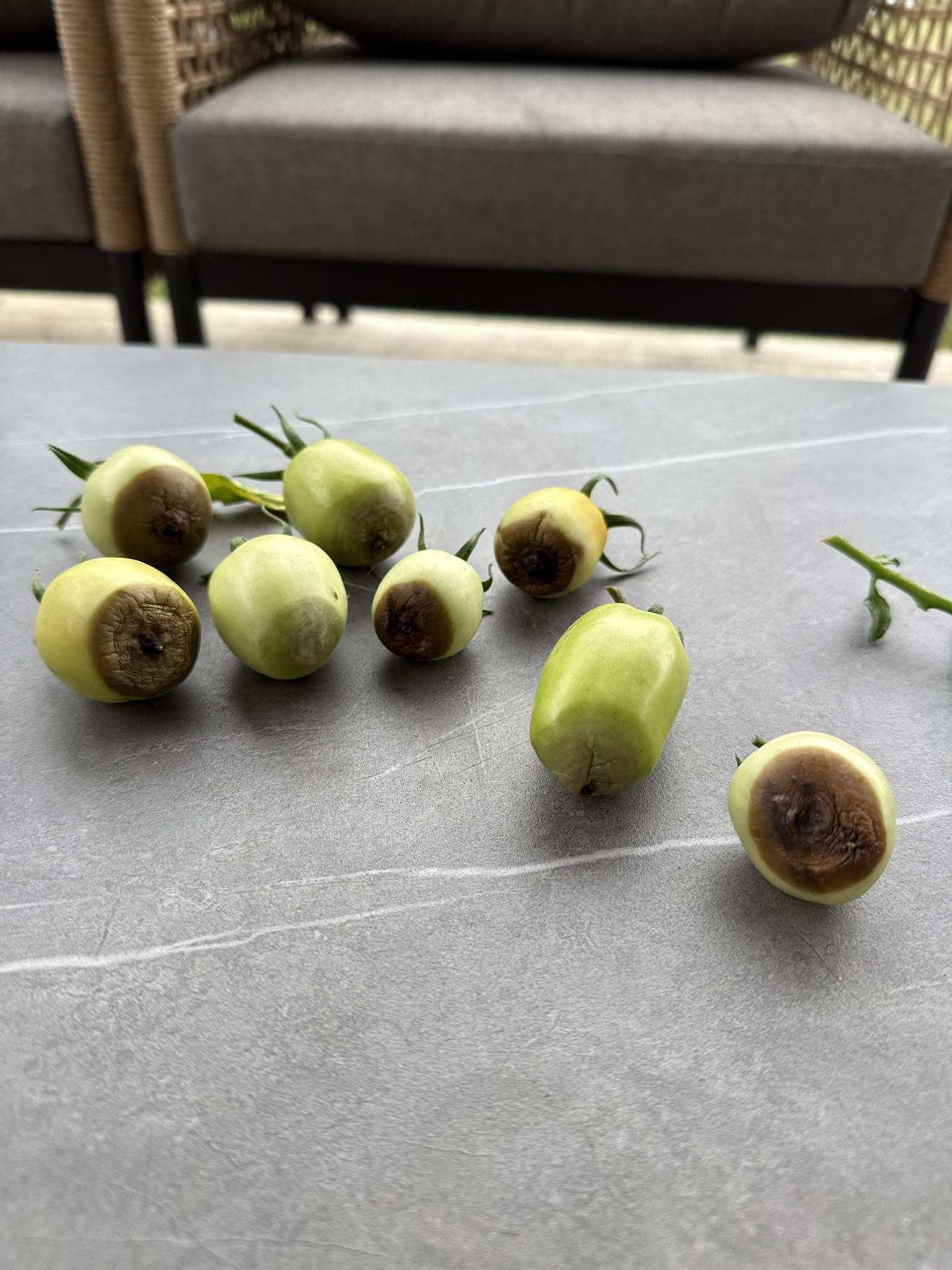
Now, have a look at the picture below. It shows a typical case of blossom end rot on tomatoes.
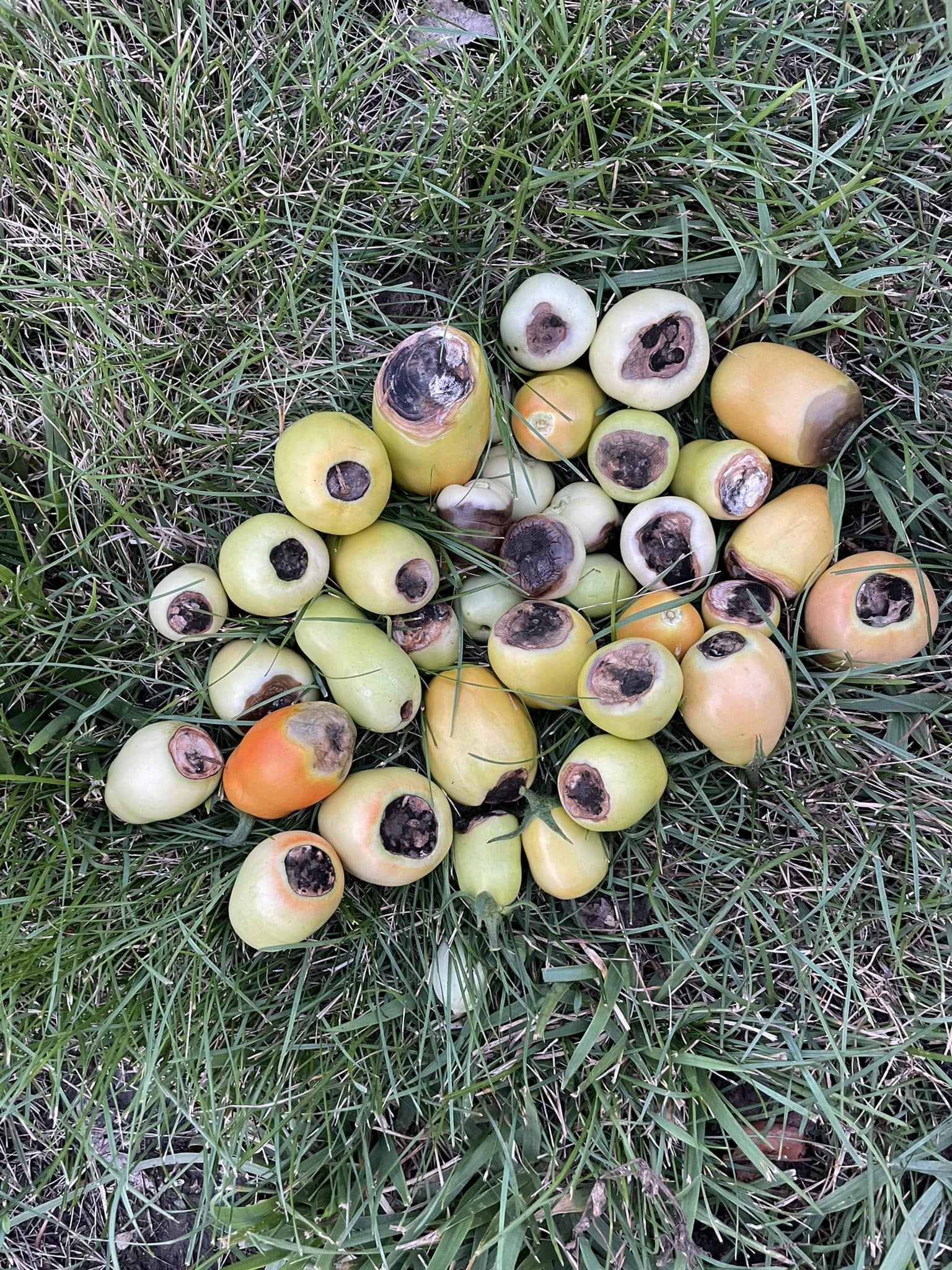
In most cases, blossom end rot is caused by a calcium transport problem rather than a lack of calcium in the soil. The soil has enough calcium, but inconsistent watering makes it harder for the plant to move that calcium to the developing fruit when it needs it most.
So, the inconsistent watering is the most common reason for Blossom End Rot in fruits.
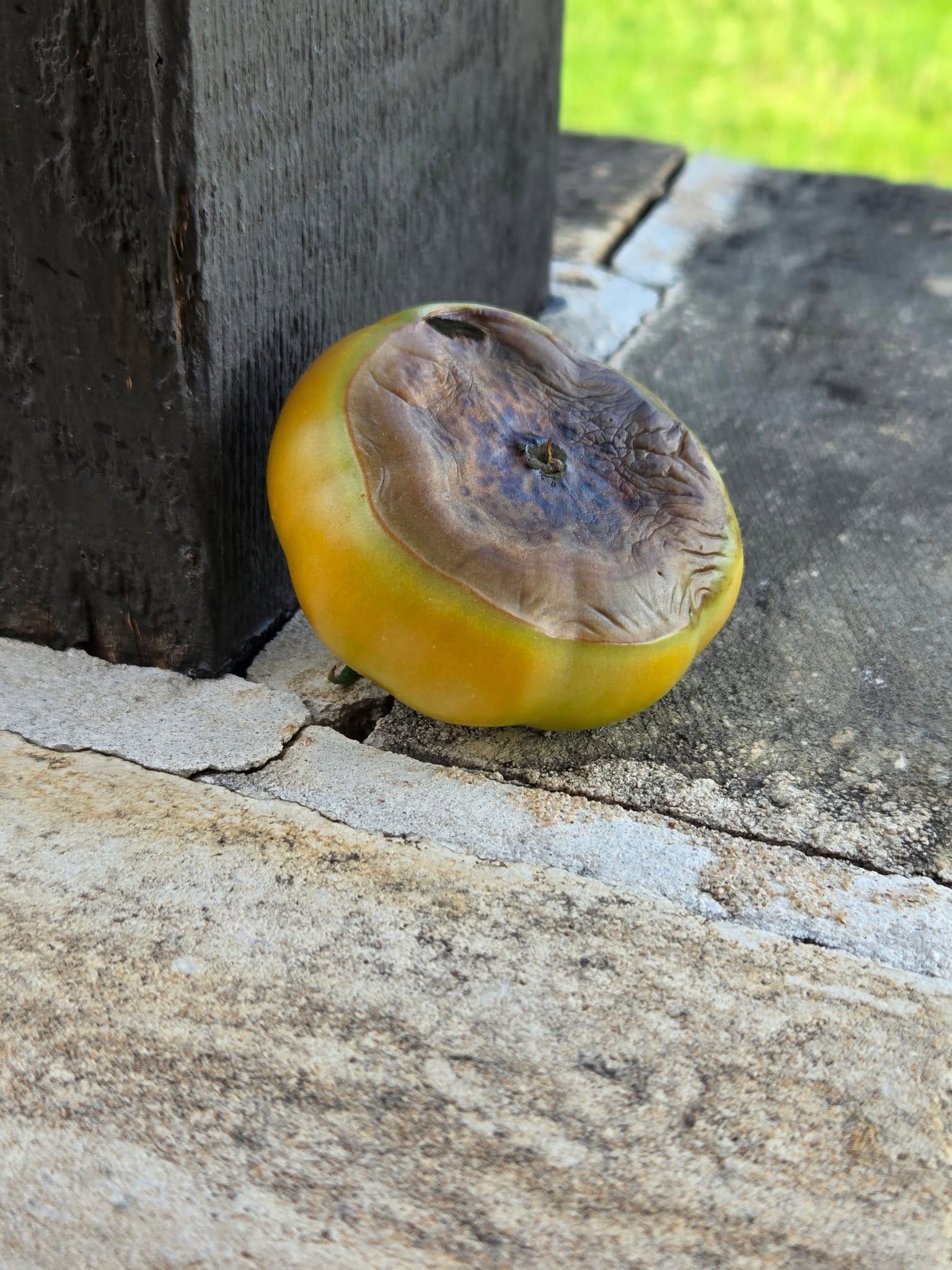
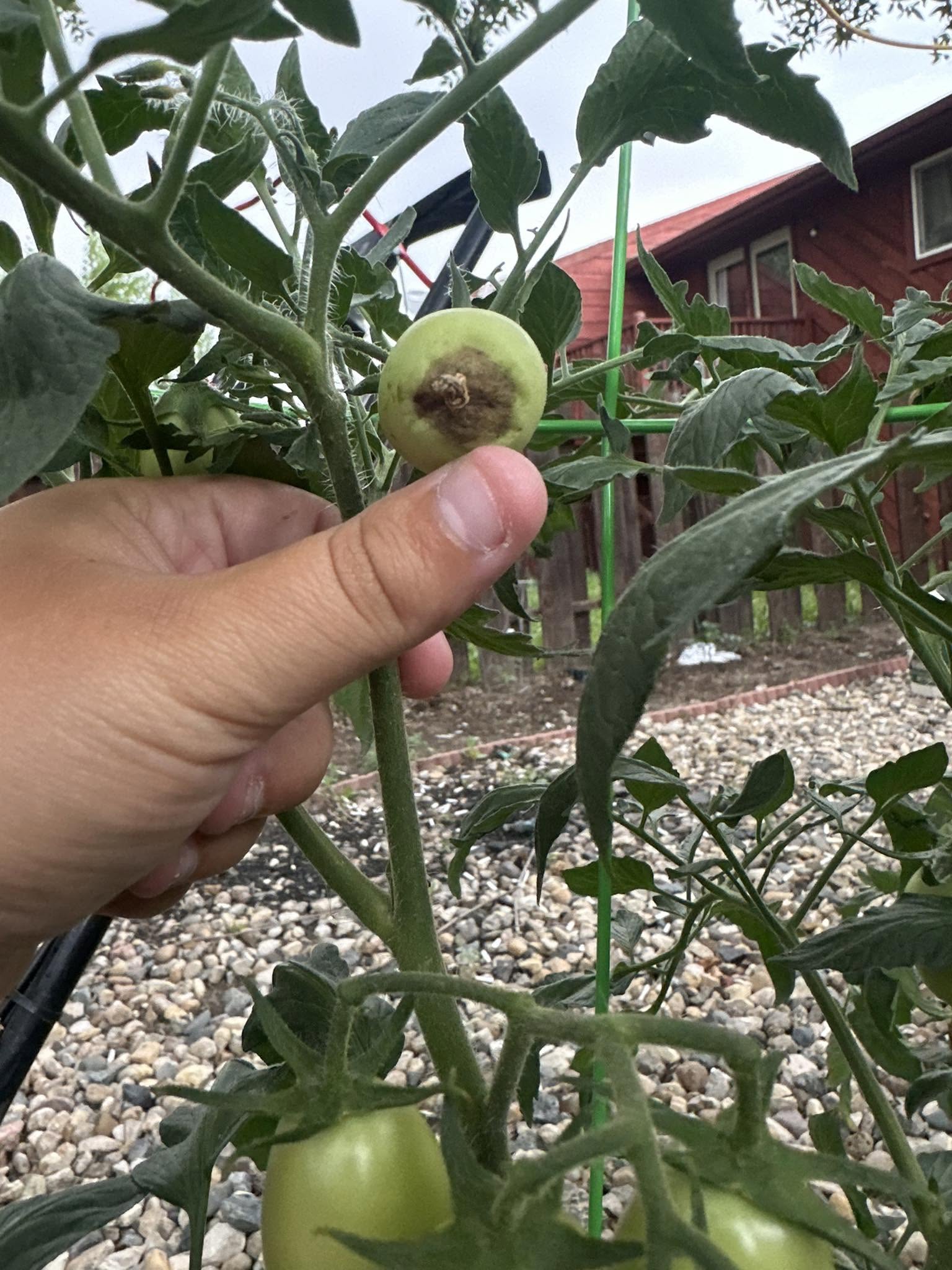
Here is another close-up of blossom end rot for your better understanding.
I won't list a bunch of reasons here that might just confuse you. Instead, I'll focus on the most common cause of blossom end rot, the one most gardeners face, and the most effective solutions to fix it.
Inconsistent Watering – The Most Common Reason
Calcium cannot move on its own. It travels with water. When watering is inconsistent, calcium delivery to the fruit becomes inconsistent too, which can lead to blossom end rot.
So, water your plants deeply whenever the top 1–2 inches of soil feels dry. The goal is to keep the soil evenly moist, not constantly wet or completely dry. During hot weather, you may need to water more often.
You can add a 2–3 inch layer of mulch around your tomato plants. I like to use straw or shredded leaves. This helps the soil stay moist for longer, especially during hot weather, and prevents it from drying out too quickly between waterings.
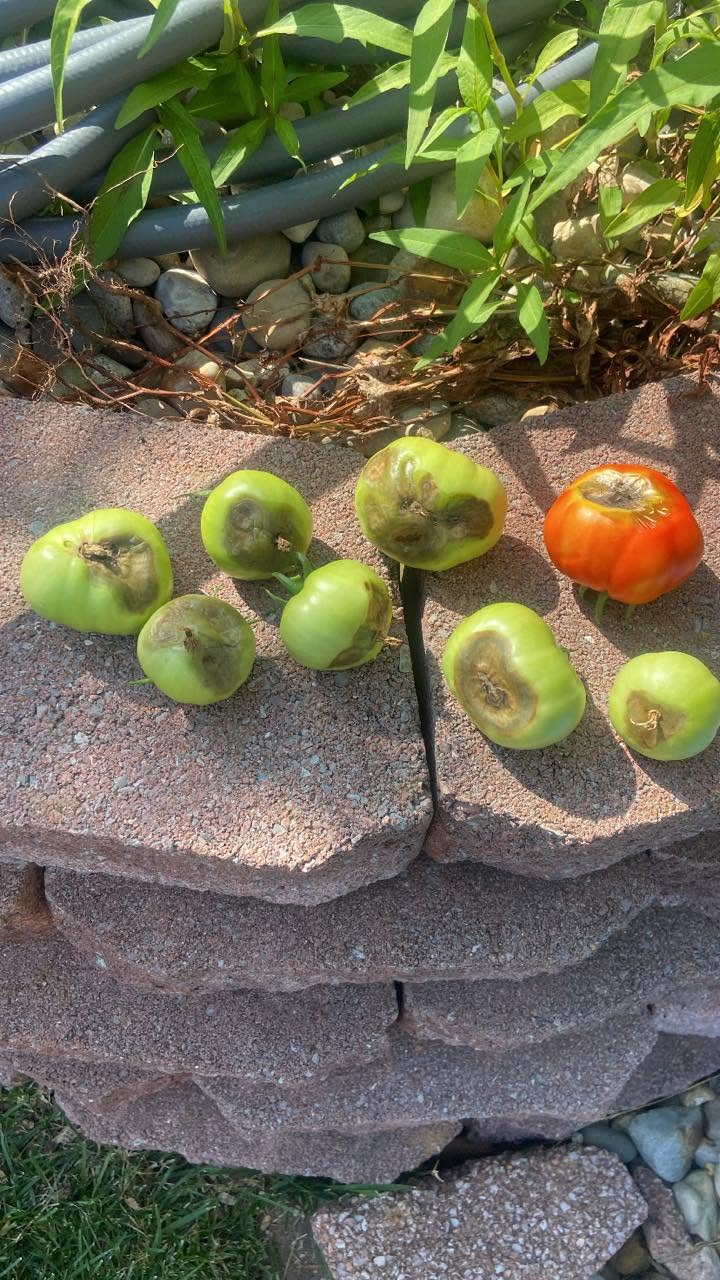
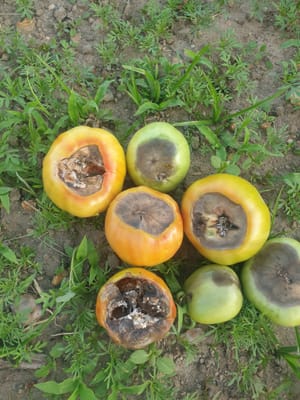
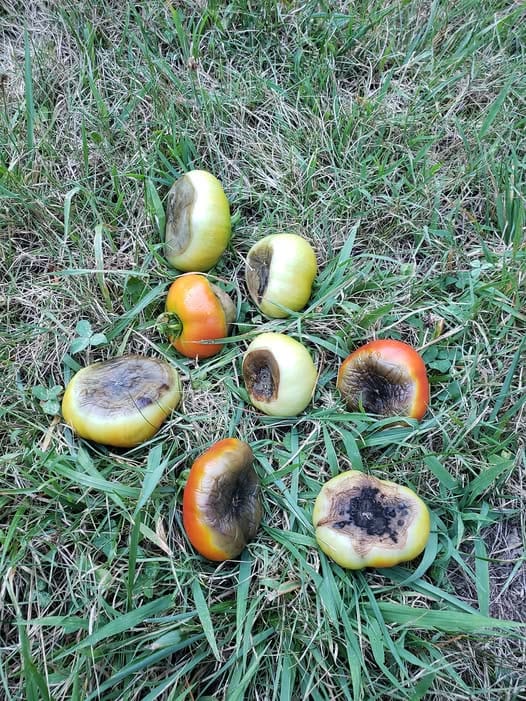
The above picture only shows you the damage in its early stage. I actually removed those tomatoes as soon as I noticed them. If you look at the image below, you'll see how bad the damage can get if those affected tomatoes are left on the plant for too long.
Should You Add Calcium to the Soil?
In most cases, NO. Many soils already contain enough calcium. If watering problems are stopping the plant from taking up calcium, adding more calcium to the soil usually won't solve the problem. Only add these if a soil test confirms your pH is too low (acidic) or calcium levels are truly low.
Do NOT Use too Much Fertilizer – Especially Nitrogen Fertilizer
It may sound surprising, but more fertilizer is not always better. Too much fertilizer, especially high-nitrogen products, can increase the chances of blossom end rot.
A few years ago, I was walking through my aunt's garden, and I noticed her tomato plants looked amazing. They were tall, vigorous, and covered with dark green leaves. Everything looked perfect. But when we looked closely at the fruits, many of the young tomatoes had blossom end rot.
The problem wasn't the lack of calcium in the soil. My aunt had simply used too much nitrogen fertilizer.
When a tomato plant gets too much nitrogen fertilizer, they grow lots of leaves and stems very quickly. This fast growth uses up a lot of the plant's calcium. Because of this, the growing tomatoes may not get enough calcium, and the bottoms of the fruits can start to rot.
Treatment
Stop applying high-nitrogen fertilizers. Switch to a balanced tomato fertilizer (look for numbers like 4-12-4 or 5-20-5) if feeding is necessary.
Protect roots: Be careful when working around your tomato plants. Avoid digging or cultivating too close to the plant base, as damaged roots may struggle to absorb enough water and calcium, which can increase the chances of blossom end rot.
Should You Remove Affected Tomatoes?
YES. I usually remove damaged fruits as soon as I spot them. They will not heal or turn healthy again.
If you remove the affected tomatoes, the plant can focus more of its energy and nutrients on developing new, healthy fruits instead of wasting them on damaged fruits that will never recover.
One question I often see people asking on gardening forums, Facebook groups, and social media is, "Can I eat tomatoes with blossom end rot?" The answer is usually YES. As it is a physiological disorder, not a disease, you can eat it. Just cut away the damaged part and use the healthy portion, as long as the fruit hasn't started to rot or grow mold.
The good news is that blossom end rot does not mean your entire plant is ruined. Many gardeners continue harvesting healthy tomatoes for months after fixing the underlying issue.